


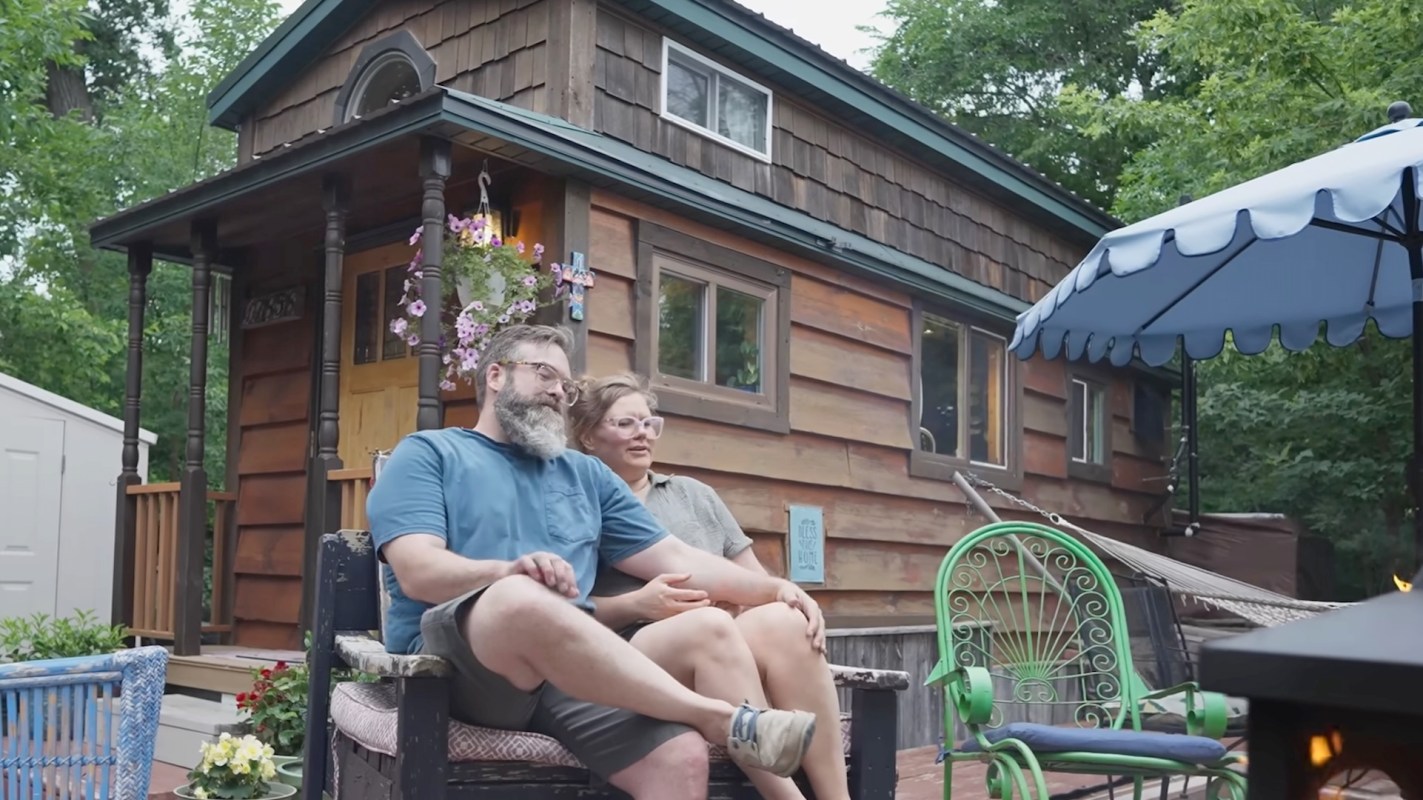
A Minnesota couple says the years they spent raising two young children in a 267-square-foot house reshaped far more than their living arrangement.
They first embraced the move as a $30,000 way to cut costs, but the tiny home went on to define a five-year stretch focused on family time, travel, and a new sense of what a home could do.
Here's what to know
Minnesota homeowners Kim and Ryan revisited the tiny house in a tour posted by Tiny House Giant Journey (@TinyHouseGiantJourney).
They moved in when their children were four and five years old, lived there for about five years, and later moved to a larger house, while the tiny home stayed on their lakefront property.
Built from a Tumbleweed ELM 24 plan, the house measures 24 feet by 8 feet, for a total of 267 square feet.
Kim said the couple's "all-in cost was $30,000" and said a similar ready-made version at the time would have been about $67,000.
TCD Picks » Quince Spotlight
💡These best-sellers from Quince deliver affordable, sustainable luxury for all




The couple said saving money was only part of the reason for downsizing. They wanted a lifestyle that made more room for homeschooling, travel, and time together.
As Kim put it, "Our value system changed to what we wanted it to be rather than just reacting to our circumstances."
They were also candid that the arrangement had limits. Their children shared a loft of about seven by seven feet until they were around 10 and 11 years old.
One commenter wrote, "I appreciate the honesty of the limitations of the tiny house option especially if you have kids."
More background
Living in the tiny house supported the family's priorities and reduced housing expenses, but it also demanded compromises.
They said those compromises included using a composting toilet, repeatedly changing their storage setup, and finding ways to stop above-ground water lines from freezing during Minnesota winters.
Instead of parting with the tiny house, they turned it into a short-term rental. That gave the family an income-producing asset and let guests try out tiny living themselves.
Another commenter wrote, "This tiny home might be an Airbnb now, but it is likely to become the full-time home of one of their children.. Airbnbs can serve a very important purpose."
They also said they are launching a nonprofit called Knitted Together. Through it, the main house on their property is intended to house pregnant women who lack support while also offering programming and connections to resources.
For them, living with less became a bridge from creating more opportunities for their own children to supporting others.
As Kim reflected, "There was so much purpose in the tiny house. It just feels like there's so much purpose that can happen through just your house. Like, it's not just a place to live."

Get TCD's free newsletters for easy tips, smart advice, and a chance to earn $5,000 toward home upgrades. To see more stories like this one, change your Google preferences here.







