


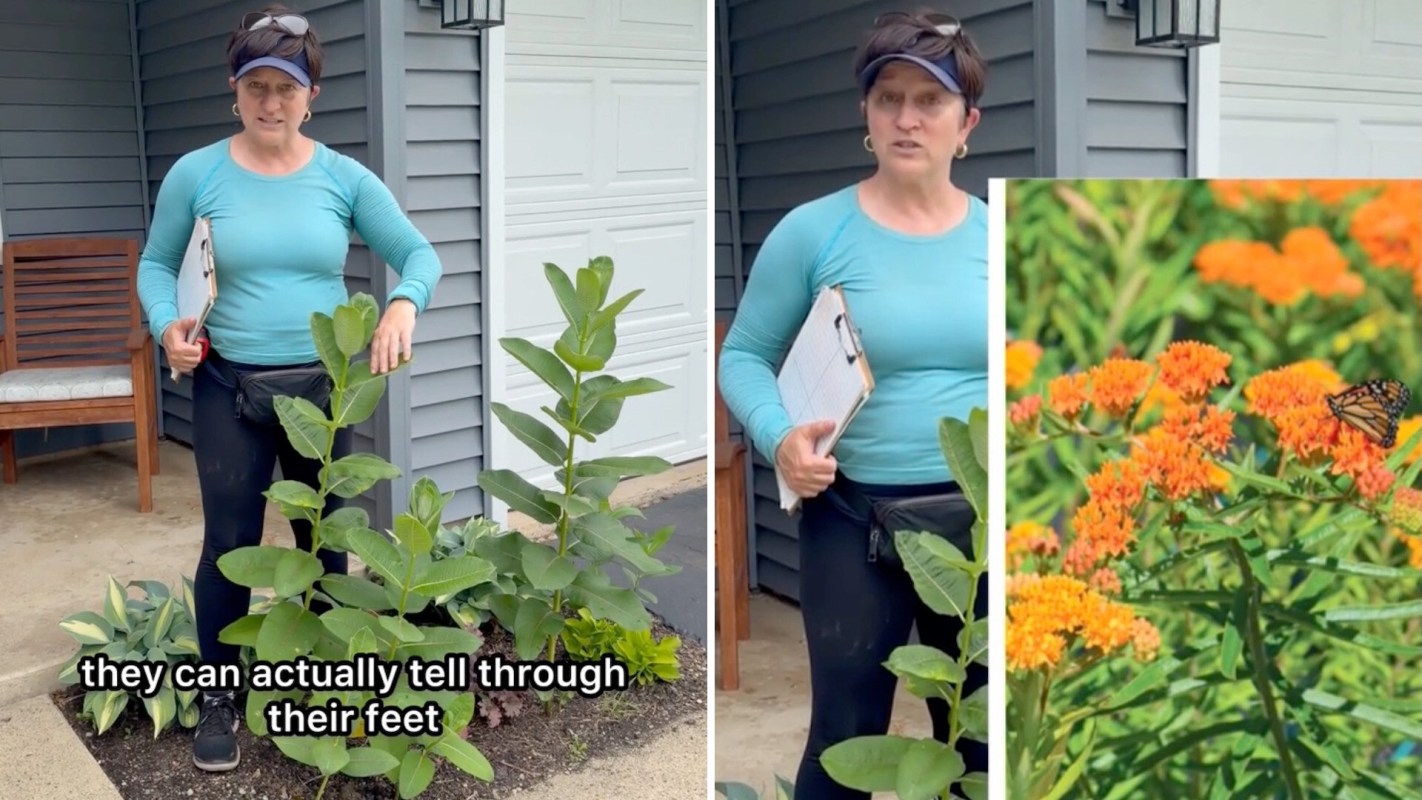
A TikTok focused on milkweed is raising awareness about potential drawbacks of the plant for gardeners interested in using it to support monarch butterflies.
What happened?
The gardener behind Powers Plants (@powers_plants) explained that though milkweed offers major benefits for monarch butterflies, it may still be a poor fit for some yards.
In the video, Powers Plants reported that milkweed is the monarch's "preferred host plant," where adults lay eggs so caterpillars can start feeding on the leaves as soon as they hatch.
@powers_plants Common milkweed is a fantastic native plant and it is the preferred host plant for monarch butterflies. There are lots of other milkweed species that I would prefer and recommend for small home gardens. Common milkweed gets about 7 feet tall and spreads aggressively via runners and seeds. I've had great success with monarch caterpillars in my garden using swamp/rose milkweed. If you have a hot dry location, there's a beautiful little 2 foot tall butterfly weed that is also in the milkweed family. You don't need to have common milkweed to help monarchs. You can replace that in your garden with something that's a little better behaved. Common milk weeds are fantastic for use in conservation areas and you can donate your seeds to local conservation groups. I'm a Garden Coach in the Chicagoland area and I love this community — if you know the answer to someone's question in the comments, please jump in and help! I can't always respond personally, but together we can figure anything out. 🌱 Visit powersplants.com to learn more about booking a coaching session with me, and for just $5/month you can subscribe for exclusive behind-the-scenes content, videos, and live Q&As where you can ask me anything directly! #nativeplants #garden #nativegardening ♬ original sound - Powers_Plants
Even with that advantage, the creator said gardeners should not treat common milkweed as the only way to support monarchs.
The gardener warned that common milkweed can be hard to contain, saying it can grow 7 feet tall, spread quickly through runners, and scatter seeds "all over the neighborhood."
For gardeners working in tight spaces, the creator explained several other options, including swamp milkweed and butterfly weed, that benefit monarch butterflies with few drawbacks.
TCD Picks » Quince Spotlight
💡These best-sellers from Quince deliver affordable, sustainable luxury for all




"There's so many milkweeds out there, so you don't have to just have this one," the creator said. "... It's your choice. It's your garden. I'm just cautioning you that right next to your walkway, this can become a monster of a plant."
Why does it matter?
Monarch butterflies rely on plants for food and to reproduce, and choosing the right variety to place in your garden supports wildlife without creating unnecessary work.
In a small space, a less aggressive native plant may be easier to manage while still giving caterpillars the food source they need.
A well-planned garden can support mental and physical health, and, if you include food in your garden, it can cut grocery bills and often produce fresher, better-tasting food than store-bought options.
What are people saying?
Commenters joined the conversation by sharing their favorite plant species and information about supporting monarch butterflies.
"Butterfly milkweed is my favorite," one said. "... Common milkweed can cause an allergic reaction in some people, similar to poison ivy. Handle it with gloves if you don't want to find out."
Others were firmly on team milkweed despite the potential for gigantic plants and far-flung seeds.
"And I'm OK with it!!! Spread, baby, spread," one user wrote.
"Keep, keep, keep! Love the smell of the flowers," someone else added.
A fourth person said, "Mine prefer swamp milkweed."

Get TCD's free newsletters for easy tips, smart advice, and a chance to earn $5,000 toward home upgrades. To see more stories like this one, change your Google preferences here.






