


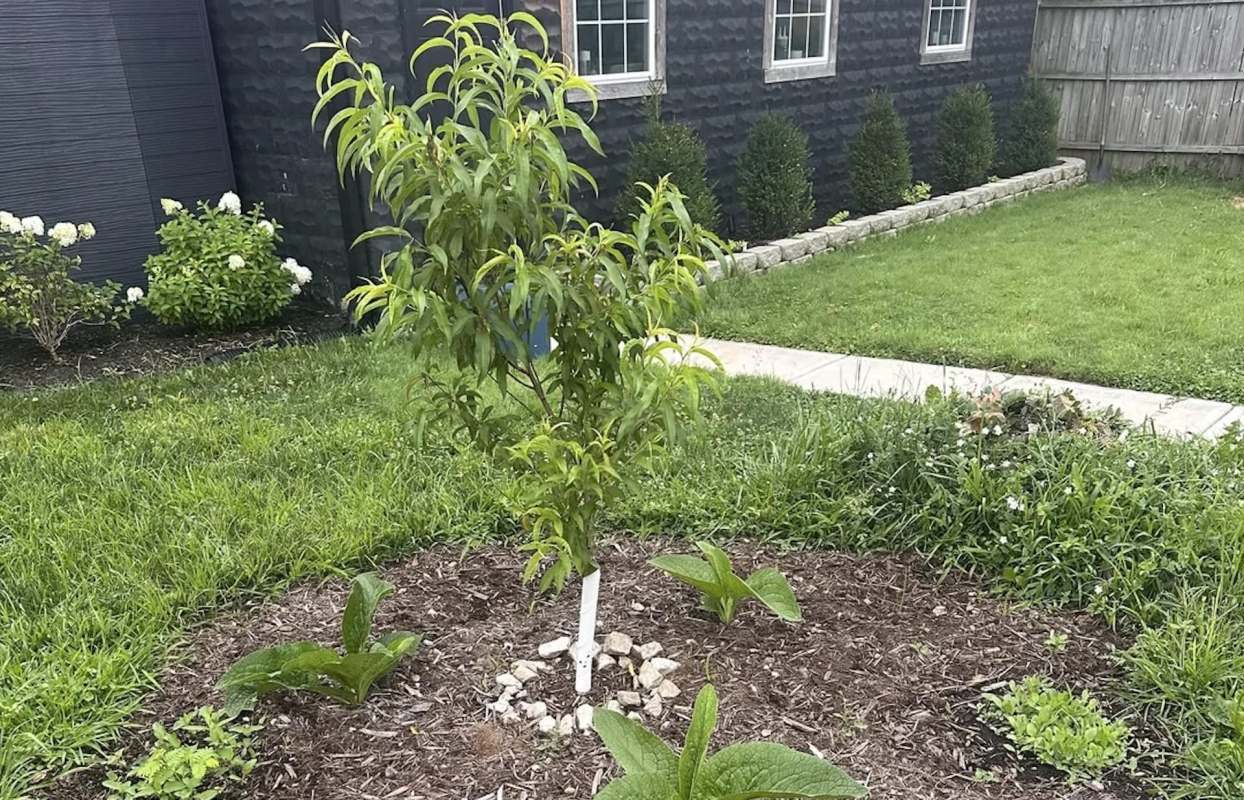
A Midwest gardener's first peach tree guild offers a glimpse of what can happen when part of a lawn is transformed into something edible, useful, and much more rewarding.
While the beginner's planting bed is modest for now, it points to a larger goal: turning grass into a mini food forest that can eventually produce fruit, herbs, flowers, and require less yard work.
What happened?
A first-time permaculture gardener shared a new planting on Reddit: a fruit tree guild centered on a Harvester peach tree.
The bed was finished with hardwood organic mulch and planted with five strawberries for ground cover, a few Egyptian walking onions, and patches of wildflowers. Three comfrey plants were also included near the peach to serve as "chop and drop" material for building soil.
The poster wrote: "Eventually I'd like to expand this to more of the yard to create a small food forest and not have so much grass to mow."
Commenters showed appreciation for this new gardener's backyard project, and offered helpful advice and feedback.
TCD Picks » Quince Spotlight
💡These best-sellers from Quince deliver affordable, sustainable luxury for all




Much of that advice focused on spacing and sunlight. One commenter warned that "the front comfrey will absolutely cover those strawberries at that planting distance as it grows in," while another said the strawberries might perform better on the sunnier south side of the bed.
Other users suggested adding a stone border to help protect the planting from mowing, keeping an eye out for grass creeping back in, and cutting comfrey back hard several times each year.
Why does it matter?
A single tree guild can be a first step toward growing food at home, reducing lawn maintenance, and making a yard more productive.
Growing even part of your own food can help lower grocery bills, and homegrown fruit often tastes better because it can be harvested at peak ripeness instead of being picked early for shipping.
Gardening can also support mental and physical well-being by getting people outside, encouraging movement, and providing a calming, hands-on project.
Replacing sections of turf grass with layered plantings can create a welcoming habitat for pollinators, build healthier soil, and reduce the need for mowing.
A food-producing bed can be a beautiful alternative to a water-guzzling, high-maintenance lawn.
What can I do?
Starting small is enough.
One fruit tree, a few support plants, and mulch can become the foundation for a more resilient yard. If you want to follow a similar path, TCD's guide to growing your own food is a useful place to start.
The comments also included several smart early design lessons: Think about sun angles before planting, leave enough room for vigorous plants like comfrey, and plan for how ground covers such as strawberries will spread.
Physical borders, mulch, and regular trimming can also make the difference between a thriving guild and one that gets overtaken by grass.
Another commenter looked further ahead, noting that peach trees may not live especially long and suggesting a slower-maturing canopy tree as a future addition.
"Sun exposure is a first order design concern in a guild and a garden," one commenter wrote.
Another summed up the mood more simply: "Congrats! Looks like a wonderful start."

Get TCD's free newsletters for easy tips, smart advice, and a chance to earn $5,000 toward home upgrades. To see more stories like this one, change your Google preferences here.






