


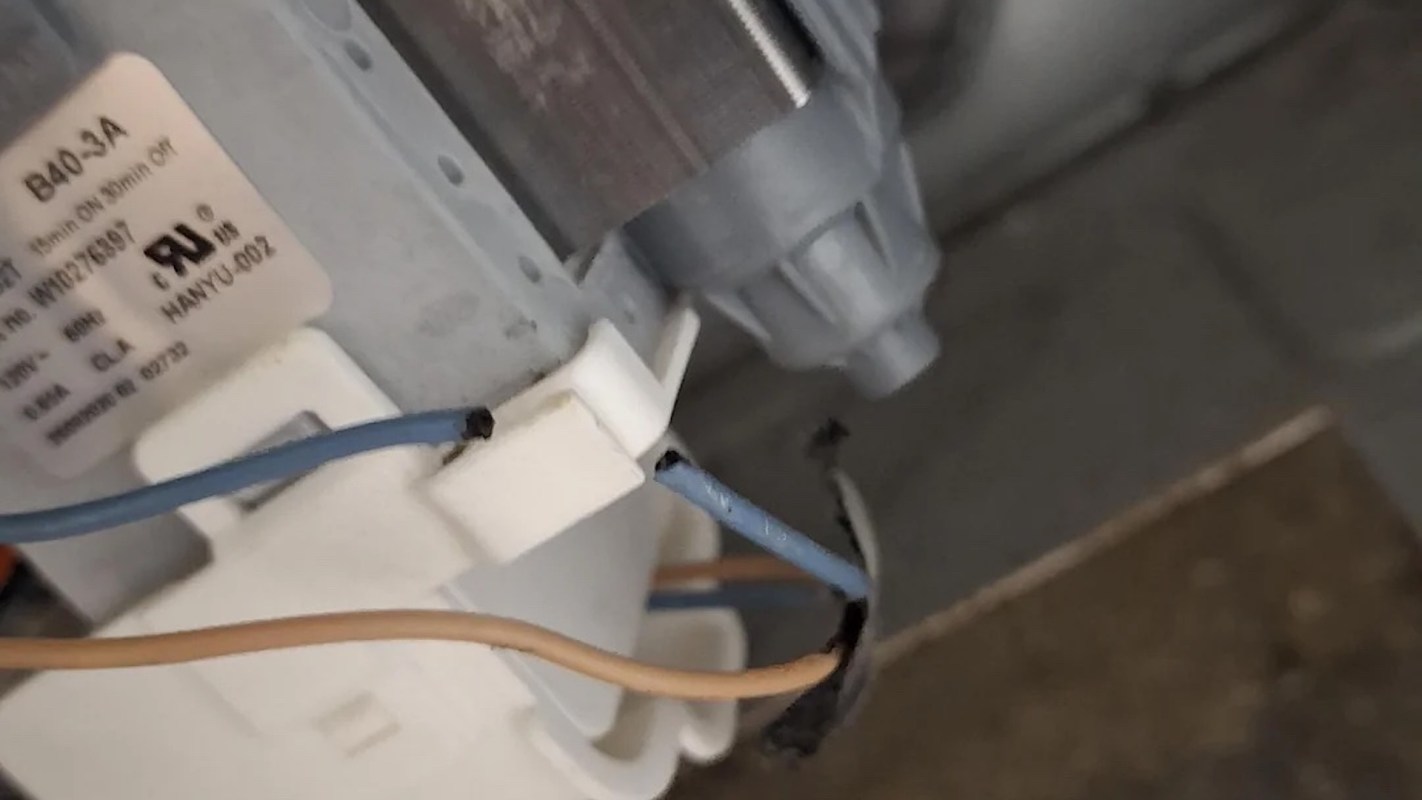
A 2.5-year-old Maytag washing machine that stopped mid-cycle and sat full of water looked headed for an expensive repair — until its owner discovered the real problem was a single broken wire.
Sharing the result on Reddit, the owner said, "1 wire nut, some electrical tape, and a few zip ties and we're back up and running."
Here's what to know
Since the washer would not drain, they assumed it was a pump problem, and the diagnostic code pointed in that direction too. The owner ordered a replacement pump and, after reading that control-board failures can also be common on this model, began checking prices for that part as well.
Those suspected causes turned out not to be the issue. After opening the washer and looking around the pump area, the owner found a damaged wire instead.
Replies to the post suggested the problem was not unique to one machine. Several users, including people who identified themselves as appliance technicians, said harness failures have been a recurring issue on Whirlpool and Maytag washers.
One pro appliance tech wrote: "The wiring harness was produced with too-thin wiring which can easily break due to vibration or other factors."
TCD Picks » Quince Spotlight
💡These best-sellers from Quince deliver affordable, sustainable luxury for all




"Yeah they didn't leave enough slack in those lines," another user said.
More background
Some commenters blamed design cost-cutting, while others said the issue can also be made worse by heavy or badly off-balance loads that put added stress on the harness.
A second self-identified professional appliance tech offered a more nuanced explanation: "This typically happens from overloading. Excessive vertical motion puts strain on the harness, causing those wires to break."
A washer that stops working does not always have a failed major component. Sometimes the culprit is a smaller wear point, such as a connection or harness problem, that can be found before costlier parts are ordered.
What can be done?
Taking a step-by-step approach to troubleshooting can help before assuming the worst. Error codes can be useful clues, but they don't always reveal the full cause on their own.
In this case, the water left in the washer made the pump-related code seem believable, but the real issue was a broken wire elsewhere in the system.
Owners seeing similar symptoms may want to examine any accessible wiring for obvious damage, especially near clips, bends, and moving sections of the machine. Repeated off-balance loads could be another sign that harness areas deserve a closer look.
For people comfortable with hands-on repair, a careful DIY fix can save money. For others, simply knowing that harness issues are possible may help shape a conversation with a repair technician.
"I wasn't looking to hire a pro because I get way too much satisfaction out of figuring things out myself," the original poster said. "I love learning more about the inner workings of things, I feel like it keeps my mind fresh haha"
Where can I learn more?
Washer problems that seem serious can sometimes come down to basic upkeep, from cleaning filters to cutting back on buildup.
• A home maintenance expert showed that easy DIY washer maintenance can help avoid costly breakdowns.
• A little-known washing machine filter hack helped keep another unit running in tip-top shape.
• A repairman warned that popular laundry product buildup can quietly lead to total machine failure.
If you're trying to track down a washer issue, small maintenance habits like these are a good place to start. They can help extend a machine's life and may keep a manageable repair from becoming a full replacement.

Get TCD's free newsletters for easy tips, smart advice, and a chance to earn $5,000 toward home upgrades. To see more stories like this one, change your Google preferences here.






