


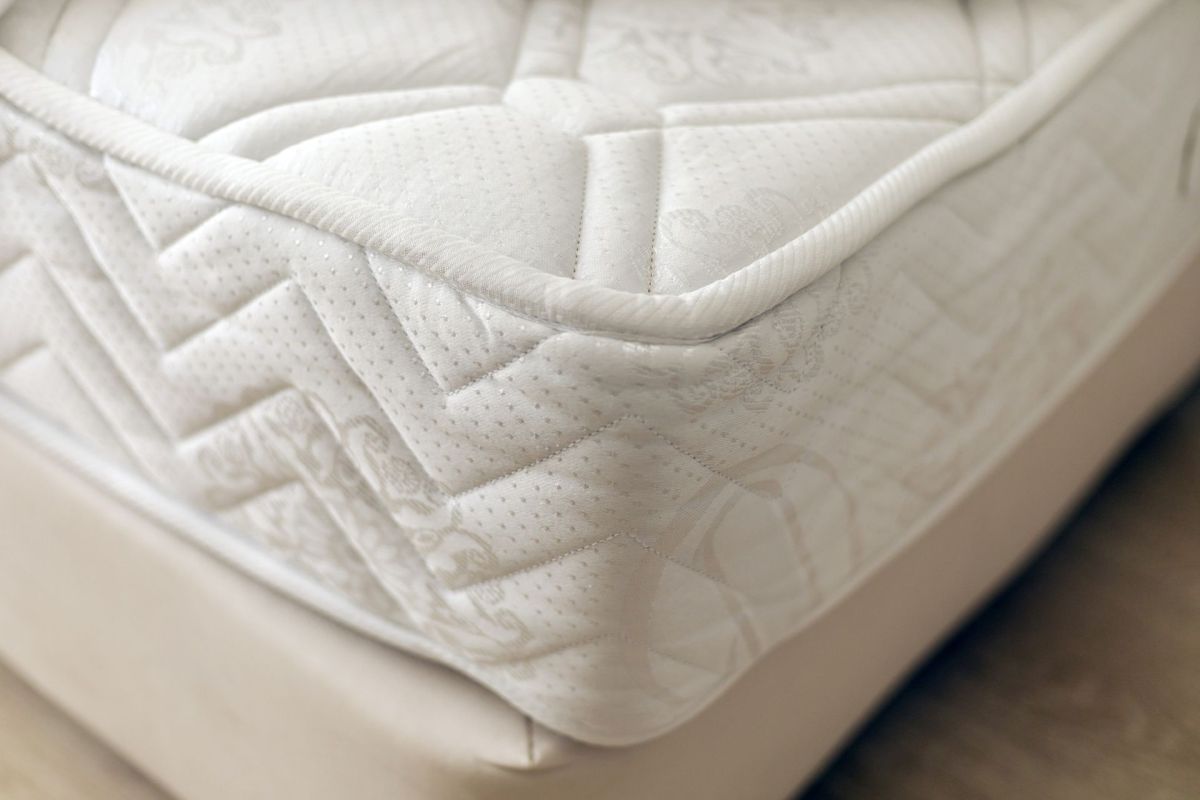
Most people think carefully about food labels and skin care ingredients, but few may consider what is inside the mattress they sleep on each night. That blind spot is drawing scrutiny as shoppers ask questions about off-gassing, flame retardants, and products marketed as organic.
On an episode of the Los Angeles Times' Live & Well podcast, host Melissa Magsaysay spoke with Arin Schultz, chief growth officer at the organic mattress company Naturepedic, about what conventional mattresses are made from and why that matters.
Here's what to know
According to Schultz, conventional mattresses commonly contain polyurethane foam and other synthetic layers that can release volatile organic compounds.
"The amount of chemicals that go into making a mattress, it's not one, it's not two," Schultz said, per the Times. "There are over 100 different chemicals that go into making a mattress."
Schultz linked the heat-retaining nature of foam mattresses to their materials, saying a standard queen-size mattress contains around 20 gallons' worth of crude-oil-derived polyurethane foam — "the same stuff they're pumping out of the ground, turning into gasoline."
He pointed especially to flammability compliance. Mattresses must pass federal open-flame testing, and Schultz said manufacturers using polyurethane foam have often depended on chemicals to meet those standards. He said Naturepedic instead arranges wool, cotton, and latex to pass the same tests without chemical treatments.
TCD Picks » Quince Spotlight
💡These best-sellers from Quince deliver affordable, sustainable luxury for all




The issue carries public health implications because mattresses are part of the indoor environments people are exposed to for hours at a time. Research on chemical exposure is still evolving, and not every material or mattress presents the same level of risk. Still, many consumers are looking for ways to reduce unnecessary exposure in bedrooms and other places where they spend long stretches of time.
More background
Schultz also warned shoppers not to assume that an "organic" label means every part of a mattress is made from organic materials.
"Greenwashing is a real big thing," he said, noting that a mattress can wrap a layer of organic cotton around conventional polyurethane foam and still be marketed as organic.
To help sort through those claims, he cited the Global Organic Textile Standard as one of the strictest certifications. Schultz said the program includes third-party factory inspections and material tracing. He also noted that Naturepedic was the first mattress brand to receive verification from the Environmental Working Group under a program launched for mattress products.
Schultz said indoor air concerns extend beyond beds. He identified flooring, paint, and furniture finishes as other overlooked sources of VOCs in bedrooms, especially children's rooms.
Exposure concerns are not limited to cleaning supplies or cosmetics. Mattresses, furniture, fabrics, and finishes can all shape how a room functions, smells, and impacts your well-being over time.
What can be done?
Schultz's advice was to buy an organic mattress after independently confirming company claims. Looking for established third-party certifications can help shoppers compare products more carefully.
For people who are not ready to replace a mattress, Schultz offered a less expensive option: using a waterproof organic cotton cover. He said it will not stop off-gassing from the layers underneath but can create separation between a sleeper and foam.
The same broader checklist can apply to the rest of the room. If someone is updating a bedroom, it may be worth paying close attention to flooring, paint, and furniture alongside mattress materials.
"We're never going to know, as a society, what all these chemicals that have been thrown into American culture in the last 50 years [are] going to do to us in the long run," Schultz said.
Where can I learn more?
Concerns about off-gassing and flame retardants have shoppers looking into mattress labels and paying closer attention to various materials. There are other concerns too, including children's chemical exposure, alternatives to petroleum-based foam, and what can happen to mattresses after use.
• Experts found children absorb "quite a dose" of mattress chemicals while they sleep.
• Earthfoam is building mattresses with natural latex from tree sap instead of polyurethane foam.
• In Australia, researchers showed fungi can give waste a second life as insulation.
Mattress choices reach beyond comfort to indoor air, material sourcing, and waste. Looking at the full picture can help shoppers decide what belongs in a bedroom.

Get TCD's free newsletters for easy tips, smart advice, and a chance to earn $5,000 toward home upgrades. To see more stories like this one, change your Google preferences here.






