


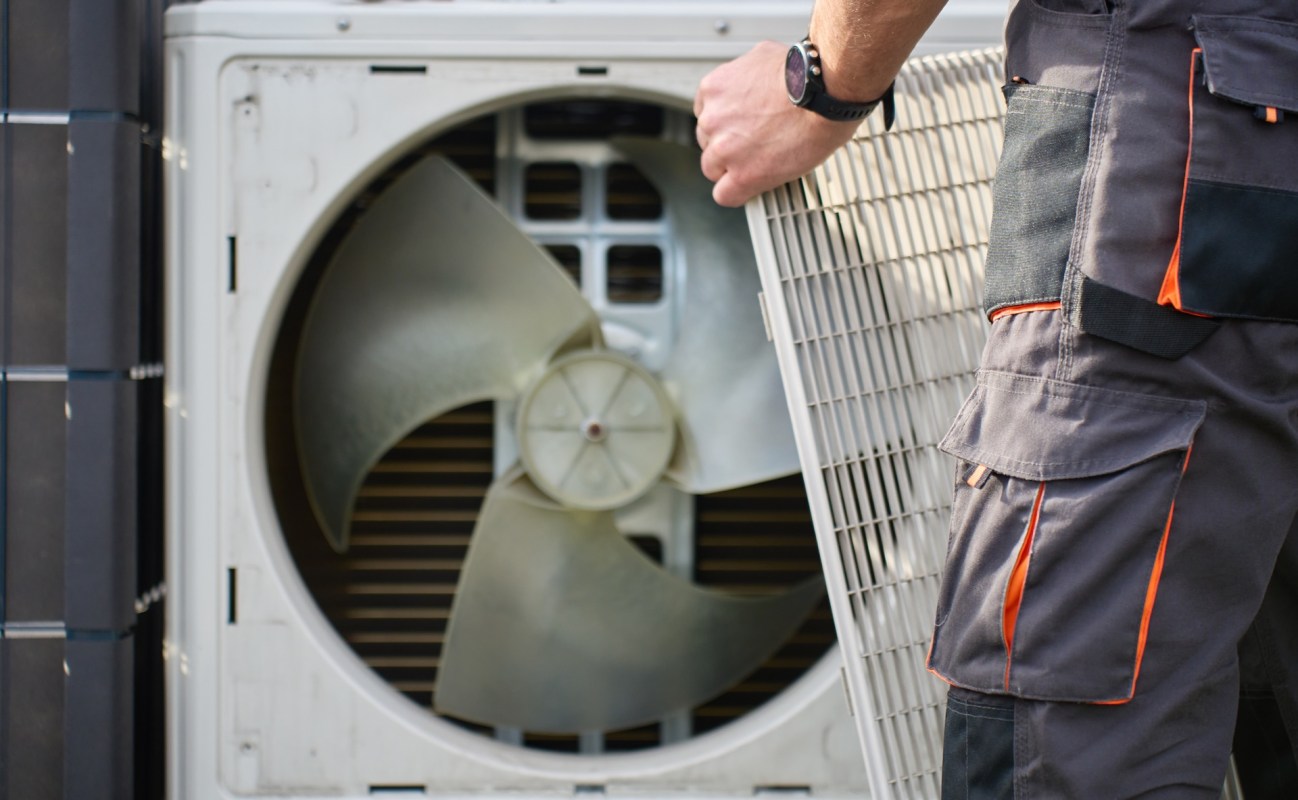
A Massachusetts homeowner needing to replace their 50-year-old oil boiler faces a familiar dilemma for anyone living in an older house: Is it better to replace a failing system for less money now, or spend more upfront on heat pumps that could pay off over time?
Here's what to know
Writing on Reddit's r/HomeImprovement forum, the original poster laid out their situation bluntly.
"Boiler is over 50 years old and she's done done," they said.
The original poster faces a tough decision: spend more now to upgrade their entire home to energy-efficient electric heat pumps, or replace their oil boiler for about half the price.
The OP's decision is shaped by significant savings from state incentive programs aimed at getting more homeowners to switch to heat pumps. Incentives available in the OP's home state of Massachusetts include both rebates and interest-free loans.
According to the homeowner, after Mass Save rebates, a whole-house heat pump/mini split system was quoted at about $26,000, with another roughly $5,200 likely needed for an electric service upgrade.
By contrast, replacing the oil boiler was quoted at $14,000 to $19,000.
However, with Mass Save's 0% financing, the homeowner said the heat pump project would come out to "just shy of $300 a month," about the same as what they averaged spending on oil.
Save $10,000 on solar panels without even sharing your phone number Want to go solar but not sure who to trust? EnergySage has your back with free and transparent quotes from fully vetted providers in your area. To get started, just answer a few questions about your home — no phone number required. Within a day or two, EnergySage will email you the best options for your needs, and their expert advisers can help you compare quotes and pick a winner. Solar panels can save you more than $50k over their 25-year lifespan, and EnergySage can help you save as much as $10k on installation. Which begs the question — isn't that worth an email or two? |

Another factor for the OP was their already-sky-high electric bills, which they said run between $300 and $600 a month. While running heat pumps instead of the oil boiler in winter would increase the home's electricity use, the heat pumps would likely use far less energy than the home's in-window AC units during the hot summer months.
Switching to heat pumps would also allow the OP to stop using the baseboard heaters presently used in two of the home's bedrooms.
Many commenters shared their own largely favorable experiences upgrading their homes to heat-pump HVAC.
One commenter argued that "the math changes completely once you cut out those window units and baseboard heaters. Those things are absolute pigs on the meter."
The same commenter added that insulation work is "where the real savings hide."
For homeowners comparing options, Palmetto can make it easy to explore different HVAC setups. Palmetto's Comfort Plan network can help you find efficient heating and cooling solutions for your home and connect you with vetted installers.
Long-term costs versus up-front price
A recurring refrain among commenters was that the OP should not be overly swayed by up-front prices. Instead, they urged the homeowner to look at long-term costs.
A properly sized heat pump in a well-sealed home can lower heating costs, replace inefficient AC units, and reduce home air pollution associated with burning oil on-site.
Switching to energy-efficient electric appliances can also reduce homeowners' exposure to fuel price swings, which commenters flagged as a major concern.
As the OP's situation highlighted, upgrading home HVAC can be a significant expense. If you're not ready to spend up front, Palmetto's Comfort Plan includes $0-down options that can lower your heating and cooling costs by up to 50%. It also includes 12 years of free maintenance.
To save even more on home energy costs, many homeowners pair solar panels with electric appliances. EnergySage makes it easy to find the best solar system and installer for your home and budget, saving you up to $10,000 on installations.
In the end, the OP thanked the commenters for sharing their experiences.
"Basically everyone I have talked to has said I'd regret the heat pumps, the electric costs will be insane, and it won't provide sufficient heat, so I felt like a crazy person for even considering," they said.
Where can I learn more?
These articles break down heat pump costs, available rebates, and how other homeowners handled steep HVAC quotes.
• In Massachusetts, new homeowners learned their 1950s oil system may be the costlier choice over time.
• Homeowners in one state can tap up to $10,000 in incentives to soften heat pump costs.
• Across the country, households can soon get up to $8,000 to upgrade aging HVAC systems.
• In central New Jersey, residents faced $15K to $20K HVAC quotes before deciding whether to switch.
• A federal policy push could give homeowners up to $8,000 for this increasingly popular AC technology.

Get TCD's free newsletters for easy tips, smart advice, and a chance to earn $5,000 toward home upgrades. To see more stories like this one, change your Google preferences here.






