


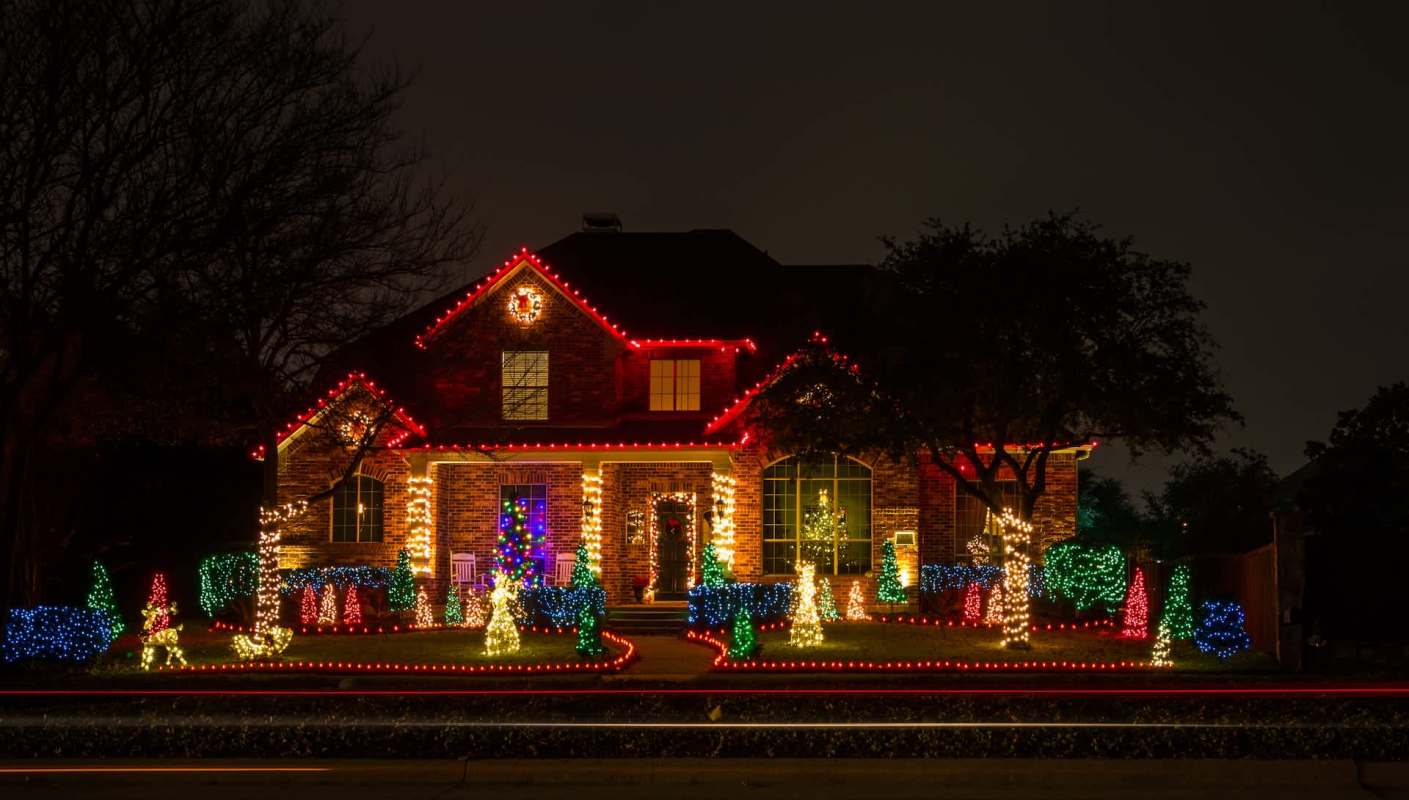
While holiday decorations can brighten a home and neighborhood, they can raise electricity bills, too. Switching just one strand of holiday lights to energy-efficient LEDs, however, could help people save a decent amount of money over the course of a season.
Here's what to know
Switching to low-energy bulbs was just one piece of electricity-conserving advice that National Grid shared as the holiday season fast approached. With tips that covered both decorating and cooking, National Grid aimed to help customers make more efficient choices, keeping electricity bills manageable, according to WXHC.
When it came to holiday lights, National Grid estimated seasonal operating costs of $35.15 for a C-9 incandescent strand, compared to $5.18 for an LED equivalent. LED C-9 lights cost about 14 cents a day to run. Incandescent versions cost roughly 95 cents.
Similarly, switching a mini-light strand to LEDs can bring its seasonal operating cost down to 37 cents from approximately $1.85, according to National Grid.
LEDs also need to be replaced less often, saving money and reducing waste. According to the U.S. Department of Energy, LEDs can last up to 25 times as long as incandescent bulbs while using as much as 90% less energy, justifying their higher upfront cost.
LEDs also reduce the fire hazards associated with older bulbs because they stay cool to the touch.
TCD Picks » Quince Spotlight
💡These best-sellers from Quince deliver affordable, sustainable luxury for all




More background
Inflatable yard displays can drive up holiday bills, too, with National Grid ranking them among the season's most energy-intensive decorations. With a typical power consumption of around 200 watts, running one animated inflatable for 15 hours per day could add as much as $6 to a monthly electric bill.
Other energy-saving approaches can be used year-round. For instance, households could save up to 10% annually by unplugging idle electronics, according to National Grid. Doing so stops devices from drawing "phantom electricity" when they're not being used.
Upgrading to new power strips can be one way to help reduce phantom electricity use. Advanced power strips keep electricity flowing to equipment that's still on but can cut it to devices that have been switched off — something traditional strips don't do.
National Grid recommended the advanced strips for those who prefer an automatic approach over having to manually unplug devices after use.
What can be done?
Using timers or smart plugs to turn decorations on and off automatically can help avoid spending money on electricity for light displays when no one is around to enjoy them.
For holiday meals, National Grid advised choosing the smallest appliance, pan, and burner that will do the job. When using an oven, keeping the door closed as much as possible prevents heat from escaping and reduces the extra energy needed to maintain its temperature.
National Grid also recommended slow cookers and electric pressure cookers as low-energy options for meal prep. The utility estimated that a pressure cooker uses approximately 0.36 kilowatt-hours during 15 minutes of operation and can shorten cooking time by as much as 70%, according to WXHC.
For those looking to replace existing appliances with energy-efficient upgrades, the utility suggested looking for Energy Star certification. Replacing a refrigerator that's more than 15 years old with an Energy Star-certified model could bring lifetime energy savings of up to $1,000.

Get TCD's free newsletters for easy tips, smart advice, and a chance to earn $5,000 toward home upgrades. To see more stories like this one, change your Google preferences here.






