


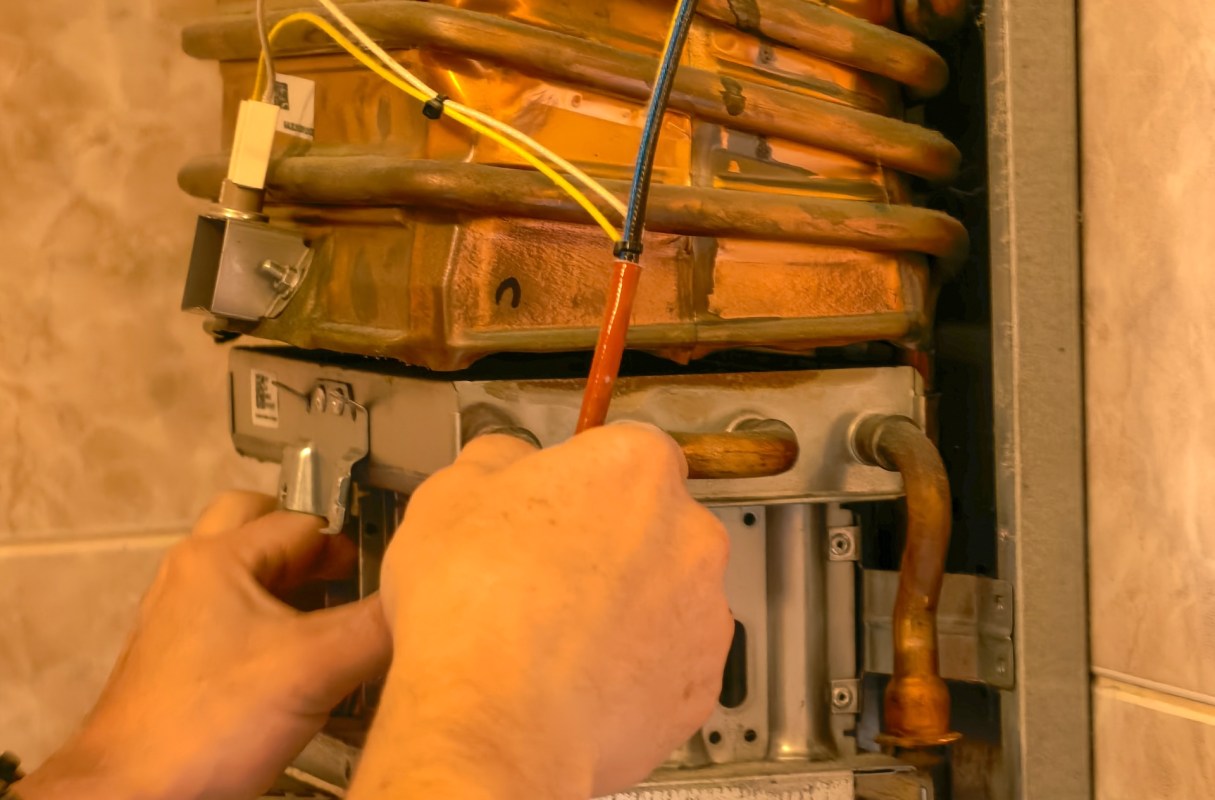
A homeowner hoping to solve hot water shortages with a second tankless water heater ran into a potentially costly complication.
Even though the house previously had two conventional gas water heaters, the gas line and meter might not be equipped to handle two tankless units.
Here's what to know
In a post on Reddit's r/Plumbing community, the homeowner described a series of problems with an 11-year-old tankless water heater after its warranty expired.
Cold water flowing back through the recirculation line was a sign of a failing built-in check valve. That problem followed a motherboard replacement, and the homeowner also suspected an issue with the igniters.
The heater may have been undersized from the outset, the homeowner suspected, despite otherwise liking it and performing regular maintenance. "Basically, the current unit struggles when there are two items drawing on it (shower, washing machine, or another shower)."
Installing two units was one option under consideration; the alternatives were a higher-capacity replacement or further repairs.
For homeowners considering a replacement, upgrading to a heat pump water heater can potentially lower energy bills.
More background
A commenter wanted details about simultaneous hot water use and the number of bathrooms, along with the climate and incoming water temperature. The homeowner described the Lake Michigan water as being "on the cooler side" and said the house was in Chicago's suburbs.
Crushed by your bills? See instant solar savings from vetted installers in just a few clicks With energy prices through the roof, there's never been a better time to go solar — and EasyHome can help you find the best prices from the best installers in your area. EasyHome takes the guesswork and headaches out of energy upgrades by showing you estimated savings from a network of vetted local partners. To get started, just enter your ZIP and share a few details about your home — seeing your estimate is really that easy. |

It also has two gas furnaces and previously had two conventional gas water heaters, leading the owner to believe the gas supply would be sufficient. The house has five bathrooms, though the homeowner said two people virtually never shower simultaneously.
What can be done?
The combined demand could rise from 80,000 BTU to 398,000 BTU, a commenter speculated. Using these hypothetical equipment ratings, they compared two conventional heaters rated at 40,000 British thermal units each with two tankless units rated at 199,000 BTU each.
The commenter asked about any other gas appliances, naming a dryer, stove, and fireplaces. They also advised checking the meter's capacity for the proposed equipment and measuring the gas line's diameter and the lengths of its runs.
The existing furnaces would add to the gas demand, rather than demonstrate that the home could support another tankless unit. To illustrate the potential demand, the commenter added two hypothetical 100,000-BTU furnaces to the two tankless heaters, bringing the combined load to 598,000 BTU.
Another replacement option is a smart heat pump water heater from Cala. Cala's customizable smart heat pump water heaters can help homeowners decrease their energy bills by heating water exactly when it is needed. That can reduce wasted energy from constantly reheating stored water while also giving households a more modern replacement option than a standard tank.
A replacement from Cala can turn a maintenance headache into an opportunity to lower utility bills and better match hot water use to a household's daily routine.
Where can I learn more?
Other homeowners considering tankless water heaters have had to sort out similar supply and sizing issues. These stories cover gas line troubleshooting, replacement costs, and plumbing constraints.
• A tankless water heater owner's pipe chatter prompted a temperature test pointing to the gas line.
• In North Carolina, a cabin owner's proposed electric tankless heater could demand 120 amps.
• A Florida homeowner's proposed 6.8-gpm tankless heater was deemed too small for two baths.
• A homeowner weighing a $4,200 water heater quote questioned whether tankless justified spending more.
• A leaking nine-year-old heater prompted tankless plans, but plumbers warned the pipes decide.

Get TCD's free newsletters for easy tips, smart advice, and a chance to earn $5,000 toward home upgrades. To see more stories like this one, change your Google preferences here.






