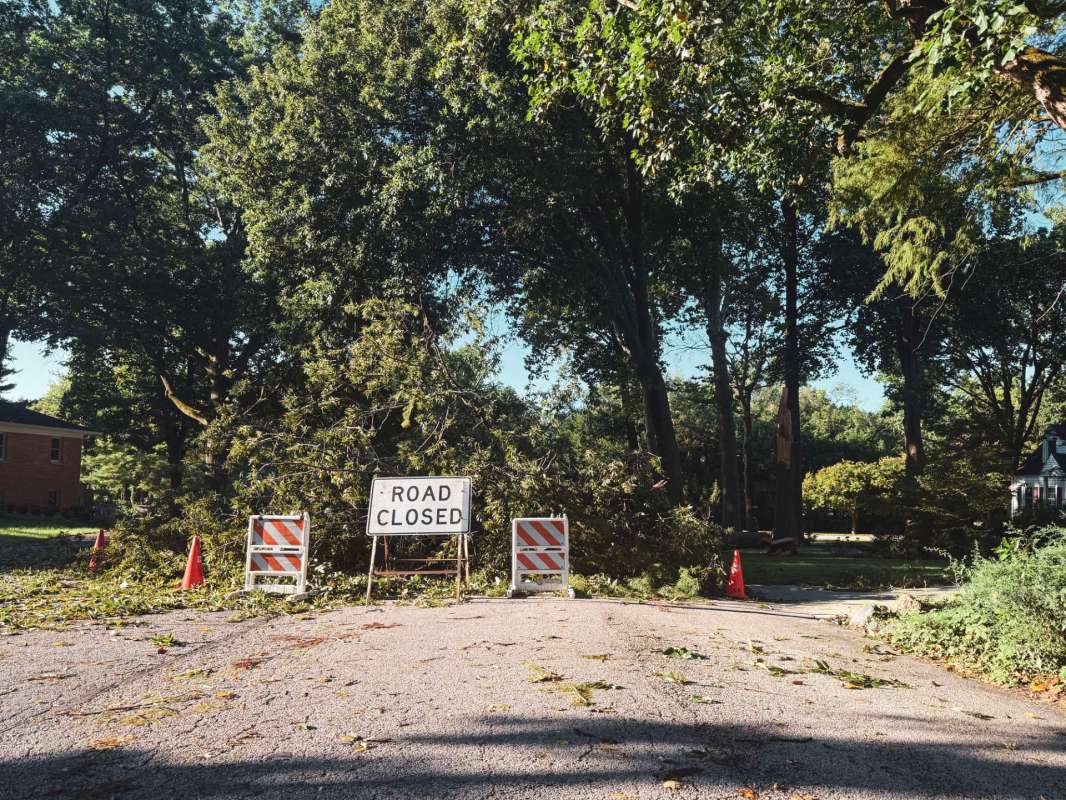
From flooding to tornado damage, homeowners in Illinois have gone through a rough patch, to say the least. Now, local officials are responding. They have requested FEMA assessors and are planning to request financial assistance from the Trump administration.
As of Sept. 2, an Illinois family was still living with roof damage, mold, and debris after an EF1 tornado struck Homewood on Aug. 11.
As Illinois makes its case for federal disaster assistance, officials from the local, state, and federal levels have been visiting the neighborhood, according to the Chicago Sun-Times.
Here's what to know
When the storm hit, Joan Douglas said her 16-year-old daughter was in a bedroom when a tree branch punched through the roof. Douglas got her out of the room, and the family took shelter in the basement while the tornado passed.
Although her daughter escaped injury, Douglas said the family also ended up with ankle-deep water in the basement.
Illinois has tied the Homewood damage to a wider round of storms that swept the state from Aug. 11-16. To move toward a request for a major disaster declaration and federal relief funds, state officials asked FEMA to begin preliminary damage assessments in eight counties.
TCD Picks » Quince Spotlight
💡These best-sellers from Quince deliver affordable, sustainable luxury for all




FEMA public affairs specialist Kim Keblish said the visits are intended to confirm the losses residents have reported.
"We're going to impacted neighborhoods and we're looking to validate the damage that has been reported," said Keblish. "So we're looking to have conversations with residents to understand the severity and the magnitude and the impact of these storms."
If the state concludes the storm damage is severe enough, Gov. JB Pritzker could then formally ask the Trump administration for federal help.
More background
Damage from the storm was still visible at the Douglas family home.
Joan Douglas said it took about a week for workers to clear the tree and close up the hole in the roof, and rain kept getting inside during that time. Contractors also had to cut into the ceiling to help dry the home.
Homeowner Olivia Douglas, Joan Douglas' mother, described the emotional strain of living with the damage.
"It gives me anxiety just looking at all the holes in my house," she said.
Douglas said her parents got $700 from the Red Cross, but that amount is nowhere near enough to cover the repairs.
Next door, 68-year-old Cathie Perlick said trees came down, damaging her fence and stripping away part of her siding.
"It's scary," Perlick said. "I need help. I'm older and on a fixed budget."
What's being done?
State and federal teams are documenting damage in storm-hit neighborhoods to understand how extensive the destruction was.
Illinois has already battled the Trump administration over disaster aid. In 2026, according to the Chicago Sun-Times, the state sued after FEMA denied flood relief funding tied to storms that swamped Chicago and the suburbs and overwhelmed sewer systems.
Greg Nimmo, the Illinois Emergency Management Agency's recovery division chief, said state officials are trying to make the strongest possible case for assistance.
"We are putting all the cards on the table, giving everything we got," Nimmo said. "Our goal is to put a strong package together and do everything we can to bring some type of federal assistance."
"We're trying our best to get things fixed, but we're struggling," Douglas said.
Where can I learn more?
What happened in Homewood is part of a stretch of destructive weather across Illinois. These stories look at how repeated tornadoes, power outages and drawn-out recovery efforts have left families and communities struggling long after the storm passes.
• Across suburban Chicago, residents faced toppled trees and no power after destructive storms.
• Across Illinois, 148 tornadoes before July underscored how relentless this season became.
• Across the South, a powerful swarm of storms left recovery crews confronting widespread ruin.
They help explain why families like the Douglases can still be dealing with repairs weeks after the winds die down. They also offer context for why Illinois officials are pushing so hard for federal help.

Get TCD's free newsletters for easy tips, smart advice, and a chance to earn $5,000 toward home upgrades. To see more stories like this one, change your Google preferences here.