


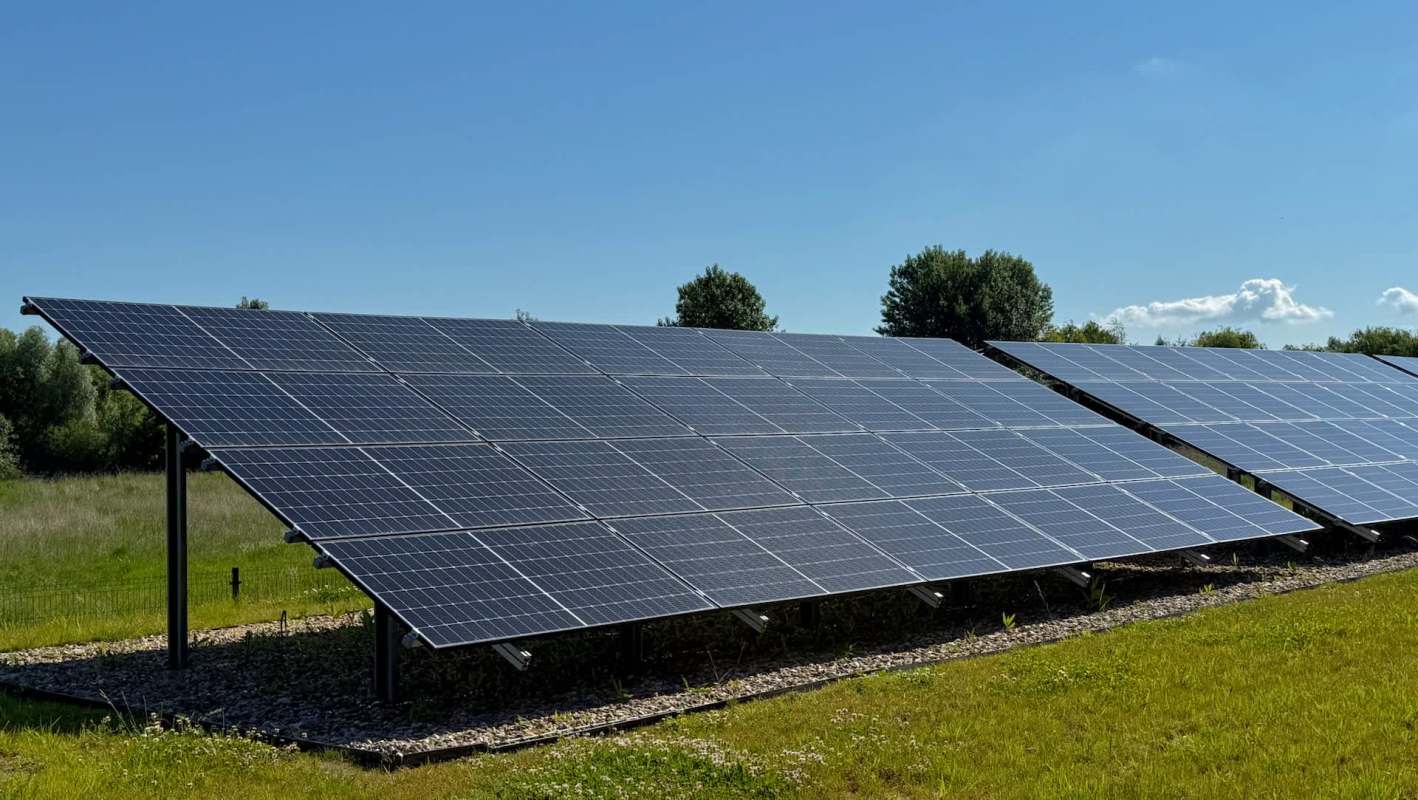
An Illinois homeowner thought a new 20-kilowatt solar system would slash monthly power costs.
Instead, some bills climbed as high as $153, even in months when the home produced more electricity than it used.
What happened?
A homeowner in western Chicagoland told r/solar that they installed a 20-kW solar system last November and then joined ComEd's hourly pricing plan five months ago.
Even though the home finished each of those months as a net producer, with roughly 1 megawatt-hour of extra generation in three of them, the bills for that stretch still totaled "$90, $0, $84, $129, and $153."
What bothered the poster most was the line item called "Net Metering Credit - Supply."
Depending on the month, it swung from a $0.00383-per-kilowatt-hour charge to a $0.09177-per-kilowatt-hour credit.
"All in all, it feels like something is off," the homeowner wrote.
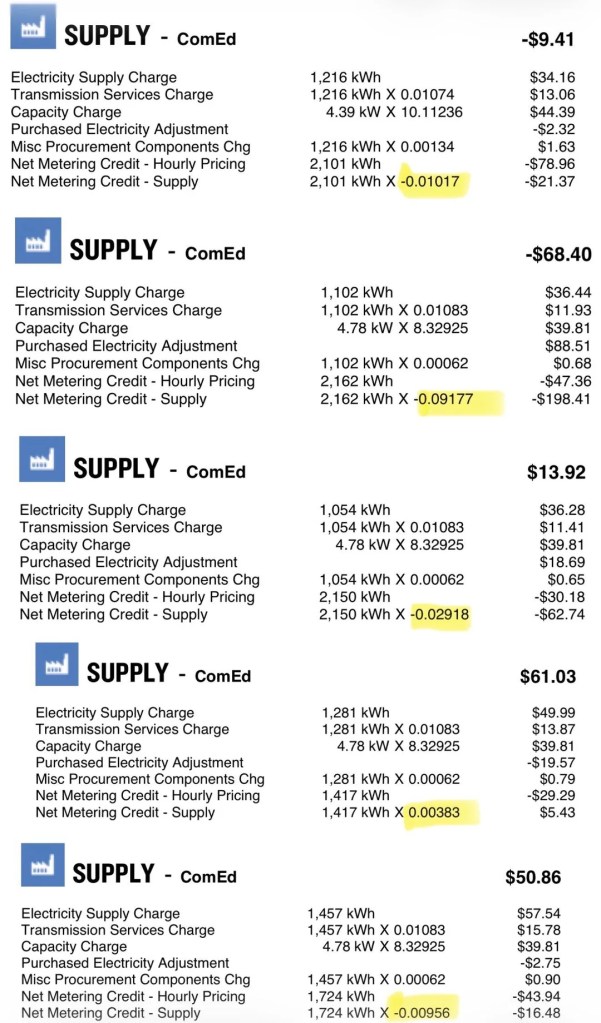
A reply suggested ComEd's capacity charge could be part of the explanation, saying, "They base your rates on the highest usage day from the previous year."
Save $10,000 on solar panels without even sharing your phone number Want to go solar but not sure who to trust? EnergySage has your back with free and transparent quotes from fully vetted providers that can help you save as much as $10k on installation. To get started, just answer a few questions about your home — no phone number required. Within a day or two, EnergySage will email you the best local options for your needs, and their expert advisers can help you compare quotes and pick a winner. |

Why does it matter?
For many households, going solar remains one of the most effective ways to lower home energy costs over time, and those considering a system or comparing rate-plan impacts can use EnergySage's free tools to get quick solar installation estimates and compare quotes for how effective it would be in not just in an area but for a specific property, including tree cover.
In this owner's case, their local utility's setup — or at least the plan here — was not super solar-friendly compared to what's typical in the U.S., where most net metering plans allow you to "roll over" surplus credits and those generating more than they use over the year pay nothing beyond any flat-rate charges associated with being connected to the grid — typically $10 to $40 per month, depending on the area.
If a utility credits exported solar power at different rates throughout the day and a household has to buy electricity back during more expensive hours, the bill can remain higher than expected even when the meter shows surplus generation for the month. And if the company bases this hourly pricing plan on what you used when you did not yet have solar, that plan might hurt more than it helps.
To be sure, the homeowner is still saving money over having no panels, but it's clear their bill is not getting slashed as much as they expected, and commenters tried to help sort it out.
More From EnergySage
💡Go deep on the latest news and trends shaping the residential solar landscape



"Read up on ComEd's 'Capacity Charge' for hourly pricing," another commenter said. "They base your rates on the highest usage day from the previous year. I was advised to wait a full year after installing solar to switch to the hourly pricing."
The OP said that the Capacity Charge plan allowed them to claim EV charging rebates, at least, which may offset much of the downside, despite the hopefully temporary frustration.
"Maybe bad timing on that, if it's best to wait a year, but the EV is such a wildly valuable benefit for me that I had to switch away from a car immediately," they wrote. "My commute is almost 100 miles per day, and my prior car was a V8 twin turbo that got a whopping 16mpg on premium... LOL. I was spending like $800 a month just on gas to drive to & from work, whereas the EV drives practically for free."
That highlights one of the most amazing benefits of solar, too: If you pair panels with an EV, you get to drive with free energy from the sun, and you never have to stop for gas again. At even 100 miles per day, the OP would never have to stop at a public charger, either, and could always charge overnight while sleeping. Only longer road trips would require the hassle of a public charger, and most EVs come with built-in mapping tools to find the nearest compatible options.
What can I do?
If your solar bill looks unusual, the first step is to review each line item separately — especially supply charges, delivery charges, fixed fees, and credits. It can also help to ask your installer or utility to explain how your rate plan interacts with net metering, since hourly or time-based pricing can change the value of exported electricity.
EnergySage's free services can also help remove some of the guesswork from the process. With EnergySage's help, the average person can save up to $10,000 on solar purchases and installations. And EnergySage's solar map shows the average cost of a home solar panel system on a state-by-state level, along with details on solar panel incentives for each state, so readers can get the best price for rooftop solar panels and access available incentives.
Adding battery storage to a solar setup is one of the best ways to protect your home during outages. It can also help save money on energy and make it easier to go off-grid. Homeowners curious about backup power can explore EnergySage's free tools for information about home battery storage options, including competitive installation estimates.

Get TCD's free newsletters for easy tips, smart advice, and a chance to earn $5,000 toward home upgrades. To see more stories like this one, change your Google preferences here.






