


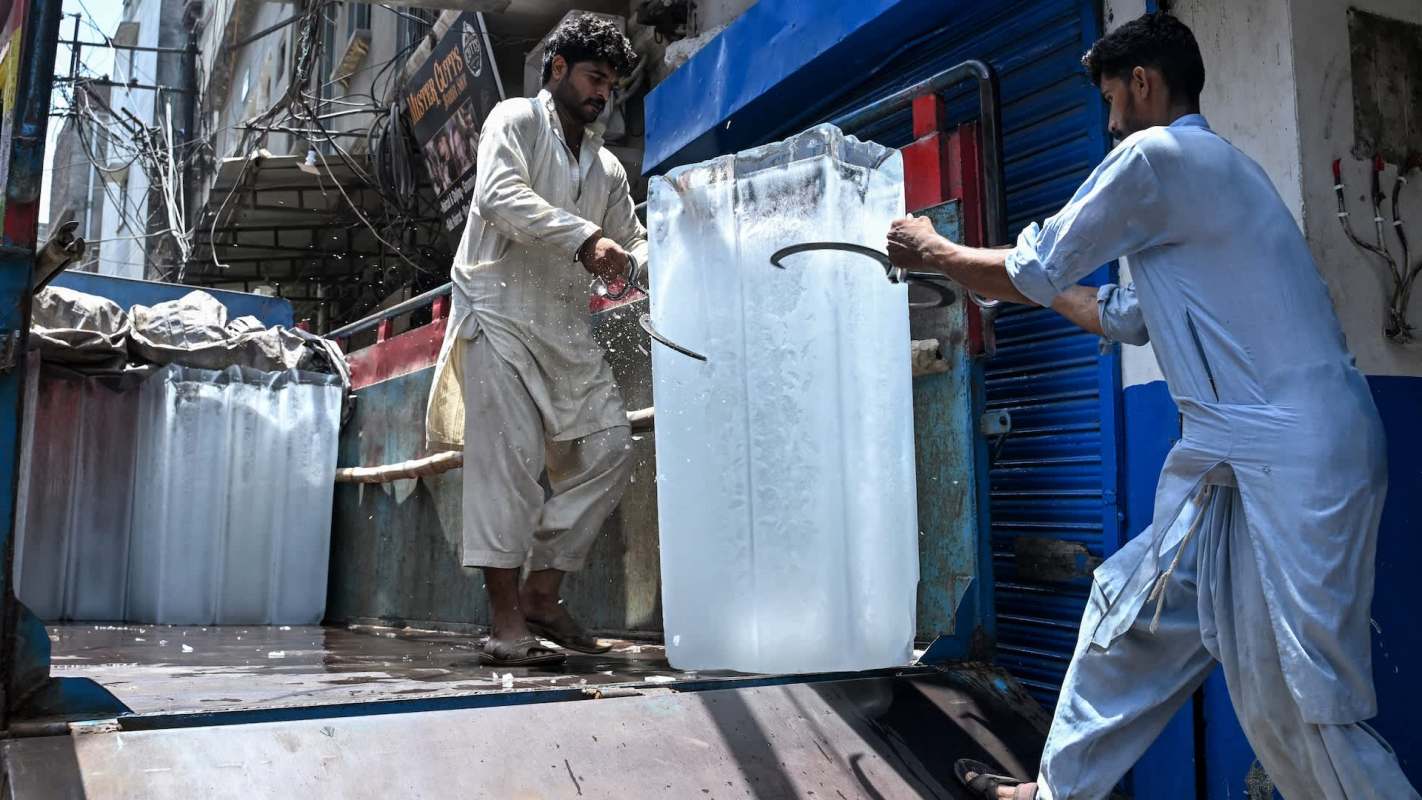
Before the day heats up, many households in Nasirabad, Pakistan, send someone out to secure ice, an early-morning errand tied directly to getting through the heat.
Because power is limited and homes can become oppressively hot, even one block can make drinking water cooler and conditions marginally less dangerous.
Here's what to know
According to The Guardian, as temperatures rise in the region to as high as 122 degrees Fahrenheit (50 degrees Celsius), residents of Nasirabad gather outside the town's ice factory at first light.
The outlet reported that one of the people who make that trip is 12-year-old Taimoor, who stops at the factory before school.
"If I do not bring the ice, how will we endure the heat at home?" he told the outlet.
The town is roughly 25 miles from Turbat in Pakistan's Balochistan province. Most residents live in mud-built homes and usually have electricity for only a few hours a day, with voltage that is often too weak to keep refrigeration dependable.
TCD Picks » Quince Spotlight
💡These best-sellers from Quince deliver affordable, sustainable luxury for all




In its May 2026 heatwave warning, the Pakistan Meteorological Department forecast highs of 115 degrees Fahrenheit to 122 degrees Fahrenheit for areas that included Turbat.
Citing the World Meteorological Organization, The Guardian reported that Asia is heating at nearly twice the global rate, while the 11-year stretch through 2025 was the hottest ever recorded worldwide.
More background
Worsening extreme weather can threaten lives and livelihoods at once by increasing the risk of dehydration, heat exhaustion, miscarriage, lost work hours, crop damage, and further strain on already fragile power and water systems.
For people in Pakistan the extreme heat is already impacting families.
According to The Guardian, Taimoor's mother once carried the ice to their home, but now avoids the task. His mother is now pregnant and, after two miscarriages, worries that the extreme heat and labor could jeopardize her pregnancy.
Meanwhile, 66-year-old widow Raj Bibi cannot afford ice, so she carries bottles of water each day to a neighbor's solar-powered refrigerator, the outlet reported.
"The day passes in heat and suffocation," she told The Guardian. "There is no electricity to run a fan."
What's being done?
Nasirabad's main stopgap is the local ice factory run by owner Mohammad Haider, who said his late father established it in 1992.
The Guardian reported that each morning, workers open the doors around 7 a.m., and the roughly 400 blocks produced overnight are usually gone within two hours.
According to the outlet, solar panels let some households run fans and sometimes refrigerators during the day. People also lend neighbors what capacity they have, such as space in a fridge for water, while families whose homes stay too hot or underpowered often sleep outside at night.
Pakistan has also issued heatwave guidance. The Guardian reported that the National Disaster Management Authority has put out advice on preparing for extreme heat, and Balochistan's Provincial Disaster Management Authority has a district plan for Kech.
The meteorological department has urged people to avoid unnecessary sun exposure, stay hydrated, conserve water, and protect livestock. But many people in Nasirabad do not have those options.
For Haider, the daily rush for ice reflects how narrow that margin has become.
"It saddens me when people cannot get ice before it runs out," he said to The Guardian. "They then have to spend the entire day drinking warm water."

Get TCD's free newsletters for easy tips, smart advice, and a chance to earn $5,000 toward home upgrades. To see more stories like this one, change your Google preferences here.






