


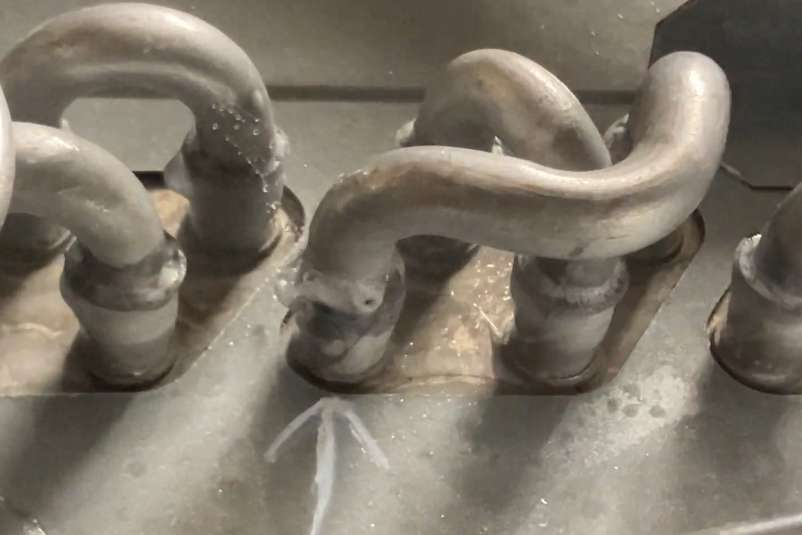
A homeowner looking into an HVAC system that had already been acting up found something far worse than a clogged drain line after the household pets began sneezing and an air purifier showed a red air-quality reading.
A quick spray of soapy water revealed bubbling at the coil and a hissing refrigerant leak.
What happened?
According to a post on Reddit, the homeowner went back to inspect the air handler after noticing two unusual signs indoors: the household pets had started sneezing, and a plug-in air purifier was showing a red reading even though wildfire smoke was not a factor.
The homeowner had heard what sounded like a leak, tested the area with soapy water, and confirmed that part of the evaporator coil was leaking.
During that check, they spotted mold. This all came after a separate issue in which the HVAC system had been cooling only intermittently until they found and cleared a clogged condensate line.
(Click here if the embedded video does not appear.)
Commenters said the visible damage pointed to a coil replacement.
"Looks like a new coil coming your way," one commenter wrote.
Save $10,000 on solar panels without even sharing your phone number Want to go solar but not sure who to trust? EnergySage has your back with free and transparent quotes from fully vetted providers in your area. To get started, just answer a few questions about your home — no phone number required. Within a day or two, EnergySage will email you the best options for your needs, and their expert advisers can help you compare quotes and pick a winner. Solar panels can save you more than $50k over their 25-year lifespan, and EnergySage can help you save as much as $10k on installation. Which begs the question — isn't that worth an email or two? |

Another added: "Congrats, you found the leak on the evap coil. I would call someone in to repair it properly."
Although the homeowner first considered whether a skilled DIYer could take on the repair, they soon decided against it.
"OK calling a professional. I'll change my own brakes, do my own plumbing and electrical, relocate the thermostat, and am a carpenter by trade. But f*** that."
For homeowners dealing with aging or troublesome HVAC equipment, newer heat pumps can be a major upgrade. They are significantly more energy-efficient than traditional HVAC systems while providing both heating and cooling, and they may unlock tax credits, rebates, and long-term savings on utility bills. Tools such as EnergySage's Heat Pump Marketplace are also available for people considering a replacement.
For people who do not need a whole-home overhaul, Merino may appeal to households trying to solve comfort issues quickly.
Why does it matter?
A refrigerant leak like this can quickly turn into a major comfort issue. As the refrigerant charge drops, the system may keep running without properly cooling the home, causing electricity use to rise even as indoor temperatures become harder to manage.
It can also become an expensive repair.
Several commenters noted that the coil may still be covered if the unit falls within a five- to 10-year warranty window, though labor and replacement refrigerant would still add to the cost.
Others urged the homeowner to gather multiple quotes after sharing repair bills ranging from about $1,400 to several thousand dollars.
There is also an environmental concern. Leaking refrigerant can release pollution into the atmosphere, and an HVAC system struggling to function efficiently tends to waste energy at the same time.
What can I do?
If your system starts cooling unevenly, making unusual noises, or cycling on and off, check the basics first, including the air filter, thermostat settings, and whether the condensate line is clogged.
If you suspect a refrigerant leak, contact a licensed HVAC technician, ask whether the coil is still under warranty, and request an itemized estimate so labor and refrigerant costs are clearly outlined.
If replacement is on the table, EnergySage is also available for homeowners interested in solar.
For those exploring heating and cooling upgrades specifically, it can also help to revisit EnergySage's Heat Pump Marketplace when comparing systems.

Get TCD's free newsletters for easy tips, smart advice, and a chance to earn $5,000 toward home upgrades. To see more stories like this one, change your Google preferences here.






