


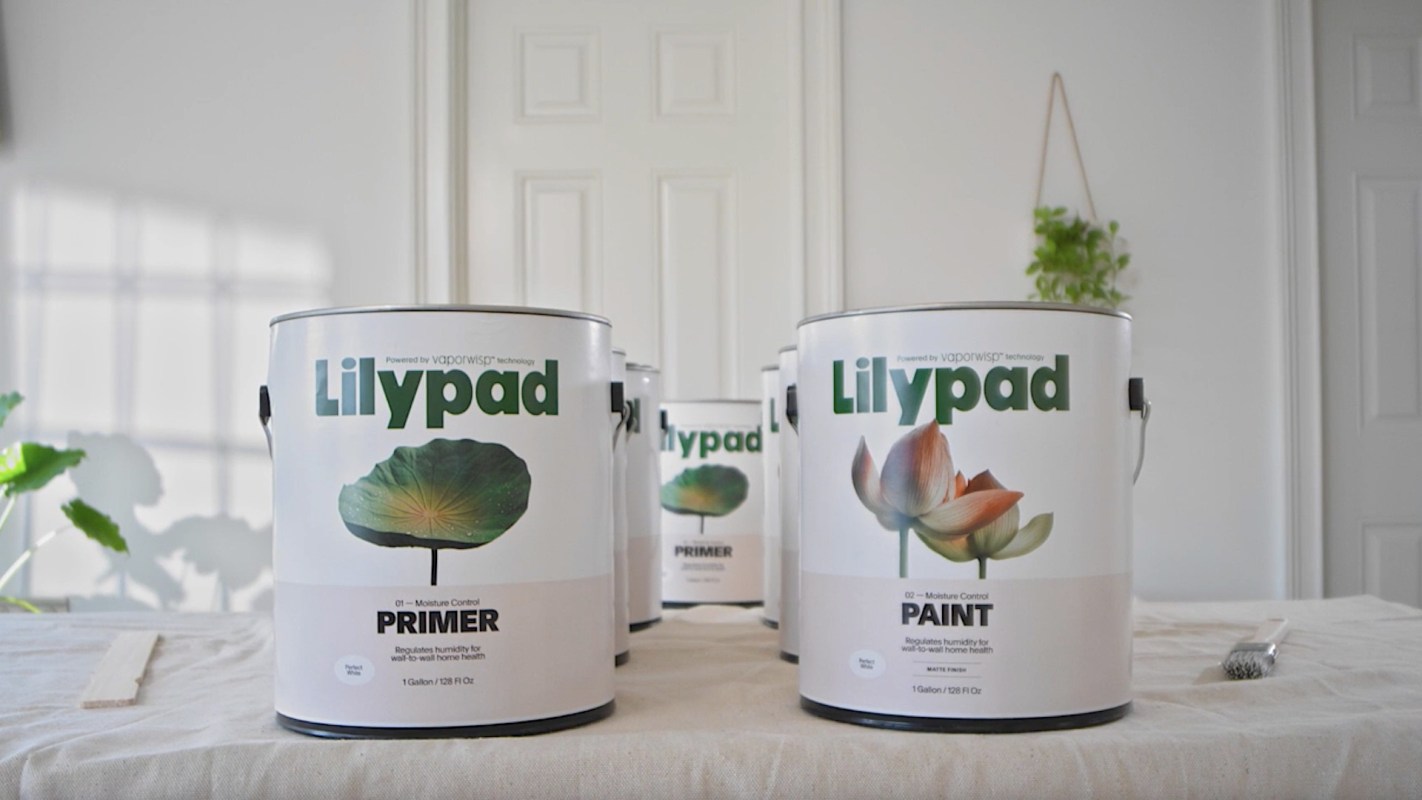
Inspired by the way plants handle water, a new paint and primer product called Lilypad aims to absorb indoor humidity. Applied to walls, it soaks up moisture from the air and releases it gradually, which may help limit the dampness that allows mold to develop.
Here's what to know
Fast Company reported that Lilypad grew out of Adept Materials founder and physicist Derek Stein's view that buildings should adapt to climate conditions more naturally, without depending heavily on energy-using mechanical systems.
The humidity-regulating product comes as a two-part system: latex paint and a primer.
The paint controls moisture with a proprietary desiccant made from nanomaterials, which draws water from the air. The primer helps release that moisture back into the room instead of into the wall.
"It's like putting silica gel, those humidity protection packs, all over your walls," Stein said.
Fast Company named Lilypad a 2026 Innovation by Design Awards winner in the materials and biodesign category.
TCD Picks » Quince Spotlight
💡These best-sellers from Quince deliver affordable, sustainable luxury for all




More background
Indoor humidity can be far more than a comfort issue. Damp conditions can encourage mold growth, which can damage buildings and create unhealthy living environments. Homes without sophisticated ventilation systems to regulate moisture could benefit especially.
Stein linked the product idea to transpiration, the process plants use to move and release water, saying: "The 'aha' moment was really just looking out the window at how plants are doing things."
Lilypad remains an early-stage product. A kit with one gallon each of primer and paint costs $175. Fast Company reported that only "hundreds" of kits have sold due to the product's novelty.
What's being done?
Adept Materials is testing the product in a pilot with the Boston Housing Authority.
While it is not yet a mass-market solution, it could serve alongside traditional ventilation, dehumidification, and mold-prevention strategies rather than replace them.
"In a building, you want to be able to deploy humidity control in ways that are accessible and make a difference," Stein said.
Where can I learn more?
Lilypad is part of a broader push to help buildings manage air and moisture better. Cooling paints, adaptive coatings, and cleaner indoor air systems target the infrastructure needed to adapt to climate conditions.
• Scientists developed a material capable of pulling water from the air for future buildings.
• Researchers created paint that can sweat to cool buildings and cut electricity use.
• Scientists identified a color-changing material that could help buildings respond to heat.
• Engineers designed a human-biology-inspired system to strip harmful indoor toxins from the air.

Get TCD's free newsletters for easy tips, smart advice, and a chance to earn $5,000 toward home upgrades. To see more stories like this one, change your Google preferences here.






