


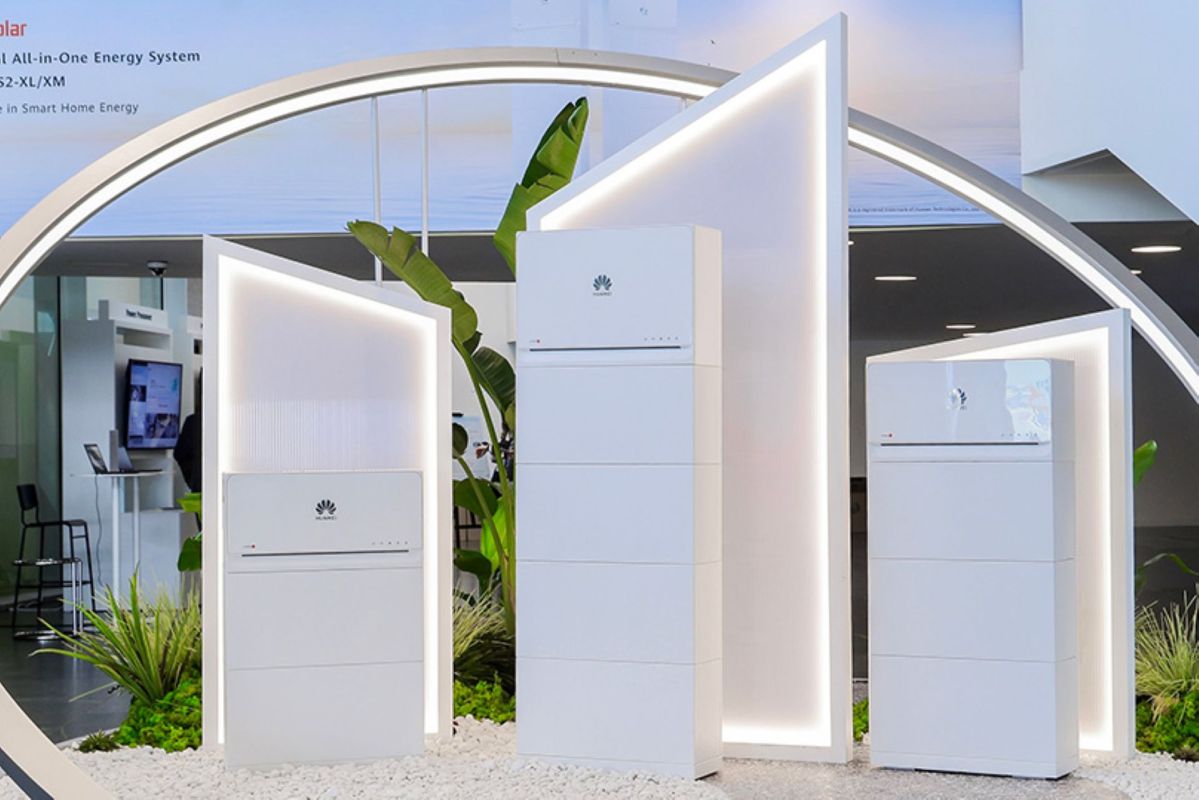
Homeowners can scale Huawei's new Luterra S2 from 5 kilowatt-hours of storage to 336 kWh by linking systems. The home battery aims to offer more flexibility for keeping the lights on during an outage.
Here's what to know
According to Electrek, single-phase models deliver 3 to 10 kilowatts, while three-phase models provide up to 20 kW. The system pairs a hybrid inverter and battery modules with artificial intelligence-based energy controls in a stackable design.
Homeowners can add modular 7 kWh lithium iron phosphate battery packs when they need more storage. The entry configuration supplies 3 kW of power to keep household essentials running during outages.
For homeowners exploring battery products and comparing competitive installation estimates, EnergySage offers a way to weigh options before committing to a system.
EnergySage has also partnered with electrification company Qmerit, with the stated goal of helping homeowners secure the best available battery-storage pricing — a useful consideration when comparing a modest backup setup with a larger installation.
More background
Huawei said the Luterra S2 takes only minutes to set up and commission. The design centers on the company's proprietary full-silicon carbide architecture, which it credits with improving efficiency and power density.
The system is rated to operate in ambient temperatures from minus 13 degrees Fahrenheit (minus 25 degrees Celsius) to about 140 degrees Fahrenheit (60 degrees Celsius). Huawei uses passive cooling without external fans, and said operating noise remains below 29 decibels.
For protection against the elements, the Luterra S2 has an IP66-rated enclosure and C5-M-level corrosion resistance, according to Electrek. Homeowners seeking greater power output can also connect three 20 kW inverter units in parallel for a combined 60 kW.
Crushed by your bills? See instant solar savings from vetted installers in just a few clicks With energy prices through the roof, there's never been a better time to go solar — and EasyHome can help you find the best prices from the best installers in your area. EasyHome takes the guesswork and headaches out of energy upgrades by showing you estimated savings from a network of vetted local partners. To get started, just enter your ZIP and share a few details about your home — seeing your estimate is really that easy. |

What can be done?
Stored electricity can help households rely less on the grid and potentially lower their electricity bills by letting them use more of their own solar power. With a suitably designed setup, the system can also support off-grid use.
For those seeking a smaller commitment, Pila is another battery backup option. Its plug-and-play format offers a substantially lower-priced alternative to whole-home backup systems.
Electrek reported that the Luterra S2 is unlikely to reach the United States.
Steve Zhang, president of Huawei Distributed PV & BESS Business, outlined the goals behind the new design.
Zhang said, "By combining full-SiC architecture, AI-driven energy management, and industry-leading safety, Luterra S2 is designed to be smaller, lighter, quieter, safer, smarter and more powerful than ever before."

Get TCD's free newsletters for easy tips, smart advice, and a chance to earn $5,000 toward home upgrades. To see more stories like this one, change your Google preferences here.






