


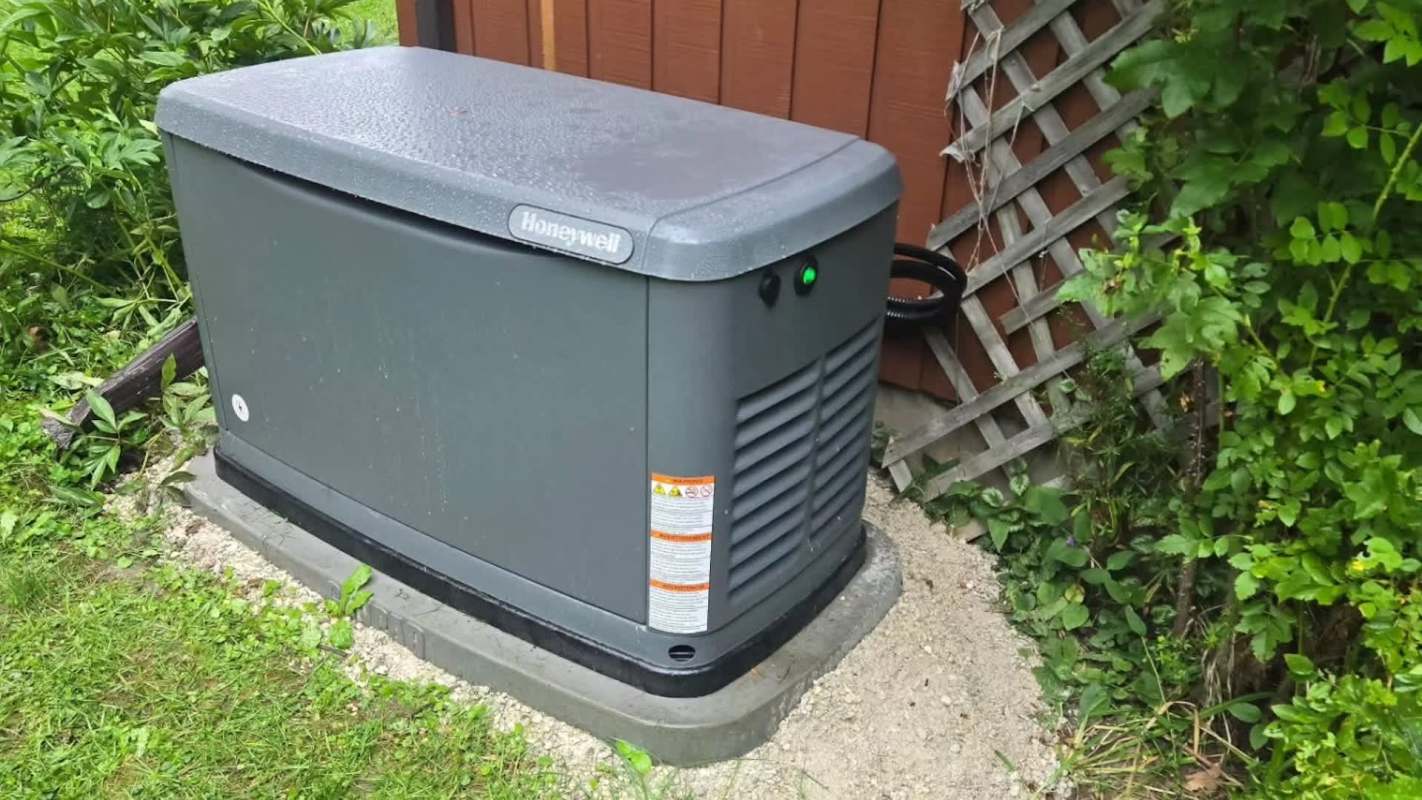
A homeowner who spent $12,016 on a Honeywell 22-kilowatt whole-home standby generator said the system has already carried a full house through four utility outages — the kind of real-world performance many buyers struggle to find beyond spec sheets and sales pitches.
Here's what to know
In a Reddit post, the homeowner said they installed a Honeywell model G00723510 in August 2024 and later shared invoice details and operating notes. The final cost came to $12,016, covering the unit, transfer switch, concrete pad, propane line, and labor.
A short delay in how the house comes back online appears to be part of the design. The homeowner said the generator usually starts about five seconds after utility power drops, but the whole-house transfer switch does not restore every circuit at once. Air conditioning comes back around 30 to 45 seconds later, which the OP said is intentional load management rather than a malfunction.
The homeowner reported four real outages, and the unit "started and carried the full house load (including AC) every single time, for the full duration until utility power returned."
More background
Price was a major reason the buyer chose Honeywell over Generac-branded equipment. The OP said the Honeywell unit uses Generac-sourced engine and generator hardware — "same core hardware as a comparable Generac-branded unit" — but was available locally at close to half the price.
The owner said the installed cost totaled $12,016, while a comparable Generac-branded setup in the same area would have been roughly twice as expensive.
TCD Picks » Quince Spotlight
💡These best-sellers from Quince deliver affordable, sustainable luxury for all




Maintenance moved to an hours-based schedule after a 25-hour break-in oil change. The system is monitored through Generac's MobileLink app, which displays weekly self-test status, run hours, Wi-Fi signal, and warranty details.
What can be done?
One lesson is to ask for every charge to be broken out. The homeowner said people in the thread questioned an earlier rounded estimate, which led to a review of the invoices and an updated total of $12,016 instead of the rougher figure first mentioned.
It also helps to verify what the quoted equipment price actually includes. Here, the generator itself — with the transfer switch included — cost $5,500, while the post listed $3,750 for electrical installation and labor before concrete-pad and propane-line expenses pushed the total higher.
Another useful question for installers is how they restore large appliances after an outage. In this case, the AC didn't come back on for 30 to 45 seconds after the generator started, showing that staged load management can be normal and doesn't necessarily mean the home failed to transfer correctly.
On propane, the system used a 250-gallon tank, and the homeowner expected about five days of runtime at partial load.
For this homeowner, the appeal was reliable backup power without paying more for a better-known nameplate: "Didn't make sense to me to pay double for the badge on the same internals."
Where can I learn more?
If you're comparing standby generators with other outage options, these articles look at whole-home batteries, solar-backed resilience, and generator safety during outages.
• Energy experts say backup solar can deliver quiet home power that traditional generators cannot.
• Installers now see more families choosing home backup batteries instead of replacing aging generators.
• After Hurricane Beryl, doctors warned that carbon monoxide from generators can turn outages deadly.
• Families replacing gasoline units found home batteries offered safer backup without fumes or refueling.

Get TCD's free newsletters for easy tips, smart advice, and a chance to earn $5,000 toward home upgrades. To see more stories like this one, change your Google preferences here.






