


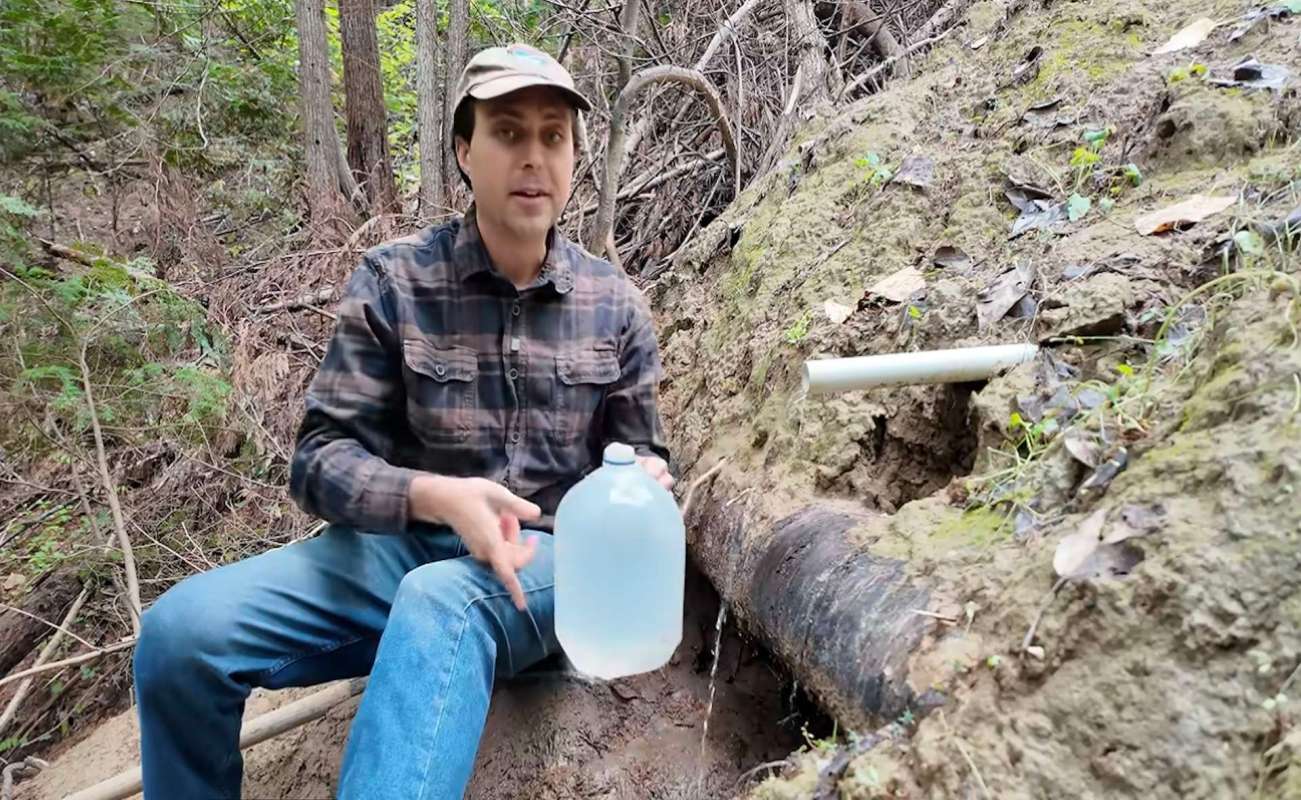
Digging a hole for a buried water tank turned into something much bigger for one off-grid family: the discovery of a spring that could refill the system without relying on a drilled well or pump power.
Here's what to know
In a YouTube video, The Ready Life (@TheReadyLife) documented how that surprise find became a gravity-fed water setup.
The project centers on installing a 1,700-gallon cistern for the homestead's water supply. But while digging the hole, water filled the excavation badly enough to bog down a 12,000-pound skid steer, shifting the job from a basic tank install into a spring discovery.
"What started with a 12,000-lb skid steer sinking into a flooded hole turned into the best water source on our homestead — no well, no power bill, just gravity doing the work day and night," the homesteaders wrote in the caption.
Instead of stopping with the original cistern, the The Ready Life expanded the project into a spring collection system. The posters said five separate springs now feed one tank using gravity alone, and that about one-third of a gallon per minute can still be useful if storage capacity is large enough.
More background
A water source does not need a high output to be valuable. If it runs steadily and the water is stored, even a modest flow can accumulate into a meaningful amount over the course of a day.
TCD Picks » Quince Spotlight
💡These best-sellers from Quince deliver affordable, sustainable luxury for all




A setup like this can only be created where there's a natural water supply to feed it. Not every property has accessible springs, the right elevation and slope, or the right soil conditions for a buried tank. Excavation, plumbing, water testing, and ongoing maintenance also add cost and complexity.
Avoiding pump electricity, reducing reliance on hauled water, and maintaining a backup source during outages can all help lower stress and trim ongoing expenses.
One commenter wrote, "I have a similar system. I have two tanks about that size. Its been in use at least 45 years."
What can be done?
Having a successful backup water supply is less about copying this exact off-grid build than about planning out water storage, supply, and how much water a household actually needs.
In some places, that could mean exploring rainwater capture, adding emergency storage, fixing leaks, or using gravity where the landscape allows. In others, it may mean sticking with a conventional well or municipal service while building a smaller backup system.
Anyone considering a spring, cistern, or catchment setup should also check local regulations and prioritize water quality testing. The video itself shows why. The posters said there was "a silt problem that almost ruined the whole system," and natural water sources still require proper collection and filtration planning.
The same lesson applies outside rural areas. Water resilience does not have to mean going fully off-grid; even a modest reserve can make a difference when service is disrupted.
As one commenter put it, "Having a backup water supply is essential to city dwellers as well as country folk. Having a backup to your backup is next level and helps you sleep at night."
Where can I learn more?
A setup like this is one piece of the larger off-grid puzzle, where water, power, and storage must work together. These articles explore how other homeowners approach solar choices, winter energy use, and daily routines when standard utility service isn't a given.
• One off-grid homeowner turned to Reddit for advice on solar panels after realizing there was plenty left to learn.
• After two years off-grid, one homeowner showed solar still works in winter despite a common seasonal myth.
• One family living off-grid said meal planning and battery discipline helped stretch power and heating costs.
Across all three, resilience comes from layering practical systems and habits over time. The mindset behind a gravity-fed backup water setup often carries over to power, heat, and everyday household routines.

Get TCD's free newsletters for easy tips, smart advice, and a chance to earn $5,000 toward home upgrades. To see more stories like this one, change your Google preferences here.






