


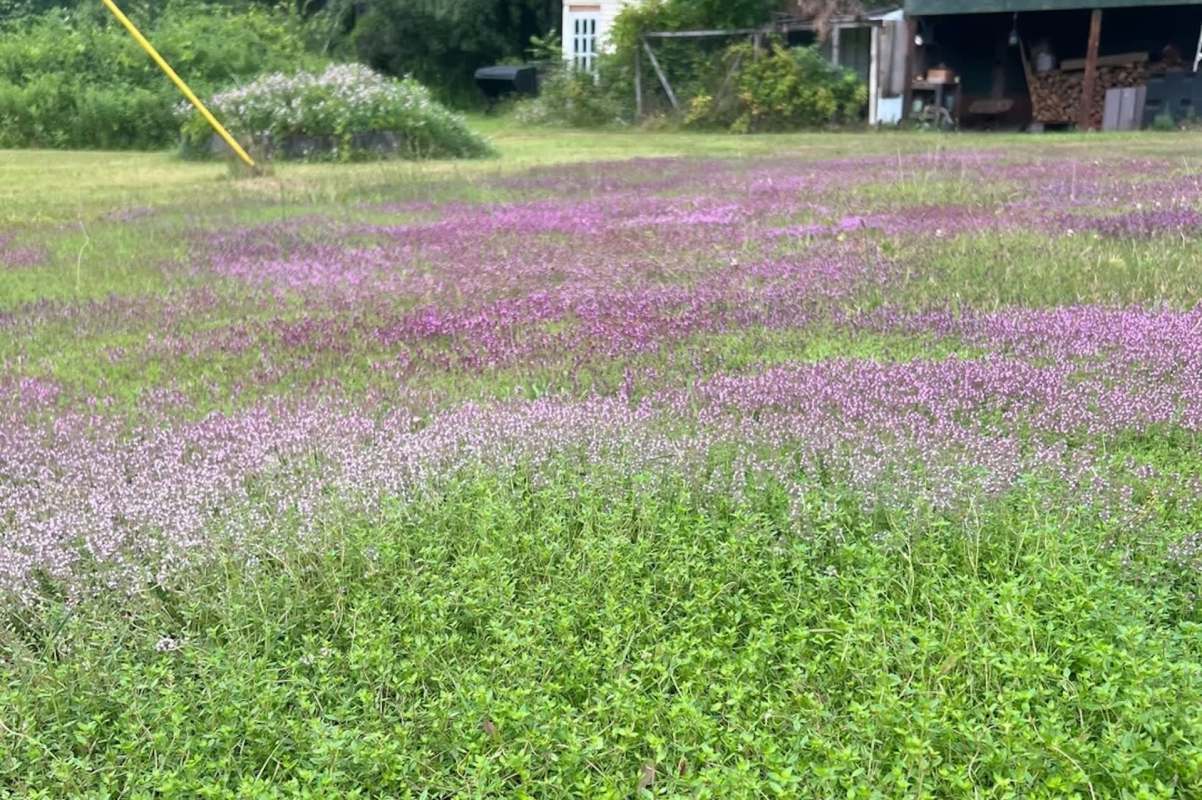
A homesteader's simple yard photo is getting thousands of people excited about this softer, lower-maintenance alternative to turf grass.
Instead of a uniform green lawn, this yard is filled in with flowering thyme, and plenty of readers are tempted to give it a try themselves.
What's happening?
According to Reddit, a homeowner's photo post in r/homestead picked up more than 5,000 upvotes and 500 comments.
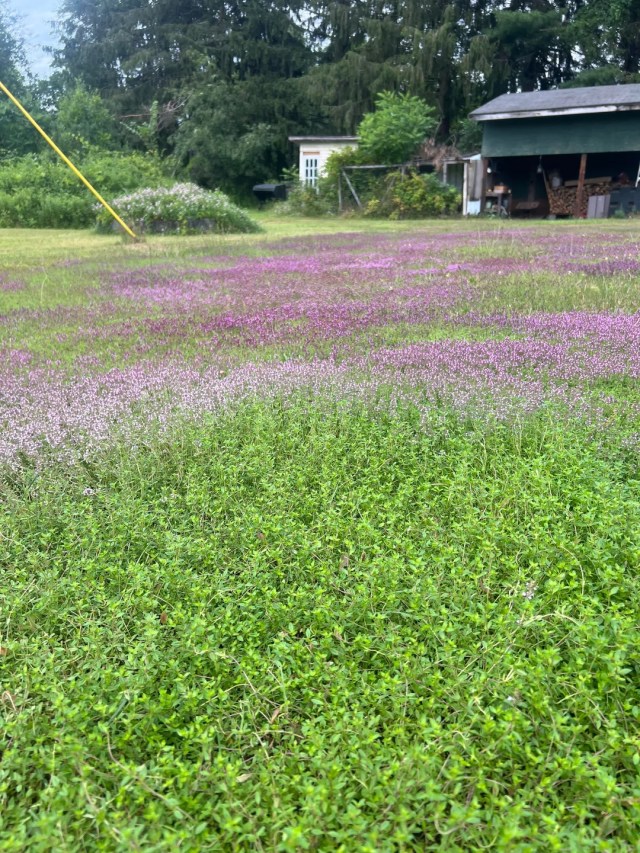
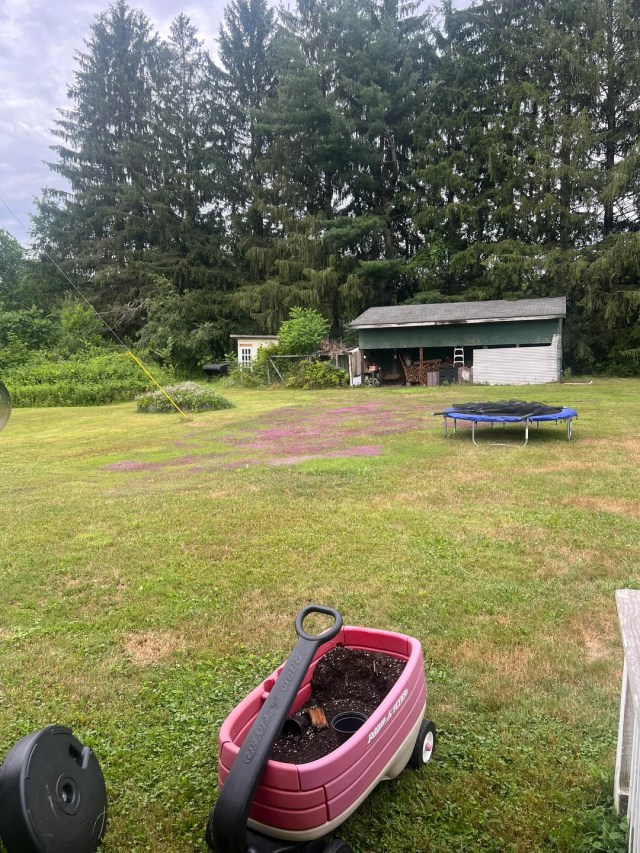
As a yard plant, flowering thyme offers several advantages: It stays low, handles light foot traffic, smells great, produces blooms that pollinators enjoy, and can even be harvested for cooking.
Many Reddit users were amazed by the sight of the vast field of thyme. One user offered a tasty use for it in a sarcastic joke: "Oh no my yard smells amazing and tastes great on chicken! What ever shall I do?"
Another user asked, "How do I make this happen permanently? I have a large pot of thyme growing profusely! I'm in Michigan though." The original poster answered that it's quite simple: "Just plant it everywhere and forget about it, after a year or so you will see thyme all over."
TCD Picks » Quince Spotlight
💡These best-sellers from Quince deliver affordable, sustainable luxury for all




Why does it matter?
The reaction to the post reflects a broader rethink of whether a conventional grass lawn is really worth the cost and labor.
Traditional lawns can require frequent mowing, regular watering, fertilizers, and other maintenance that eats up both time and money.
Replacing even part of a yard with low-maintenance alternatives can help reduce those demands. Native-plant lawns in particular can save homeowners money on upkeep, lower water bills, and reduce the amount of time spent maintaining a yard.
They can also create better habitat for birds, bees, and butterflies than standard turf.
Thyme is just one option, and it is not native in many parts of the United States, so it will not be the best ecological fit everywhere.
Many homeowners are searching for landscapes that are easier to maintain while putting less strain on local resources.
The Cool Down has also covered homeowners replacing turf with clover lawns and embracing xeriscaping, with low-water, low-effort yards catching on beyond one Reddit thread.
What can I do?
There are plenty of practical ways to move in that direction.
Homeowners can consider native plants, clover, buffalo grass, or xeriscaping, depending on climate, sun exposure, and how they use the space.
A full lawn replacement is not the only path. Even replacing a section of turf — along borders, under trees, on slopes, or in spots that never grow well anyway — can reduce mowing, shrink water use, and make a yard more resilient.
The TCD Guide has pages on upgrading to a natural lawn and rewilding your yard with more tips and discussion from other readers.
A yard does not have to look conventional to be useful or attractive.
In many cases, a less manicured landscape can save money, save time, and offer both more colorful plant life and animal life in return — as one commenter put it, "Bees absolutely love thyme flowers."

Get TCD's free newsletters for easy tips, smart advice, and a chance to earn $5,000 toward home upgrades. To see more stories like this one, change your Google preferences here.






