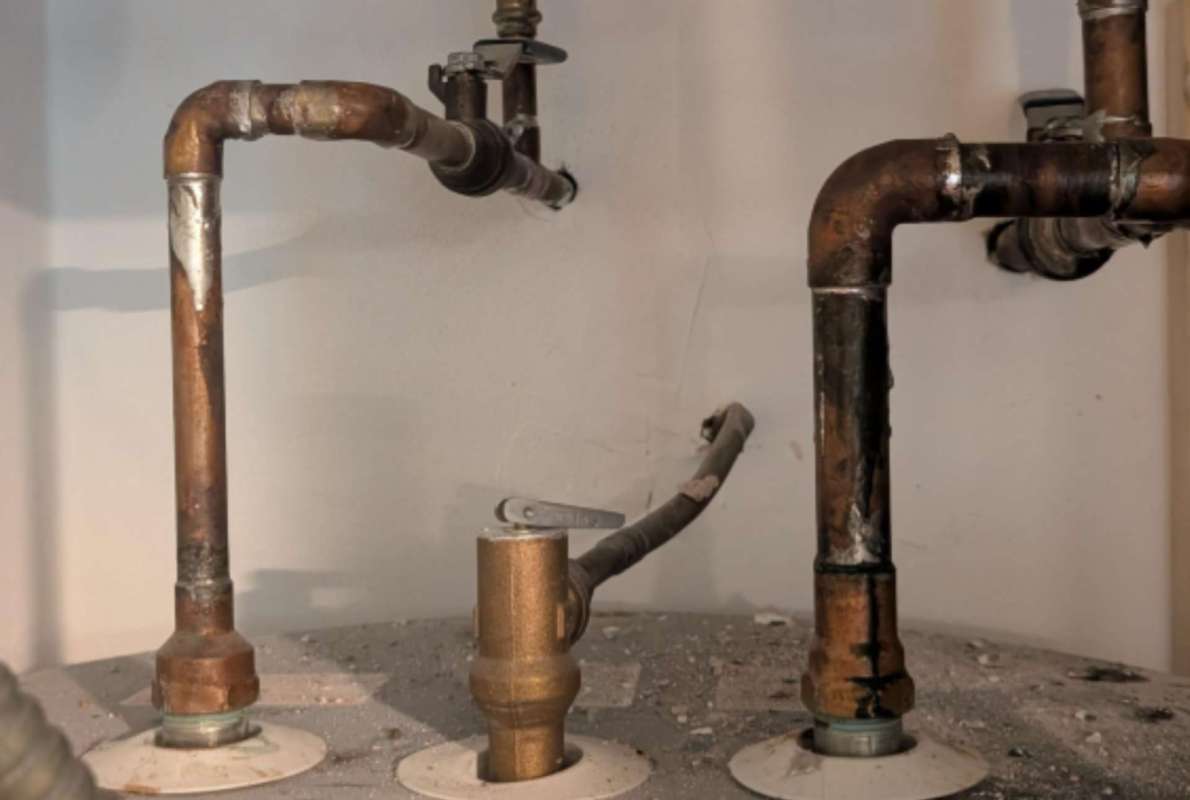
A homeowner preparing for a seemingly simple upgrade to an aging water heater uncovered a bigger issue than expected.
The old line tied to the tank's pressure-relief valve was not a safe shortcut for draining condensate from a new heat pump model. A small detail to some, but after the owner posted the image to a plumbing forum on Reddit, many experienced professionals told them that line was illegal and unsafe.
Moving from a conventional electric water heater to a heat pump model can reduce energy consumption and trim utility costs. Those benefits, however, can be offset when the drainage details are handled incorrectly during installation.
Here's what to know
On the r/plumbing thread on Reddit, a homeowner said they were removing an 18-year-old, 30-gallon Rheem 82SV30-2 and replacing it with a Geospring heat pump water heater. After noticing that the old tank's pressure-relief valve fed a line that vanished into the wall, they asked, "Can I use this line as a condensation drain instead of running a new line through the attic?"
The answer was no.
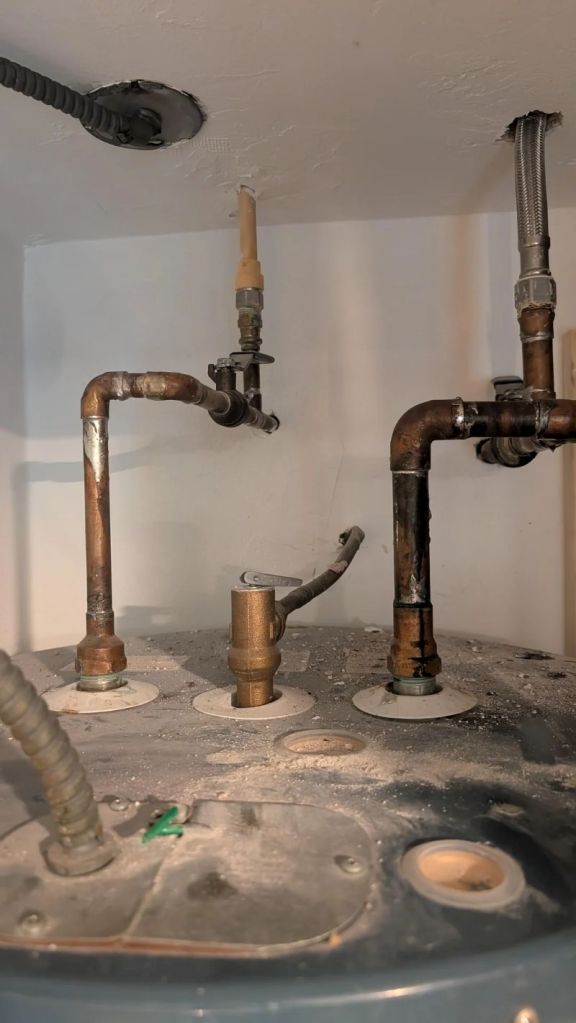
Replies focused on safety and code concerns. One commenter wrote, "That line isn't legal because it goes uphill, it's undersized, and it appears to be kinked." Another said, "The temperature and pressure relief valve should've never been piped out of the room."
That same commenter noted that the replacement unit would need its own temperature-and-pressure relief valve and advised the poster to "make sure to have a drain pan installed underneath of your water heater."
The condensate would normally need its own route and, if necessary, a pump, while the relief-valve discharge should not be repurposed for that job.
Save $10,000 on solar panels without even sharing your phone number Want to go solar but not sure who to trust? EnergySage has your back with free and transparent quotes from fully vetted providers in your area. To get started, just answer a few questions about your home — no phone number required. Within a day or two, EnergySage will email you the best options for your needs, and their expert advisers can help you compare quotes and pick a winner. Solar panels can save you more than $50k over their 25-year lifespan, and EnergySage can help you save as much as $10k on installation. Which begs the question — isn't that worth an email or two? |

More background
Unlike traditional electric resistance tanks, heat pump water heaters create condensate. That happens because they draw heat from the surrounding air, in a process similar to what a dehumidifier or air conditioner does.
The temperature-and-pressure relief valve serves as a safety mechanism that releases water in dangerous conditions, which is why its discharge line is not a substitute for condensate drainage. A line that is kinked, too small, or improperly routed can raise code concerns and also hide a more serious safety issue.
A water heater promises to lower electric bills, but previous installations may call for added planning around condensate removal, a drain pan, and a proper discharge path to protect both the appliance and the home.
What can be done?
Before installation begins, one useful step is to have the installer explain these points: where the condensate will drain, where the temperature-and-pressure relief valve will discharge, and whether local code or standard practice calls for a drain pan in that location.
A condensate pump may be needed when gravity drainage is not an option. Keeping the condensate line separate from the safety discharge helps each one function as intended.
The original poster, in the end, appeared to accept a different approach, writing, "I will drop the pressure relief line into the drain pan."

Get TCD's free newsletters for easy tips, smart advice, and a chance to earn $5,000 toward home upgrades. To see more stories like this one, change your Google preferences here.