


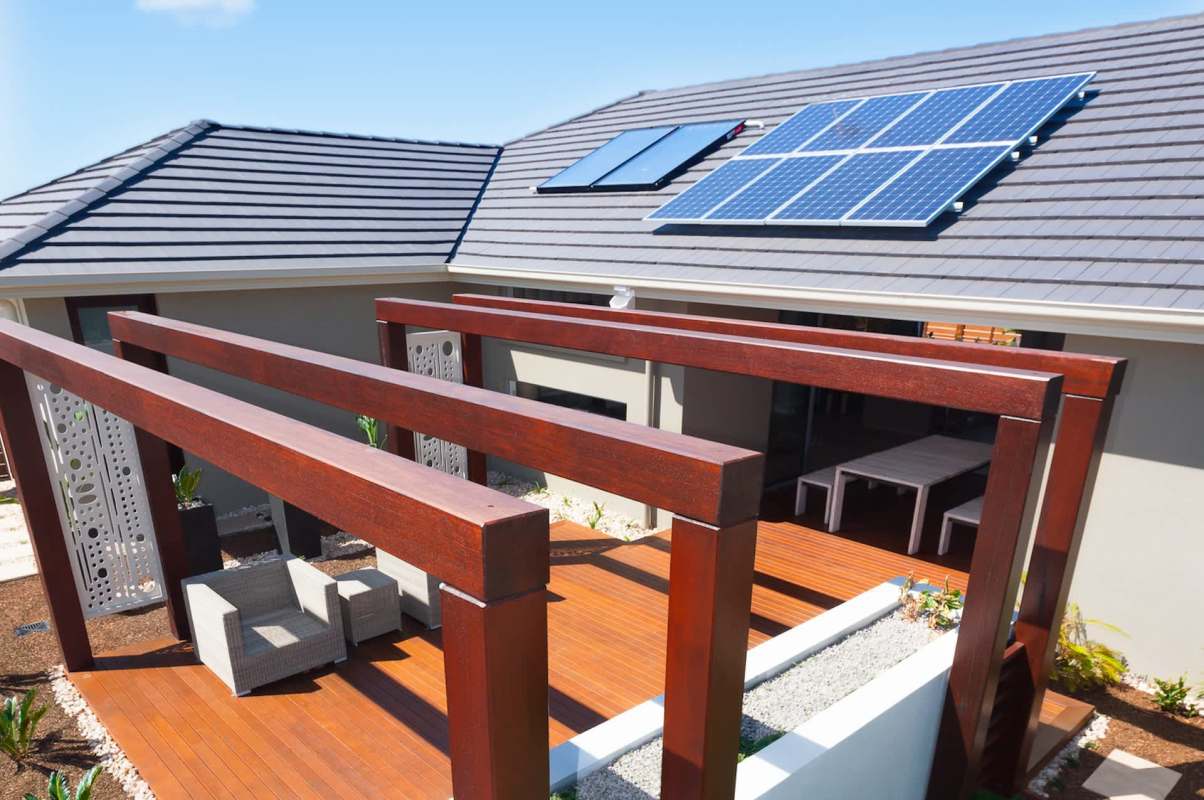
A homeowner's patio-roof solar panels have produced about 10 megawatt-hours of electricity over two years, helping power everyday essentials through a battery system that runs around the clock.
The 10-panel setup sometimes generates more electricity in summer than its batteries can even hold.
Here's what to know
In a Reddit post, the homeowner described connecting an EcoFlow DPU battery system to a manual transfer panel. The arrangement supplies a refrigerator and hybrid water heater, along with televisions, Wi-Fi, and indoor and outdoor lighting.
The system has two batteries and uses an outlet connection to recharge whenever it drops below 10%. The batteries have cycled between roughly 10% and 90% charge almost every day, per the original poster.
The homeowner estimated that about 3 to 4 kilowatt-hours of potential generation is lost when the batteries are full. That leaves some of the panels' summer output unused.
More background
An uninterruptible power supply keeps electricity available when grid service fails, which is what the homeowner meant by describing the protection as "UPS style." The system therefore serves as an outage backup and an everyday power source.
TCD Picks » Quince Spotlight
💡These best-sellers from Quince deliver affordable, sustainable luxury for all




"Awesome set up which gives my whole house UPS style back up and power during outages," the original poster assessed.
For broader backup coverage, the homeowner said they can manually connect the system through a generator inlet to supply the whole electrical panel, including a 3-ton air conditioner. They also pair the setup with a 3,600-watt inverter generator and keep 100 gallons of propane on hand to sustain a lengthy outage.
Commenters raised another consideration in the electricity needed to run the inverter itself.
While estimates varied, one owner reported measuring about 40 watts at idle, with fluctuations no higher than 50 watts. That operating demand was also a purchase consideration for another commenter using a Delta Pro 3.
What can be done?
Other users shared how they were using their existing systems and were trying to optimize them like the original poster.
One commenter reported powering their entire house for a year using a DPU, an SHP2 panel, and solar panels, while also experiencing issues.
They also expressed frustration with software that displayed savings in euros despite their rate settings and said they were dissatisfied with support. As for solar generation, the owner used the low-voltage input as needed in winter while keeping the high-voltage input maximized year-round.
Another commenter described a seasonal lake house in northern Minnesota equipped with 10 solar panels rated at 585 watts each, reporting $68 in savings. Their next steps were to address two large pine trees shading the panels and add another battery, aiming to make the house mostly independent of the grid.
For the OP, they were very pleased with their setup, and the only missing piece might be additional battery capacity to avoid wasting excess solar generation.
"Overall super impressed with the system that's been running non stop, 10% to 90% basically everyday for 2 years," they concluded.
Where can I learn more?
Other homeowners have put solar panels and batteries to work running their homes and cutting grid use.
• In the U.K., a homeowner's solar-and-battery setup generated 1 megawatt-hour in its first month.
• A homeowner's Guardian 6000 powered two-thirds of the house before two weaknesses emerged.
• A California homeowner's 52-panel off-grid system powers two EVs, air conditioning, and a well.

Get TCD's free newsletters for easy tips, smart advice, and a chance to earn $5,000 toward home upgrades. To see more stories like this one, change your Google preferences here.






