


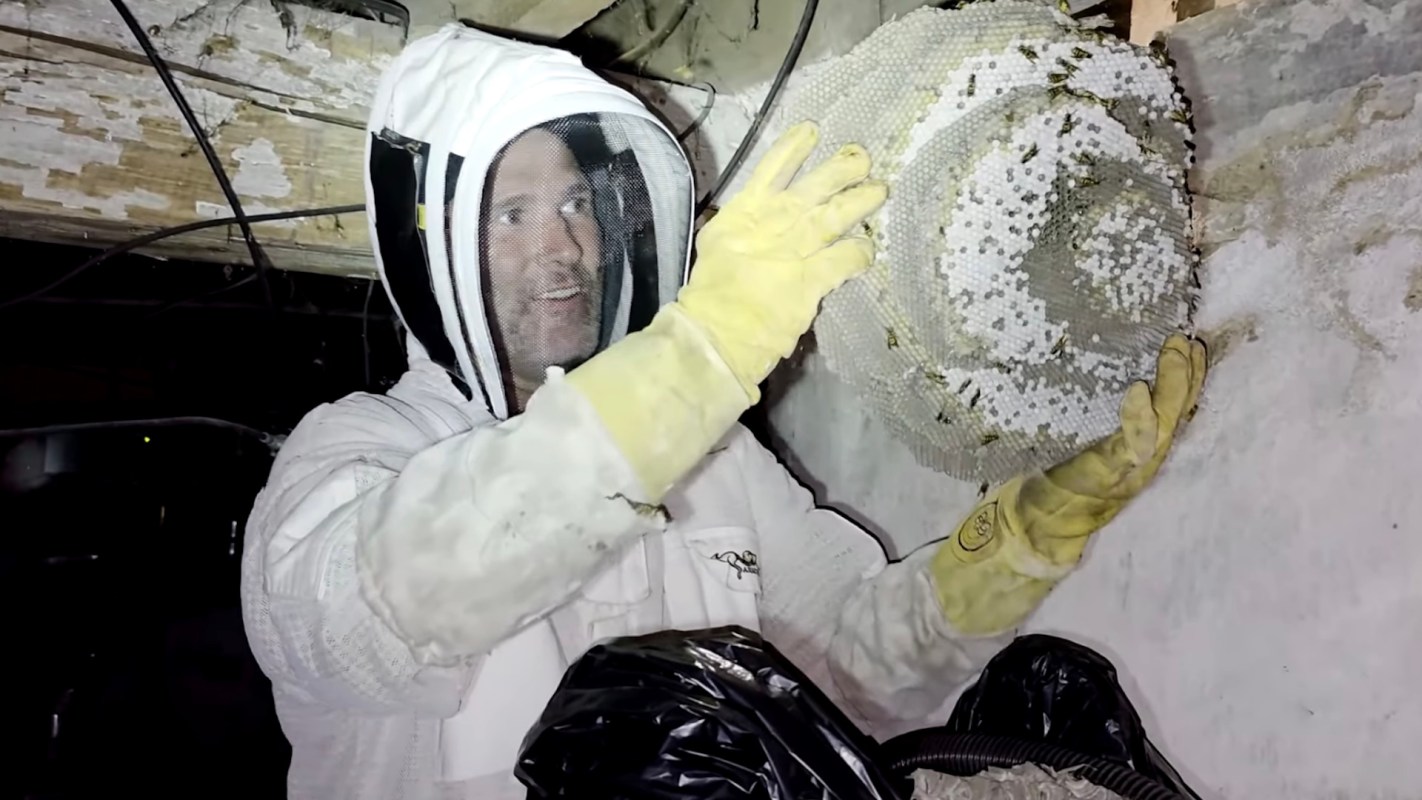
A homeowner's basement became the site of a much larger infestation than expected when a yellow jacket problem turned out to be a huge indoor supernest.
What happened?
On YouTube, the creator known as The Hornet King (@HornetKingOfficial) posted a video of the entire process.
After entering the confined area, the remover said he found what he described as an "absolutely massive nest." He said the scale of the infestation in the house meant that "When your basement is filled with yellow jackets, you might have a supernest!"
The insects were identified as German yellow jackets, a species known for building paper nests and becoming aggressive when disturbed. In a basement or crawlspace, people and pets can be just a wall or floor away from defensive insects.
Once the nest was out, he wrote, "I removed this nest for my client and fed the larvae and pupae to my animals!" He also said the wasps reacted during the job: "They were sensitive and ended up stinging me!"
While "supernest" is often used informally, it generally refers to an unusually large colony that has grown far beyond the small, more familiar nest many people picture hanging from an eave or tucked into a shrub.
TCD Picks » Quince Spotlight
💡These best-sellers from Quince deliver affordable, sustainable luxury for all




Why does it matter?
Yellow jackets are more than a nuisance. Unlike bees, they can sting repeatedly, and a hidden indoor colony increases the chances of accidental encounters in places people assume are safe, such as basements, utility rooms, and storage areas.
This type of conflict can also be traced in part to human activity. Houses create warm, dry, protected cavities that resemble the sheltered spaces wasps seek out in nature, while garbage, sugary drinks, pet food, and other easy food sources around homes can help sustain colonies. In some places, warmer conditions can also make unusually large nests more likely.
A concealed nest may lead to damaged walls or insulation, costly removal, and people avoiding part of the home until the insects are gone.
What can I do?
If you notice heavy yellow jacket activity indoors, especially around vents, wall gaps, or basement corners, it is best not to investigate too closely on your own. Large nests can become dangerous very quickly when disturbed.
Homeowners can reduce the risk by sealing cracks around foundations, keeping window screens in good condition, cleaning up food waste promptly, and making sure trash bins close tightly. Regularly checking less-used areas of the house during warmer months can also help catch a problem before it grows.
If you're trying to make your space less inviting to pests overall, practical green home upgrades such as better sealing and storage can help while improving comfort and efficiency.

Get TCD's free newsletters for easy tips, smart advice, and a chance to earn $5,000 toward home upgrades. To see more stories like this one, change your Google preferences here.






