


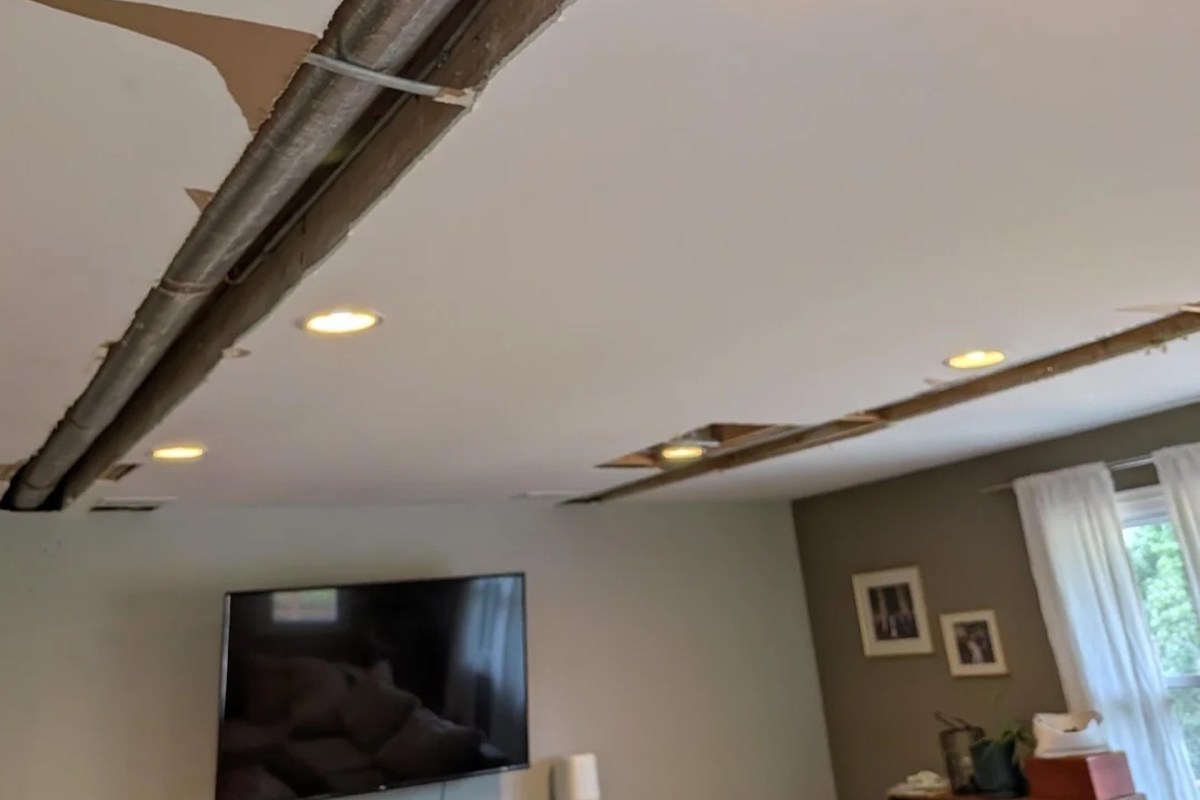
When a living room ceiling kept leaking condensation, one homeowner had the AC unit and furnace looked at by professionals, and everything checked out fine. After the leaks kept coming, they decided to open the drywall to inspect the ductwork.
Here's what to know
In a follow-up post on Reddit, the homeowner said the thing that stood out most was nails poking through the floorboards above, raising the possibility that the ducts had been punctured.
In the comment section, most replies instead suggested missing duct insulation, a common problem in older homes.
One commenter replied with just two words: "No insulation."
Another added, "There is no cavity or duct insulation here. If this is not a tightly built house, odds are heat and humidity are being sucked into every crevice of this house."
A separate set of comments focused on why the lack of insulation could lead to leaking, as one commenter explained, "The temperature of the pipe is lower than the dew point of the air around it." Put simply, moisture can collect when warm, humid air meets a much colder duct surface.
Left unchecked, duct condensation can damage drywall, promote mold, and make an air-conditioning system work harder than necessary.
Palmetto can help homeowners understand their HVAC options and slash their energy bills with new, efficient HVACs and heat pumps; its Comfort Plan network can help connect people with vetted installers.
Save $10,000 on solar panels without even sharing your phone number Want to go solar but not sure who to trust? EnergySage has your back with free and transparent quotes from fully vetted providers in your area. To get started, just answer a few questions about your home — no phone number required. Within a day or two, EnergySage will email you the best options for your needs, and their expert advisers can help you compare quotes and pick a winner. Solar panels can save you more than $50k over their 25-year lifespan, and EnergySage can help you save as much as $10k on installation. Which begs the question — isn't that worth an email or two? |

More background
Commenters said the ducts themselves are less likely to be the problem, but rather, if moist air is getting into the cavity around them, that could cause the condensation.
One wrote, "Humid air getting into that space between the floors will cause the condensation. That or the whole house is generally too humid due to air leaks."
Another commenter noted, "The temperature of the pipe is lower than the dew point of the air around it."
Air leakage like that can make an AC system less efficient, raising energy use while parts of the home still feel uncomfortable. Commenters also pointed to maintenance or design issues that can aggravate the situation, including dirty filters, restricted airflow, undersized ductwork, and a leaky building envelope.
What can be done?
A practical starting point is to inspect the insulation, look for openings where hot outdoor air could be entering, keep an eye on indoor humidity, and make sure vents and filters are not choking airflow.
One commenter said it would help to measure airflow and supply air temperatures.
For households considering a larger upgrade, Palmetto's Comfort Plan includes $0-down options that can lower heating and cooling costs by up to 50%, plus 12 years of free maintenance. That can make it easier to replace aging equipment with efficient electric HVACs or heat pumps without a large upfront hit.
Homeowners can also pair solar panels with electric appliances, including efficient HVACs, to drive utility costs even lower. EnergySage makes it easy to find the best solar system and installer for your home and budget, with potential savings of up to $10,000 on installations.
One commenter summed it up in saying, "There is no other reason this duct would be sweating other than hot air and humidity making contact with it."
Where can I learn more?
For more on the kinds of issues that can make a home feel muggy, unevenly cooled, or expensive to run, these stories dig into attic ventilation, air leaks, humidity control, hidden HVAC leaks, and how central air moves through a house.
• A contractor says a simple attic fan can keep upper rooms cooler in summer.
• A home energy audit can uncover invisible air leaks that quietly drive up bills.
• A new homeowner found a hidden HVAC leak after damp carpet signaled trouble.

Get TCD's free newsletters for easy tips, smart advice, and a chance to earn $5,000 toward home upgrades. To see more stories like this one, change your Google preferences here.






