


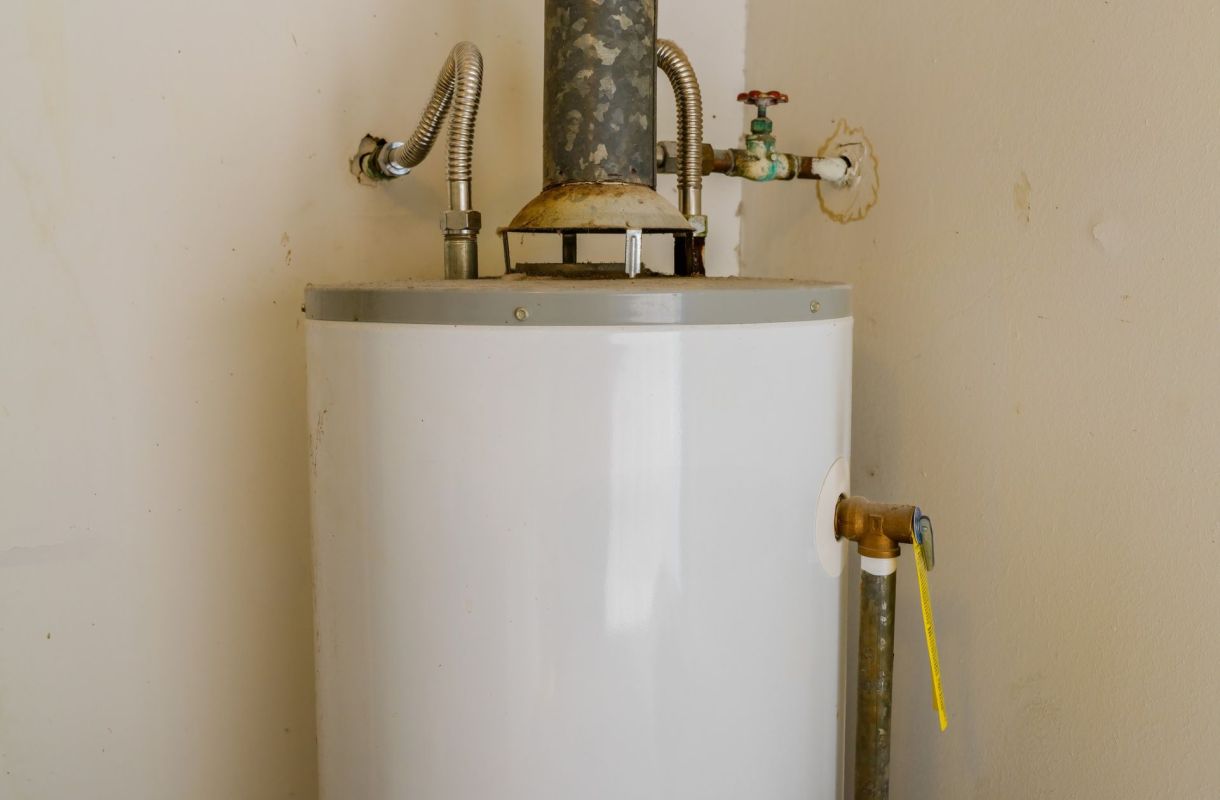
A homeowner deciding between a larger tank and tankless said a new 75-gallon setup was quoted at $4,200, with tankless priced even higher.
Their dilemma sparked a wide range of responses on the r/HomeImprovement subreddit, with several commenters pointing to pros and cons of the numerous options.
Here's what to know
The Reddit thread explored the sticker shock. The homeowner said their previous 50-gallon Rheem "cost us $1600 installed - 7 years ago," but their family needs more capacity.
They said one quote came in at "$4200 for a 75gal Bradford unit requiring metal fireplace chute (not pvc)," and that "it would be an extra $1500 to $2000 for a wall mounted gas unit."
For some commenters, the first question wasn't tank versus tankless, but how the home actually uses hot water.
"A large, high powered tank is the highest performance option," a user declared. "Are baths common? Multiple simultaneous showers?"
One reply came from a family of four with two teens, who said their wall-mounted gas heater is generally fine for routine demand but becomes "less than ideal when 2 people want to use 2 different showers at once."
Others pointed out that installation details can matter as much as the appliance choice. One commenter said gas instant heaters "are on the loud side" and added that they may need "a larger supply pipe and service," which could push the project price up further.
Crushed by your bills? See instant solar savings from vetted installers in just a few clicks With energy prices through the roof, there's never been a better time to go solar — and EasyHome can help you find the best prices from the best installers in your area. EasyHome takes the guesswork and headaches out of energy upgrades by showing you estimated savings from a network of vetted local partners. To get started, just enter your ZIP and share a few details about your home — seeing your estimate is really that easy. |

"Have you considered a heat pump water heater?" a user asked.
Upgrading to a heat pump water heater can lower a homeowner's energy bills, so a replacement decision involves more than the upfront cost.
More background
Several replies suggested looking closely at everything wrapped into the quote, not just the heater itself. One commenter specifically asked whether the $4,200 price included venting "all the way to the roof."
Some people liked tankless for the promise of effectively unlimited hot water, but they also warned that convenience can vary. As one commenter noted, the delay before hot water arrives may have less to do with tankless equipment than with "the size of house and how it's plumbed."
Not every tankless owner was sold. One commenter said they switched back to a tank after dealing with recirculation issues and one practical drawback: "Tankless units need a minimum flow rate to fire up."
What can be done?
Across the thread, the most consistent advice was to size the system around actual demand patterns. Households that regularly run baths or multiple showers at the same time were repeatedly steered toward a bigger tank or a high-recovery model.
Commenters also pushed back on treating the first estimate as the final word. One described the extra charge for the wall-mounted unit as "steep," and another advised: "I'd get at least 1 more quote."
For homeowners comparing all their options, Cala makes smart heat pump water heaters. Cala's customizable smart heat pump water heaters can help homeowners lower energy bills by heating water exactly when they need it.
For households focused on operating costs as much as shower capacity, Cala offers another option to weigh alongside tank and tankless quotes.
Where can I learn more?
If you're comparing bigger tanks, tankless systems, and heat pump replacements, the same trade-offs homeowners were debating in the thread often pop up.
• A homeowner replacing a corroded gas unit found tankless is tempting despite the higher price.
• Many households find tankless water heaters save space but demand more upfront planning.
• Some homeowners switching systems learned how much money efficient tankless units can save.
• One homeowner discovered showers go weak when a tankless unit shares demand with flushing toilets.

Get TCD's free newsletters for easy tips, smart advice, and a chance to earn $5,000 toward home upgrades. To see more stories like this one, change your Google preferences here.






