


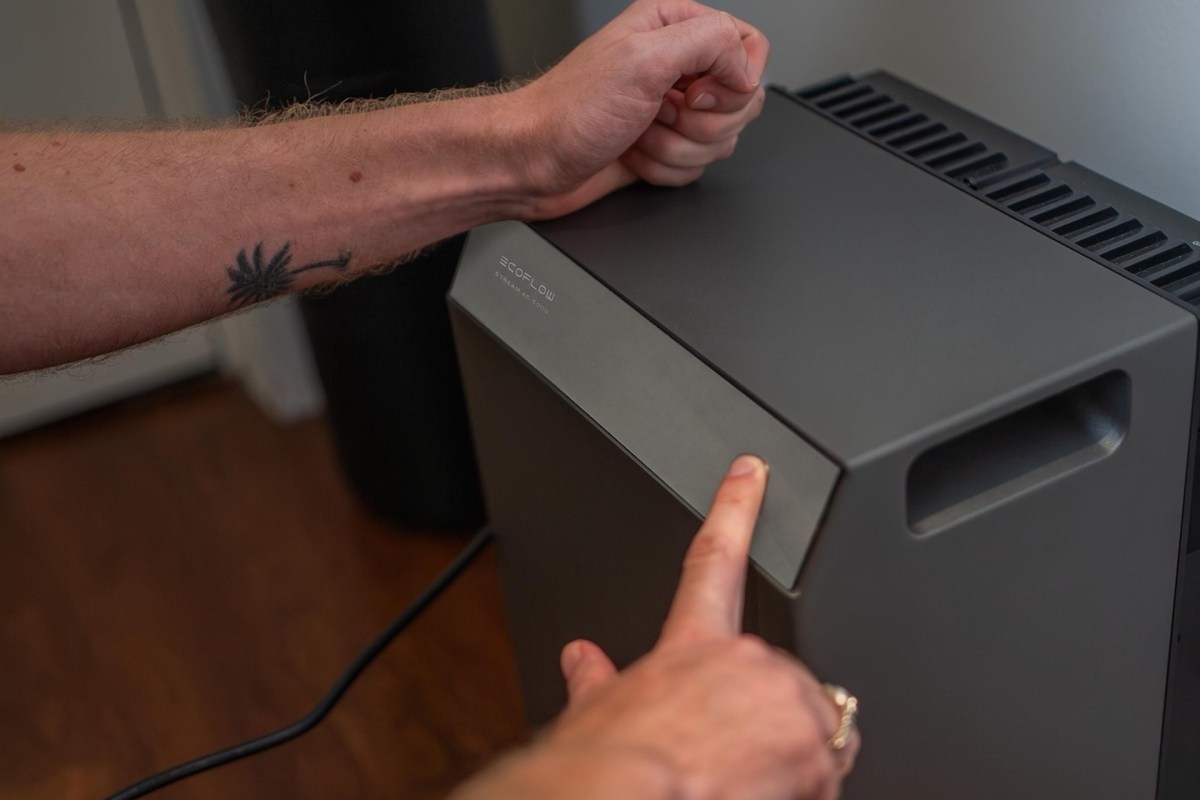
For UK households trying to get more value from off-peak electricity, a home battery can sound like a straightforward way to save money. You charge it during cheap overnight hours, then use that stored power when rates rise.
At least, that's what one homeowner using Octopus Go was questioning on Reddit. They wondered how much an EcoFlow Stream AC 5000 could actually deliver after a five-hour overnight charge, and said they were still calculating the repayment period.
Here's what to know
The original poster said they did not have solar panels and were simply asking what a battery could do through tariff arbitrage alone.
"I have Octopus Go which gives me cheap rate electricity for 5 hours overnight (I have no solar)," they wrote. "If i charge the battery at night for 5 hours, roughly how much power will I have to use during the day?"
"You'll easily be able to charge it all the way up in 5 hours, so depending on what charge and discharge limits you set, if you're not too conservative with them then probably around 4.5kWh," one responder explained.
The responder also added that the system works best when paired with EcoFlow's own smart meter add-on, not just the Octopus smart meter many UK households already have. They said that extra device lets the battery follow the home's real-time demand and discharge in a way that avoids sending power back to the grid.
TCD Picks » Quince Spotlight
💡These best-sellers from Quince deliver affordable, sustainable luxury for all




Overall, the results seem to depend largely on how the unit is set up. It can be arranged to charge in cheaper periods and discharge later, but whether that happens automatically or through manual scheduling depends on the tariff and the app's available options.
What can be done?
Payback depends on the off-peak rate, the battery's usable capacity, and the round-trip efficiency compared with a standard flat tariff — not just the highest peak prices.
Whether the battery can handle charge and discharge timing on its own, or needs fixed schedules set by the user, may depend on how well the app integrates with the tariff.
Installation costs also affect payback.
Where can I learn more?
Because a battery's payback hinges on tariff gaps, charging losses, and installation costs, it helps to look at other ways to cut an electric bill too. Utility incentives and everyday efficiency tweaks can change the math for households comparing off-peak charging with simpler upgrades.
• In Vermont, utility companies are giving away money-saving appliances to lower household demand.
• Homeowners are using a little-known AC hack with Nest-style smart thermostats to trim summer bills.
• Households are finding a surprisingly simple hack to cut standby power that quietly adds up.
• Energy experts say a simple swap from halogen bulbs to LEDs can slash waste.
That wider context matters when you're deciding whether a battery is worth the upfront cost. If a home can lock in meaningful savings through cheaper, simpler changes, it's easier to judge how strong the battery case really is.

Get TCD's free newsletters for easy tips, smart advice, and a chance to earn $5,000 toward home upgrades. To see more stories like this one, change your Google preferences here.






