


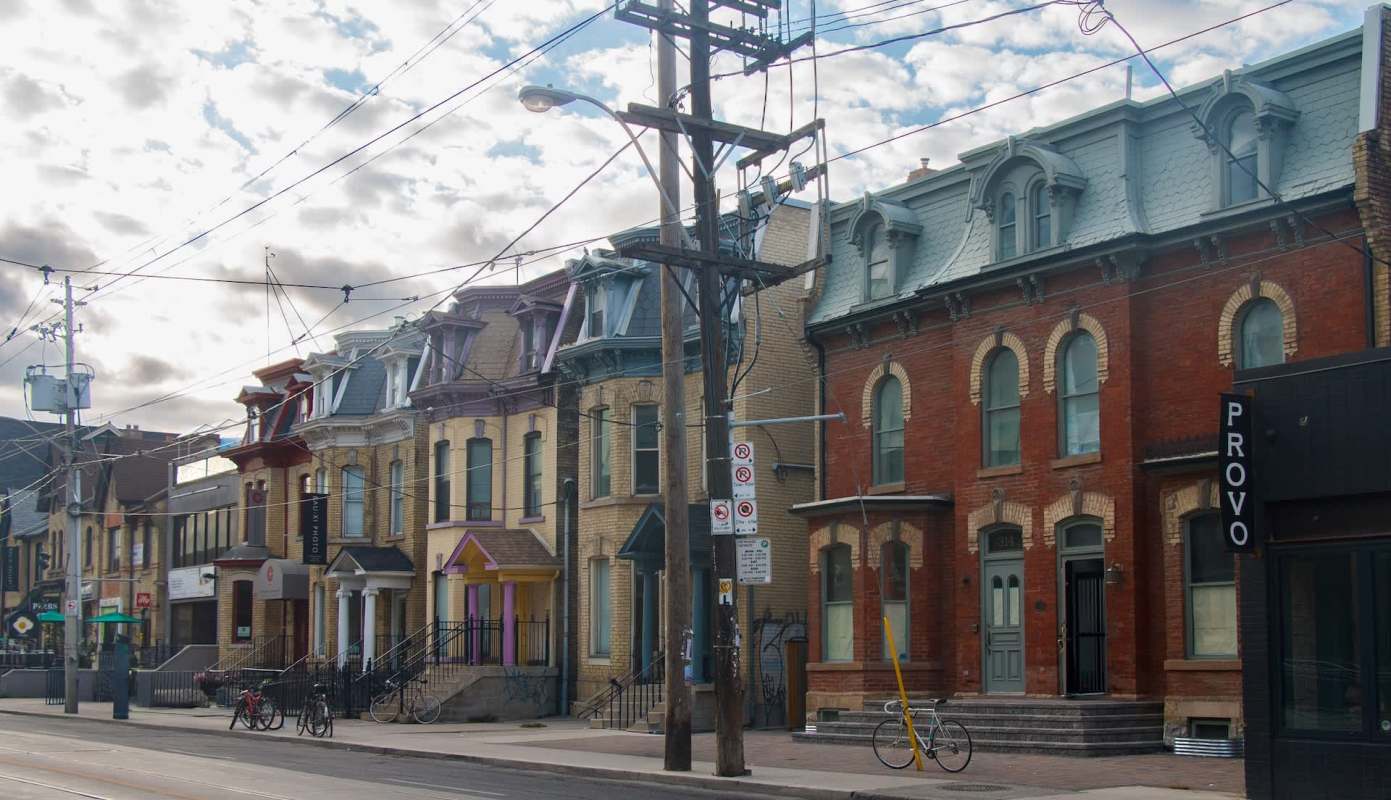
A 145-year-old house that has remained on Toronto's heritage register for about half a century is under threat as Hydro One pushes to expand power infrastructure near Kensington Market.
Here's what to know
According to CBC Toronto, Hydro One bought the 1881 property at 28-30 Cecil Street and says the building cannot be kept if the adjoining station is expanded. In a statement to the outlet, Hydro One said, "After nearly 50 years of operation, the station requires updated equipment and additional capacity to help maintain reliability and support the city's growing electricity needs."
Neighbors and tenants say that justification does little to ease their concerns about losing both housing and a historic building. George Traini, of the Baldwin Village Community Association, said, "What would at least be the best thing for the neighbourhood is if they kept the facade."
Being listed as a heritage property in Toronto does not ensure long-term protection. Ontario's 2022 More Homes Built Faster Act means any listed site not upgraded to full heritage designation by Jan. 1, 2027, will be removed from the register.
As Toronto grapples with rising electricity demand, many homeowners are also searching for ways to lower their own utility costs. Going solar is one of the best ways to save money on home energy, and homeowners can use EnergySage to get free solar installation estimates and compare quotes.
More background
In a Sept. 28 letter sent to local MPP Jessica Bell, a utility staff member wrote, "Hydro One is unable to retain the existing building for its station plans."
For the 20 or so renters living in the building who now face eviction, the impact is immediate. One tenant was shown a letter dated Aug. 17 from the building's owner telling residents they must move out by Nov. 30.
As CBC Toronto reported, Adam Wynne, chair of the Toronto and East York Community Preservation Panel, said he is "disheartened" by Hydro One's takeover and pointed out that Toronto has at least 3,900 listed heritage properties, but the city can only advance about 100 to 120 of them to full designation before the 2027 deadline.
Save $10,000 on solar panels without even sharing your phone number Want to go solar but not sure who to trust? EnergySage has your back with free and transparent quotes from fully vetted providers that can help you save as much as $10k on installation. To get started, just answer a few questions about your home — no phone number required. Within a day or two, EnergySage will email you the best local options for your needs, and their expert advisers can help you compare quotes and pick a winner. |

Ontario already extended the deadline once, moving it in the summer of 2024 from Jan. 1, 2025, to Jan. 1, 2027. But the Ministry of Citizenship and Multiculturalism told CBC Toronto that "The January 1, 2027 timeline remains unchanged."
What's being done?
Wynne wants the province to give municipalities more time to study listed heritage properties and move them toward designation.
Bell said she is hoping Hydro will compensate the current tenants, saying, "If you get evicted in this kind of hostile housing market, you're in for a massive economic shock. You can pay upwards of a thousand more in rent."
Tenant Guiseppe Awada said, "I was saddened and shocked but I feel like we don't really have an option, so now we're forced to just find a random place."
More From EnergySage
💡Go deep on the latest news and trends shaping the residential solar landscape

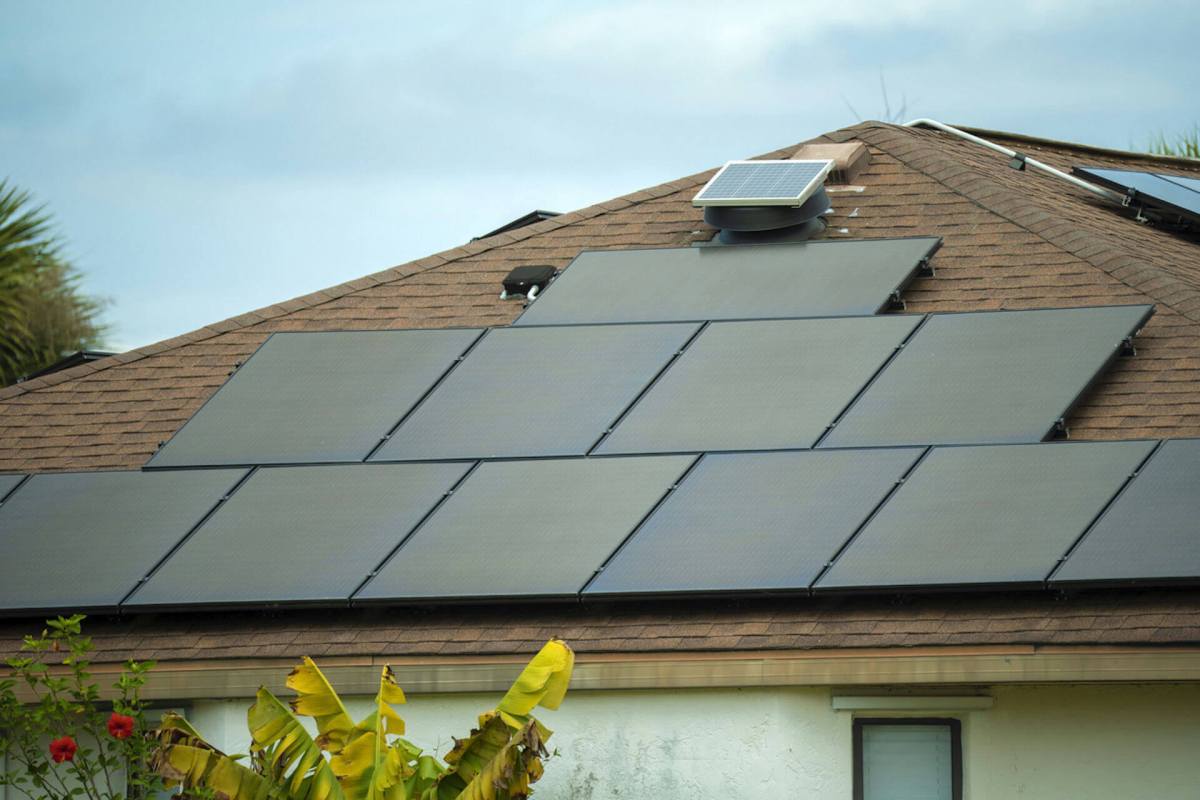

For homeowners watching utilities expand aging systems to meet growing demand, EnergySage can also clarify the economics of solar. With EnergySage's help, the average person can save up to $10,000 on solar purchases and installations. EnergySage's solar map shows the average cost of a home solar panel system by state, along with details on solar panel incentives for each state; together, these resources can help homeowners get the best price for rooftop solar panels and access available incentives.
Adding battery storage to a solar setup is one of the best ways to protect your home during outages, save money on energy, and go off-grid. Homeowners interested in backup power can explore EnergySage for information about home battery storage options, including competitive installation estimates.
Where can I learn more?
Read these stories for more on similar tensions over preservation, housing, and who pays the price.
• In Salem, Massachusetts, officials approved moving iconic historic buildings inland as flood risks mount.
• One renter said an HOA's photo demand crossed a line over private property upkeep.
• In Arizona, residents fought demands to remove decades-old trees despite heat and shade concerns.
• Builders are lobbying against energy-efficient home requirements that could lower long-term utility bills.
• Homeowners are challenging fines over native plants as HOAs enforce conventional lawns.

Get TCD's free newsletters for easy tips, smart advice, and a chance to earn $5,000 toward home upgrades. To see more stories like this one, change your Google preferences here.






