


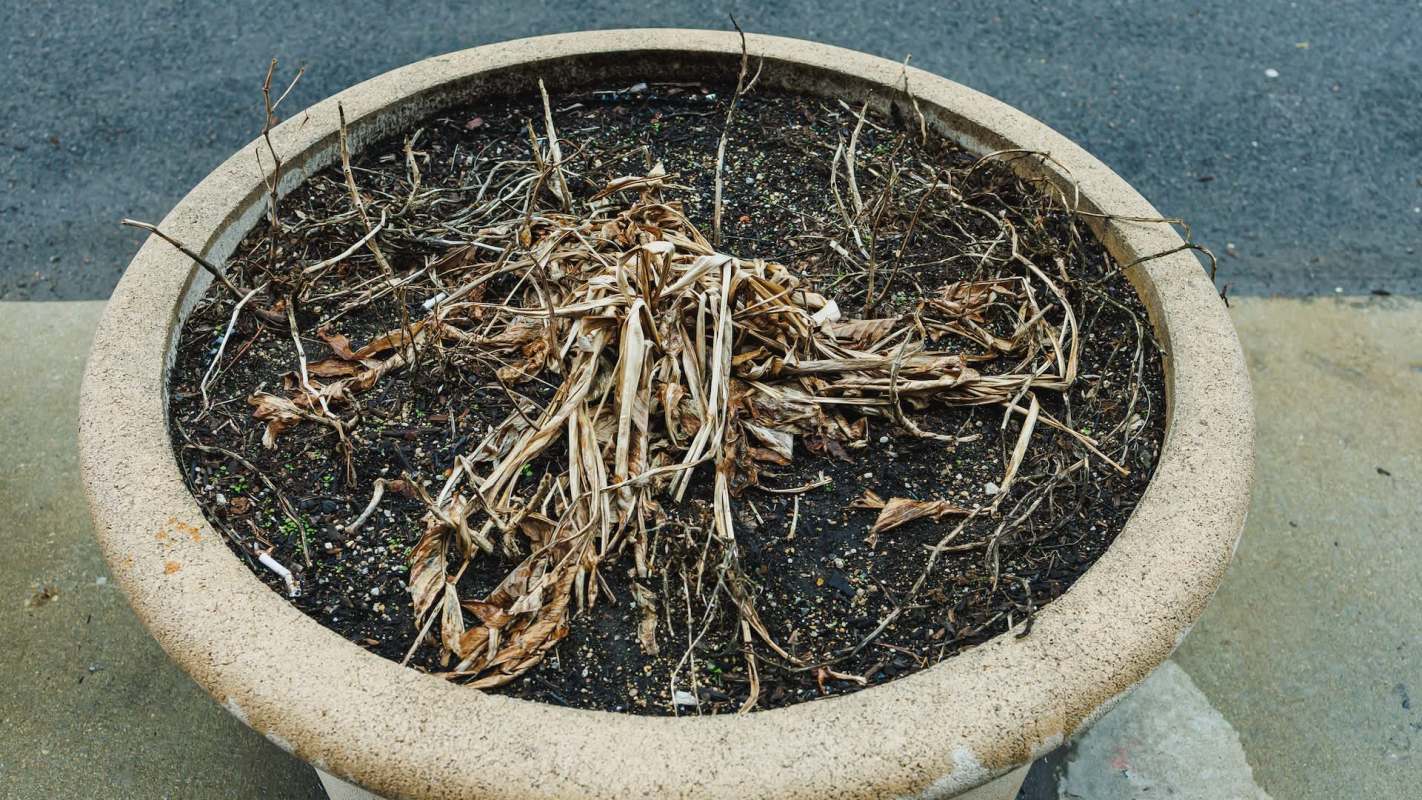
A heat-blasted plant can look finished, but looks alone don't always tell gardeners whether to discard it. Burned foliage isn't a definitive sign the plant is dead; the clearer answer is often below the soil line and inside the stems.
Here's what to know
In an explainer, Earth.com said survival depends more on living stems and roots than on how bad the leaves look, meaning even a badly desiccated plant can sometimes recover.
Foliage is often the least reliable place to judge first. Under stress, plants may brown or curl leaves to conserve resources, so visible damage can overstate how far decline has gone.
A better check is the stem: gardeners can lightly scratch it and look for damp, green tissue beneath the surface. Branches that still flex suggest life, while ones that snap quickly are a worse sign.
The roots provide the other key clue. Firm, pale roots suggest possible recovery, but black, soft, foul-smelling roots are more consistent with rot.
Ordinary watering can fail because of the potting mix. When it dries out severely, the soil can become hydrophobic and shed water, allowing it to run down the container's sides and out the drainage holes without soaking the root ball.
TCD Picks » Quince Spotlight
💡These best-sellers from Quince deliver affordable, sustainable luxury for all




To counter that, growers may submerge the root ball in room-temperature water for about 30 to 60 minutes so the soil can take up moisture again. After soaking, let the plant drain well, then keep it in the shade.
Earth.com's advice applies to plants dealing with extreme heat and drought stress.
What can be done?
You can take smaller plants out of their pots to soak, while larger ones can be soaked in their containers. In either case, they should not sit in water too long, because waterlogged roots can lose oxygen and begin to rot.
A plant can need days or even weeks to bounce back after a soak.
While waiting, gardeners should avoid full sun, skip fertilizer until new growth shows up, and postpone heavy pruning until the plant has begun to recover. If proper watering has not produced progress after two or three weeks, the next step may be to lift the root ball and inspect the roots.
A 2- to 3-inch mulch layer can reduce evaporation, while watering at the start or end of the day can help more moisture stay in the soil.
Choosing heat-tolerant plants is another smart move.
Not every heat-stressed plant will return, but a quick look at the stems and roots can show whether it is dead or simply holding on. In some cases, a careful soak is enough to turn an apparent loss into a recovery.
Where can I learn more?
The same clues come up in everyday gardens, where extreme heat can leave peppers, cucumbers, and tomatoes looking far gone. These stories show when summer stress is the main issue and when a struggling plant may be facing something else.
• In Georgia, a wilted cowhorn pepper was protecting itself in the heat, not dying.
• In Maryland, tomatoes in 100-degree weather can shut down at the roots before rebounding.
• Summer growers keep leafy greens going by breaking a few gardening rules in hot weather.
That is why a wilted or browned plant is worth checking before you toss it. Heat, root trouble, watering habits, and even disease can produce similar distress signals, even though the fix may be very different.

Get TCD's free newsletters for easy tips, smart advice, and a chance to earn $5,000 toward home upgrades. To see more stories like this one, change your Google preferences here.






