


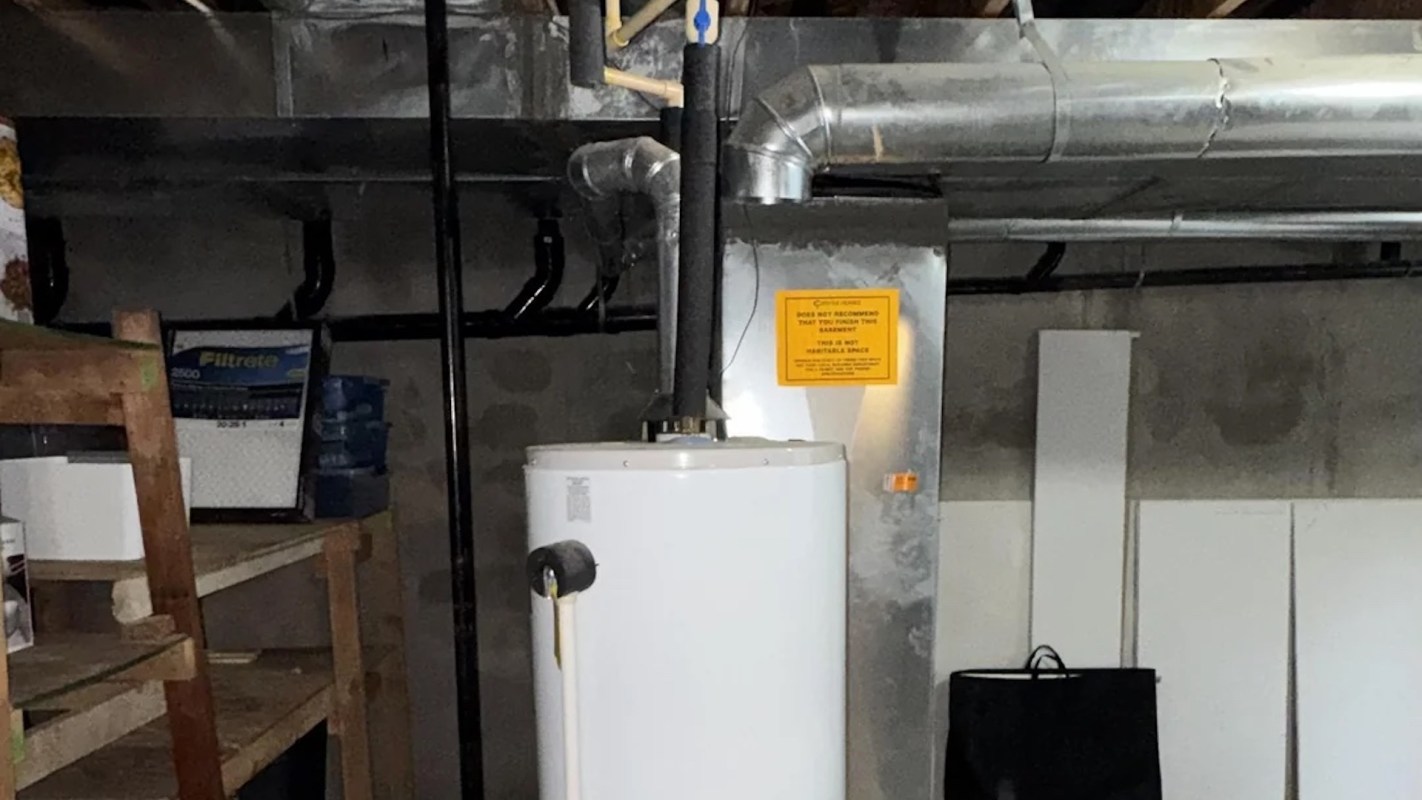
Lower utility bills, quieter operation, and cleaner hot water production are among the factors that make heat-pump water heaters appealing to homeowners. Still, when it comes to replacing old, gas-powered water heaters, installing the new appliance can require some modifications.
What's happening?
One homeowner posting on Reddit learned this lesson when it turned out that their preferred heat-pump water heater had its pipe connections on the side rather than on top, unlike its predecessor.
The new heat-pump water heater's side-mounted ports posed a challenge because they did not align with the existing CPVC lines running down from the ceiling.
This left the homeowner trying to answer two practical questions at once: how to connect those unsupported CPVC runs to the new heater without stressing the fittings, and whether a connection set up that way would satisfy code.
On paper, replacing a water heater can seem like a simple swap. In practice, details such as port placement, pipe material, support, and clearance often determine whether a project remains manageable for a DIYer or becomes a job for a professional.
Still, the potential cost savings and cleaner operation of a heat-pump water heater could make any installation headaches well worth the effort.
Why does it matter?
Heat-pump water heaters are one of the most efficient options for producing hot water. However, many older homes were plumbed to accommodate tanks with top-mounted connections rather than side ports.
That difference is not just an inconvenience. CPVC can become brittle over time, and unsupported vertical runs may not handle being forced, bent, or leveraged into position during a retrofit. When piping is under strain, the result can be leaks, premature fitting failure, or a setup that falls short of local code requirements.
Save $10,000 on solar panels without even sharing your phone number Want to go solar but not sure who to trust? EnergySage has your back with free and transparent quotes from fully vetted providers in your area. To get started, just answer a few questions about your home — no phone number required. Within a day or two, EnergySage will email you the best options for your needs, and their expert advisers can help you compare quotes and pick a winner. Solar panels can save you more than $50k over their 25-year lifespan, and EnergySage can help you save as much as $10k on installation. Which begs the question — isn't that worth an email or two? |

When considering the cost of a new heat-pump water heater, it is important to keep in mind more than just sticker price or efficiency rating. Installation costs are another important consideration.
If potential installation complications and expenses are not taken into account from the outset, a homeowner expecting a quick replacement and immediate utility bill savings may instead face extra labor costs for items such as new supports, transition fittings, or other code-related modifications.
What can I do?
If you are considering an upgrade to an energy-efficient heat-pump water heater, it is important to compare the manufacturer's installation diagram with your existing plumbing before buying. Important points to consider include the locations of the hot and cold ports, whether your current piping has proper support, and whether your local code limits CPVC near a water heater or requires specific transition materials.
When considering whether to install a new water heater yourself or hire a professional, it can be helpful to price out both options. Additionally, even if you plan to do much of the work yourself, paying for a brief consultation can be cheaper than correcting a bad layout later.
Homeowners who want to learn more about heat-pump water heaters should check out Cala. Its customizable smart heat-pump water heaters help homeowners decrease their energy bills by heating water exactly when it's needed. That kind of demand-aware operation can help households avoid unnecessary energy use while keeping hot water instantly available. For shoppers comparing next-generation options, Cala shows how heat-pump water heaters are evolving beyond efficiency alone.

Get TCD's free newsletters for easy tips, smart advice, and a chance to earn $5,000 toward home upgrades. To see more stories like this one, change your Google preferences here.







