


Upgrading to a heat pump water heater can lower a home's energy bills because it moves heat rather than generating it directly. But those savings depend on giving the unit enough space and airflow to operate properly.
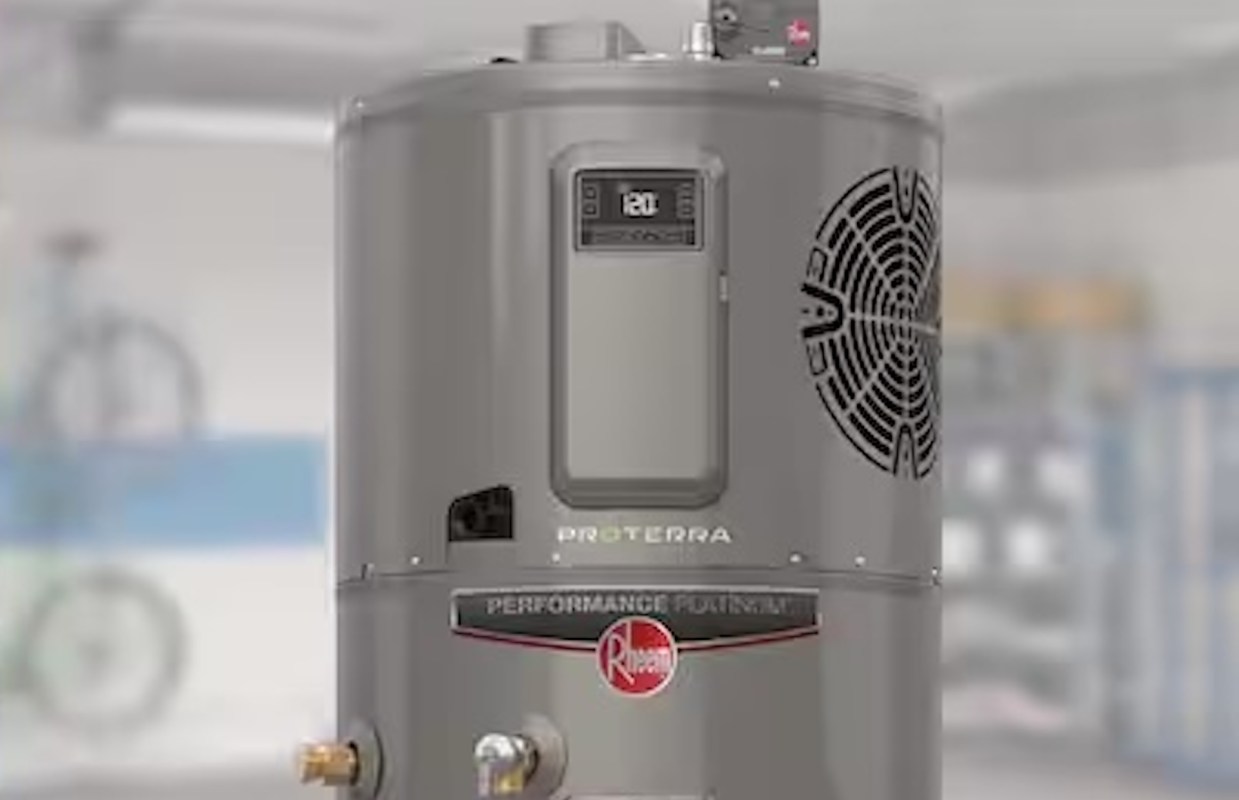
That issue became a key point of pushback for a builder planning a 740-square-foot living space in the Los Angeles area and trying to determine whether a 36-inch-by-36-inch exterior closet was large enough for a Rheem ProTerra 40-gallon unit.
Here's what to know
The builder's post on Reddit's r/Homebuilding forum described an outdoor-access closet with an 8-foot ceiling and a louvered 32-by-80 door that would open outward. They also noted that the finished depth would end up a bit shallower once the door and jambs were installed.
Replies quickly shifted to the way a heat pump water heater handles air. As one commenter warned, "If it's a heat pump water heater, it needs to breathe. It takes in warm air, and ejects cold air."
In other words, the issue was not just whether the appliance could physically fit.
The same commenter added, "If you put it in a small closet (and that is seriously small), it'll chill the whole closet down and it'll stop working," unless the intake and exhaust are ducted to a space with enough air volume.
Another reply cited the Rheem manual, which lays out "minimum clearances and total square footage and ambient temperature ranges," which could affect both performance and warranty protection.
More background
The original poster said they were "checking every square inch to make sure each space is designed correctly," a familiar challenge in tight layouts.
Crushed by your bills? See instant solar savings from vetted installers in just a few clicks With energy prices through the roof, there's never been a better time to go solar — and EasyHome can help you find the best prices from the best installers in your area. EasyHome takes the guesswork and headaches out of energy upgrades by showing you estimated savings from a network of vetted local partners. To get started, just enter your ZIP and share a few details about your home — seeing your estimate is really that easy. |

Several commenters emphasized that the appliance also affects the surrounding air. One commenter explained that the unit "acts as a slow, low-power air conditioner," pulling in warmer air and pushing out cooler, slightly drier air.
That effect can be useful in some homes, but the original poster noted, "We're talking a 740 sf house. It seems there would be no good place to vent it inside the house, as there are times of the year you wouldn't want this unit blowing cool air inside."
Given that constraint, commenters focused on alternatives and workarounds. One suggested tankless as a smaller-space option if the utility setup allows it, while others talked through ducting intake or exhaust to places such as an attic, kitchen, or another area where cooler, drier air could help rather than disrupt.
What can be done?
The practical advice was to confirm the setup against the manual before finishing the closet around the appliance. One commenter specifically cited page 7 of the Rheem "Use and Care Manual" and wrote, "The people who hold the purse strings to your product warranty have more say than random 'kibitzers' on reddit."
After reviewing the guide, the original poster said the unit could be installed in a small closet with "just a louver on the door in front of the exhaust vent and a large enough gap at the bottom of the door for intake," or with full or partial ducting. They also said the city's preapproved plans used "this exact model!!" in exterior closets even smaller than the one they had drawn.
Homeowners weighing those layout tradeoffs also have newer options such as Cala. Cala's customizable smart heat pump water heaters can help homeowners lower energy bills by heating water only when needed. For a compact project, that kind of control could make efficient hot water easier to manage alongside tight-space planning.
However, smart controls don't eliminate the need for proper siting, airflow, and plumbing access. Comparing standard models and Cala still comes back to the same basic question: Will the unit actually have enough room to breathe?

Get TCD's free newsletters for easy tips, smart advice, and a chance to earn $5,000 toward home upgrades. To see more stories like this one, change your Google preferences here.






