


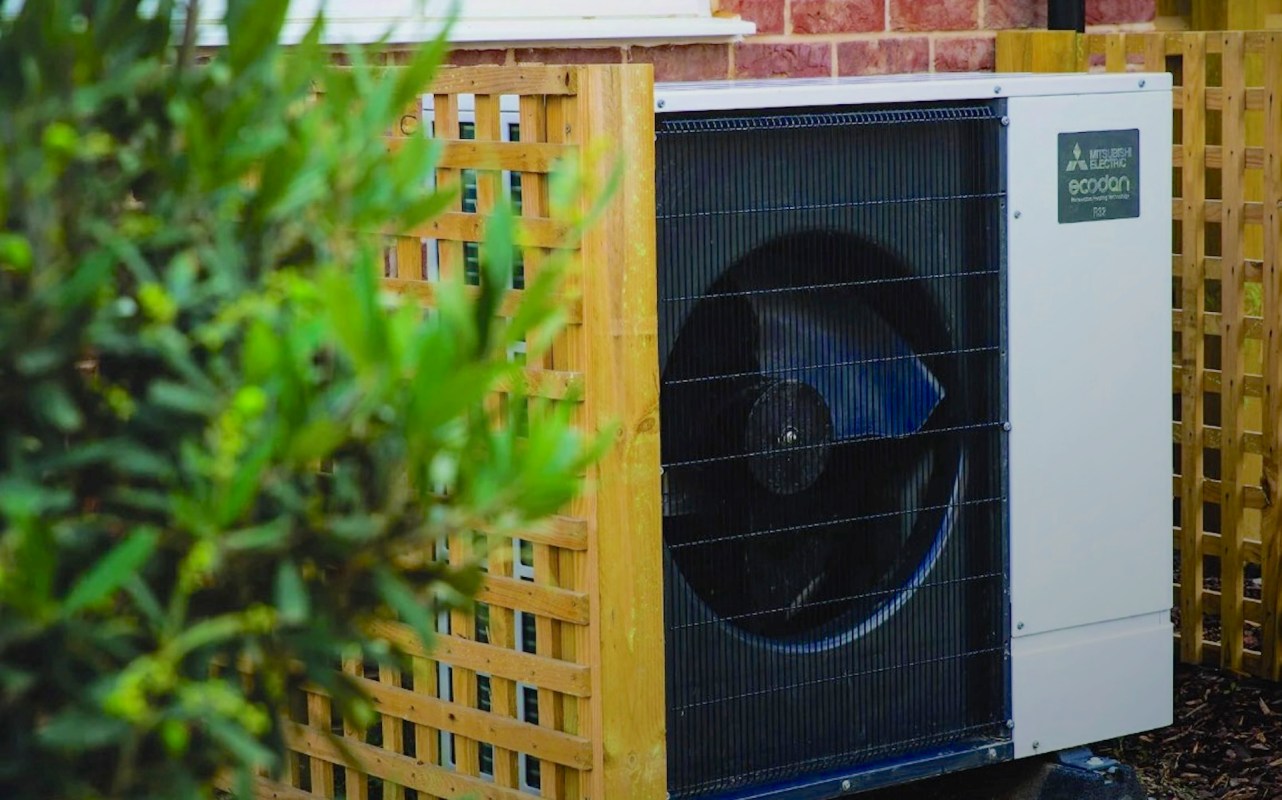
A decade ago, when a homeowner's heating or cooling system busted, they would default to buying a gas furnace replacement over a heat pump — despite the fact that heat pumps run more efficiently, leading to lower utility bills and a more comfortable home. (They also heat and cool homes, despite the name.)
The good news is that as of 2023, heat pumps have been outselling gas furnaces by a wide margin. And the cherry on top? Nine out of 10 heat pump owners would recommend them to others, according to recent research by the Heat Pumps and Homeowners Index.
The momentum doesn't seem to be stopping anytime soon. In fact, some of the latest heat pump technology goes even further. One exciting new development is called an "air to water" heat pump, and it can actually heat and cool a home while also providing hot water through the same system.
This three-in-one technology is especially helpful for homeowners as energy prices skyrocket, because now you're getting that ultra-efficiency for heating, cooling, and water heating — the three biggest sources of energy usage (by far!) in a typical home.
"Comfort is not just temperature. Comfort is about making the environment inside your house one that you don't think about," said Kim Bergeron, a homeowner in New England who is the COO of a local solar and HVAC business.
He recently installed an air-to-water heat pump system from Mitsubishi Electric called Ecodan, which now heats, cools, and provides hot water in his home, even during the most brutal winter months.
How Ecodan saves homeowners money every month
The technology for heat pumps is now so dialed in that a single unit can often reduce an HVAC system's electricity use by as much as 50%, according to the U.S. Department of Energy. That's because heat pumps use refrigerant to transfer heat (rather than generating it like a furnace would), which keeps a house cool in the summer and toasty in the winter.
And all that energy efficiency translates into lower utility bills. Right now, Americans across the country are experiencing significant bill increases every month (thanks to things like inflation, data centers, geopolitical tension, and extreme weather), so having an energy-efficient system can make a world of difference. In fact, heat pumps can save homeowners up to $1,000 on yearly energy bills — and that's not even including the increased water heating efficiency in models like Ecodan.
How good is the technology, really?
If Kim Bergeron's Ecodan heat pump can withstand both New England winters and the high standard of an HVAC contractor, you know the tech is working right. According to Mitsubishi Electric, the model can heat homes with 100% performance down to 5 degrees Fahrenheit, with heating down to as low as -22° F if needed.
"We did experience some temperatures down in the zero to 10 degree mark this year, [and] our home never deviated from temperature," Bergeron said.
Ecodan is also much lighter than a furnace or oil tank is, which makes it easier to install quickly. And it's flexible enough to work in new builds as well as for homeowners looking to update an aging system.
An added bonus is that the system is so flexible that it can distribute heat via fan coils, radiators, baseboard heaters, or even underfloor heating, depending on every home's unique setup, and it cools air through the hydronic fan coils.
Who to trust for your install
For game-changing upgrades like a new HVAC and water heating system, it's crucial to find a knowledgeable contractor. Mitsubishi Electric, for example, has its independent Diamond Contractors, a network of folks who have received advanced training directly from the company and who receive regular product, service, and installation updates.
Whoever you choose for your installation, the best thing you can do is go with someone you can trust.
And if you're a contractor (or know someone who is), there are a ton of resources to help you find a trusted, local distributor for top-quality products like Mitsubishi's Ecodan system. Given how economical this 3-in-1 appliance is for customers, becoming an Ecodan installer is a great way for contractors to boost revenue and grow their client base.
Where to start when you're ready to dive in
Ecodan is available across the country, so all you'll need to do is find a local contractor (for example, here) and they'll be able to kick off the process with a personalized quote tailored to your home.

Get TCD's free newsletters for easy tips, smart advice, and a chance to earn $5,000 toward home upgrades. To see more stories like this one, change your Google preferences here.






