


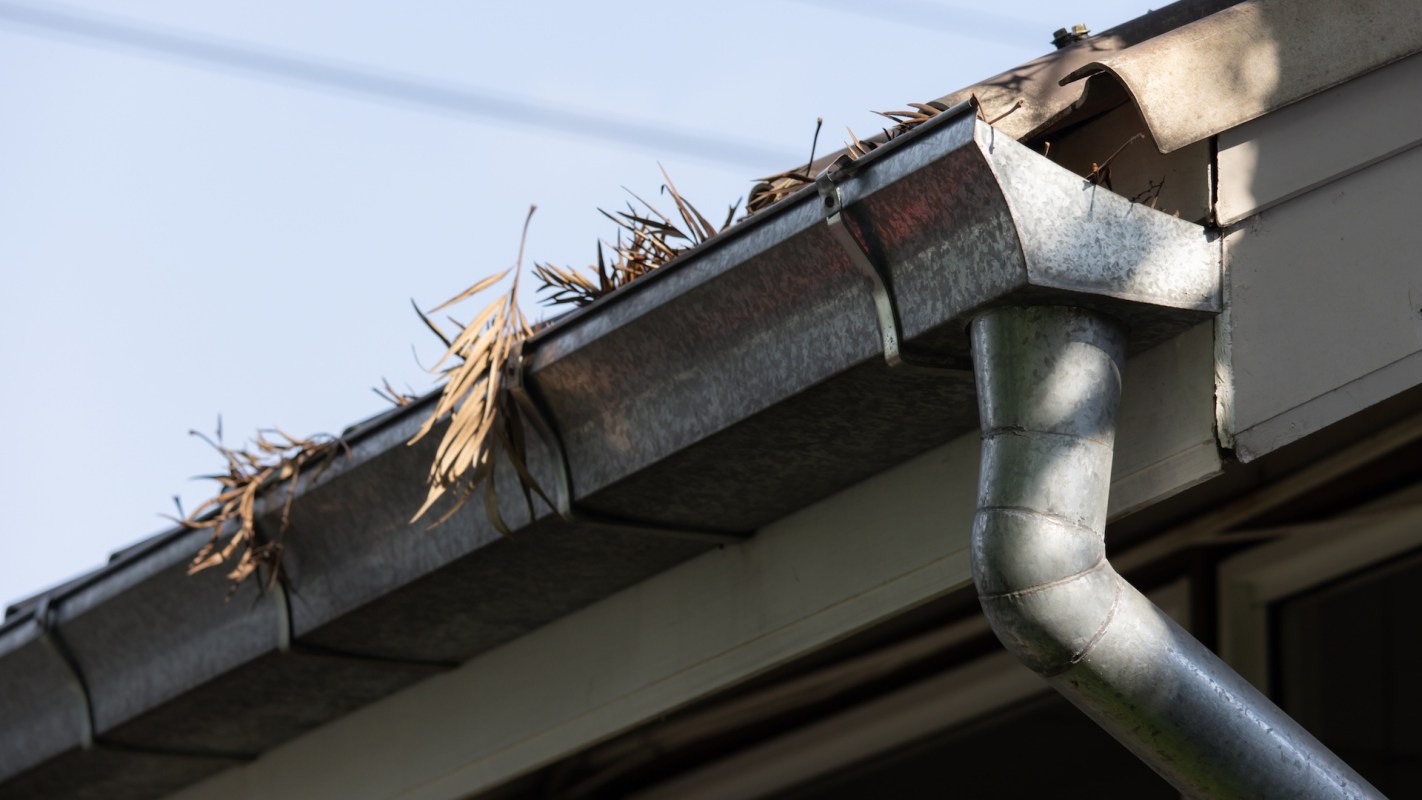
Home-maintenance experts are encouraging homeowners to check for five common gutter trouble spots before fall debris turns a hidden issue into a costly repair by sending water toward a home's roofline, siding, or foundation.
Here's what to know
Good Housekeeping identified the biggest gutter warning signs as debris buildup, structural damage, missing gutter guards, damaged downspouts, and drains that fail to carry water far enough away from the house.
One way to spot a blockage is to run water through the gutters and see whether each downspout empties properly. When flow slows or stops, the buildup may include leaves, branches, birds' nests, or granules shed from asphalt shingles, which can turn into a muddy clog inside the channel.
Standing water often points to a pitch problem, since gutters should slope about one-quarter inch toward the downspout for every 5 to 10 feet. Rust, loose fasteners, and areas where the gutter pulls away from the fascia also need attention.
To reduce the chance of basement flooding and foundation damage, ground-level drains should carry water at least 5 feet from the house. For taller homes, it may also be safer to hire a professional for cleaning.
More background
Moving rainwater away from a house takes more than the gutter trough along the roof edge. Downspouts, drain extensions, and the fasteners that secure the assembly all play a role, so trouble with any one part can keep the system from sending water where it belongs.
TCD Picks » Quince Spotlight
💡These best-sellers from Quince deliver affordable, sustainable luxury for all




If water spills over the gutter edge or exits through a loose or damaged downspout, it can collect beside the foundation. Over time, that can wear away soil, add moisture to the basement, and contribute to structural repairs.
The landscape beneath the gutters also affects drainage. Upgrading to a natural lawn or adding more native planting beds are other yard projects some homeowners may consider.
What can be done?
Start with a visual check from the ground. On a clear day, homeowners can circle the house and watch for rust, missing guards, disconnected joints, and any sections that appear to sag, using binoculars to get a better look at higher rooflines.
For anyone who can safely work from a ladder, visible debris can be cleared out by hand before rinsing the gutters with a garden hose. It is also worth confirming that the downspouts are still firmly attached and that drain extensions are connected and long enough to carry runoff away from the house. Splash blocks can help reduce erosion where runoff exits.
Catching a clogged gutter or too-short drain early can help prevent basement flooding and foundation damage after heavy rains.
Where can I learn more?
These articles cover tree-mulching mistakes and troublesome landscape edging.
• A lawn care expert warned that volcano mulching around trees can slowly kill them.
• A new homeowner wanted dangerous honeysuckle thickets replaced with a healthier native backyard forest.
• Landscapers said plastic edging causes trouble when it cracks, heaves, and looks shabby.
• Homeowners found that common plastic landscape edging can warp, surface, and quickly look worn.

Get TCD's free newsletters for easy tips, smart advice, and a chance to earn $5,000 toward home upgrades. To see more stories like this one, change your Google preferences here.






