


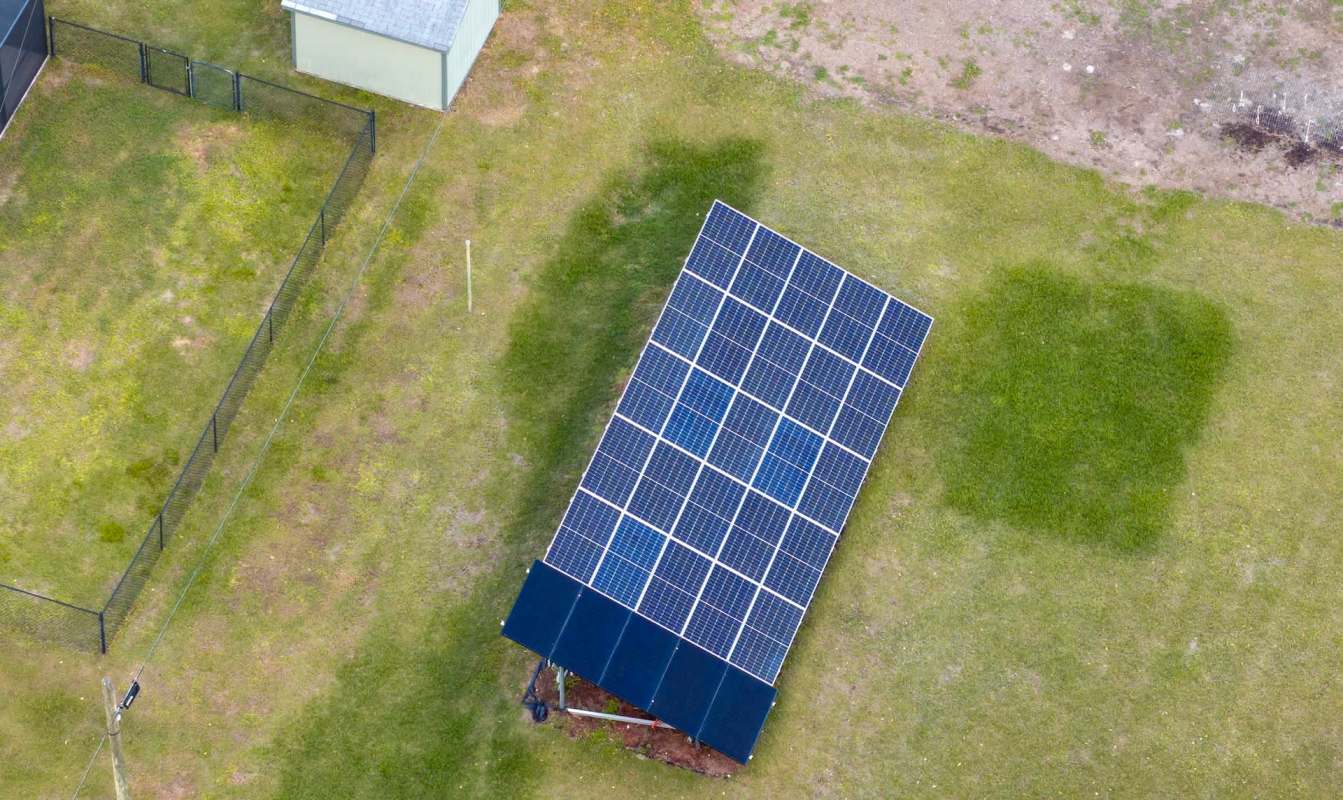
One New England homeowner took to the internet to ask whether a ground-mounted solar array makes more sense than installing panels on an older, partly shaded roof.
Here's what to know
"I'm a homeowner in New England looking to install an array and battery setup in the next couple years," the original poster described in Reddit's r/solar community. "… I feel like the right move from most standpoints is to build on the ground, then run a trench back to my home to hook into my panel, but I know that's not the common way to do it."
The OP explained that their shingles were 15 years old, only one section faced south, and even that better-positioned area gets roughly 30% shade.
They estimated that the space could host only 16 or 17 panels, though they needed 20 to cover their load. "Am I gonna see losses by transferring 50+ feet through cables?" they asked.
Because the property included an acre of space, the OP said that a larger setup might be possible, noting that 24 panels could cover their HVAC system after a planned move from an oil burner to a heat pump.
In response, several commenters said they would lean toward a ground-mounted system. "You don't want to be 1-10 years into an install and need to pull them for a roof replacement," one cautioned.
Another wrote: "I have a ground mount and I really like the peace of mind that my solar and roof don't interact or interfere with each other. No need to worry about taking the panels down when it is time for new shingles, easier to inspect for animal activity, etc. I like it when things do just one thing and do it well."
Not all commenters were on board, though. "Roof mount is the go-to option for most installers," one user explained. A second user added: "Ground is more expensive than roof. However it does have clear advantages: more panels, easy to service, and most importantly peace of mind that you'll never get a roof leak because of the solar."
Save $10,000 on solar panels without even sharing your phone number Want to go solar but not sure who to trust? EnergySage has your back with free and transparent quotes from fully vetted providers that can help you save as much as $10k on installation. To get started, just answer a few questions about your home — no phone number required. Within a day or two, EnergySage will email you the best local options for your needs, and their expert advisers can help you compare quotes and pick a winner. |

What can be done?
For many households, going solar is one of the best ways to save money on home energy over time. If you're comparing options, EnergySage can help you explore free solar installation estimates and compare quotes before committing to a system.
With EnergySage's help, the average person can save up to $10,000 on a solar purchase and installation. EnergySage's solar map also shows the average cost of a home solar panel system by state as well as details on solar panel incentives available in each state; together these resources can help readers get the best price for rooftop solar panels and access available incentives.
Where can I learn more?
When homeowners price out solar, the panel quote is only part of the equation. Roof age, available space, local rules, tax credits, and utility programs can all change whether rooftop solar is affordable.
• In the Mid-Atlantic, a narrow roof and historic rules left one homeowner rethinking solar plans.
More From EnergySage
💡Go deep on the latest news and trends shaping the residential solar landscape

• Across homeowner forums, misinformation keeps clouding practical decisions about rooftop solar.
• Even with disappearing tax credits, up to $9,000 off can sway hesitant homeowners.
For homeowners trying to choose between a roof install and a ground mount, these stories highlight the practical trade-offs beyond the equipment itself.

Get TCD's free newsletters for easy tips, smart advice, and a chance to earn $5,000 toward home upgrades. To see more stories like this one, change your Google preferences here.






