


A flashlight is often the first thing people grab in a blackout, but a quick power outage affects much more than lighting.
One very prepared creator is getting attention for turning blackout planning into a checklist that stretches from candles and batteries to a NOAA radio and solar recharging.
Here's what to know
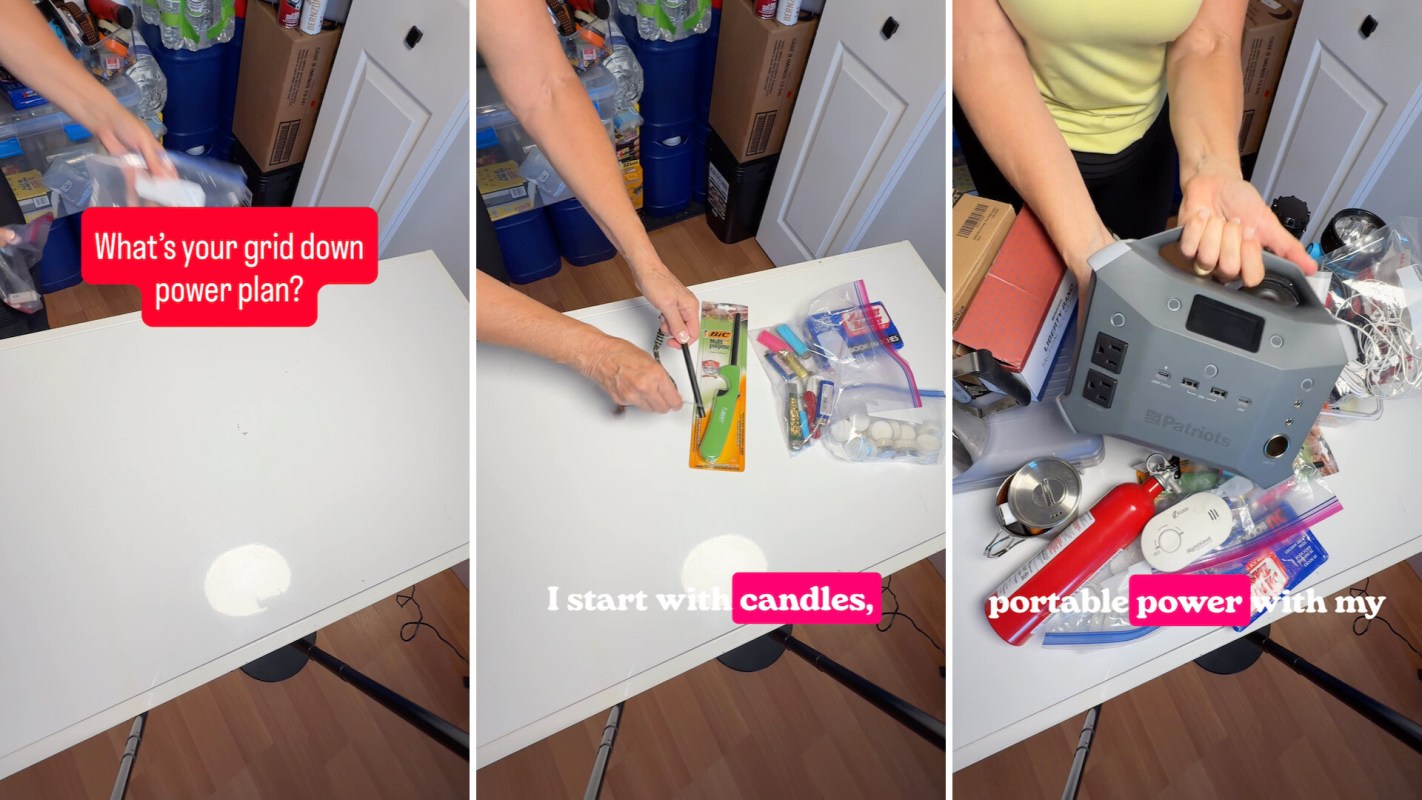
Liz (@TheIndependentPrepper) walked viewers through a "grid down power plan" for an outage.
Liz starts with basic fire and lighting supplies: candles, matches, lighters, a ferro rod, batteries, flashlights, a headlamp, and lanterns.
The caption then broadens the setup to include charging and backup-power gear like power banks, cables and adapters, emergency LED bulbs, a portable generator, and a solar panel for recharging, as well as a NOAA hand-crank radio, a butane stove with extra fuel, a multipurpose pot, a small stove and camping cup for a bug-out bag, a carbon monoxide alarm, and a fire extinguisher.
Rather than treating it as one long shopping list, Liz frames the kit around four immediate jobs during an outage: keeping lights on, charging devices, getting information, and cooking.
TCD Picks » Quince Spotlight
💡These best-sellers from Quince deliver affordable, sustainable luxury for all




"Because when the power goes out, you need more than just a flashlight," the creator said in the video.
More background
The checklist comes as prolonged outages have led many households to consider more than a temporary inconvenience.
A blackout can mean spoiled groceries, missed work, dead phones, no access to weather updates, and extra spending on takeout, ice, or replacement supplies.
The list also includes safety items that are often omitted from outage checklists.
What can be done?
"You don't have to buy everything at once," Liz says. "Start with the basics and build your power plan over time."
That can mean starting with lower-cost items that meet immediate needs: flashlights, spare batteries, power banks, charging cables, matches or lighters, and a NOAA hand-crank radio. Those basics can help protect comfort and communication without requiring a major upfront investment.
The smartest version of the hack is not buying the biggest setup. It is matching purchases to real outage risks so you spend once, use the gear when needed, and avoid panic-buying later.
Where can I learn more?
For readers thinking beyond flashlights and spare batteries, these stories look at the next layer of outage planning. They show how homeowners compare solar panels, portable batteries, and whole-home storage to keep their lights and devices running.
• On Reddit, preppers say solar panels beat generators for quieter, refill-free blackout backup.
• Home energy experts say portable solar backup systems remain the cheapest defense against outages.
• Pila Energy is pitching plug-and-play home batteries that keep essentials running without a generator.
• Across the U.S., homeowners are adding battery storage systems to ride out blackouts.
• Home battery companies are selling protection from frustrating blackouts alongside lower monthly bills.
Reading through them makes one point pretty clear: backup power can grow from a simple radio or charger into a much bigger home setup. Planning ahead usually works out better than shopping in the middle of an outage.

Get TCD's free newsletters for easy tips, smart advice, and a chance to earn $5,000 toward home upgrades. To see more stories like this one, change your Google preferences here.






