


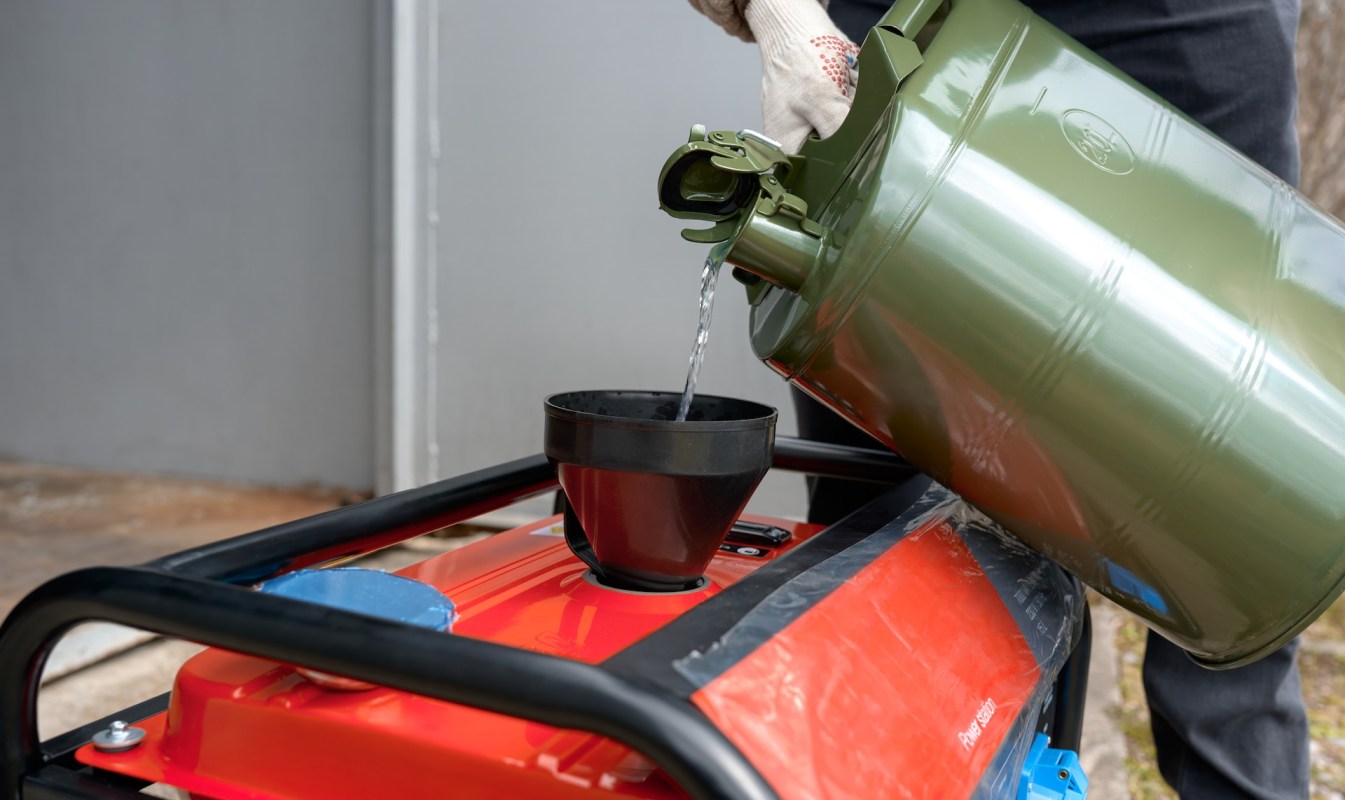
A generator owner trying to keep whole-house backup power flowing during an outage said he had been refueling a gasoline unit while it was still running — until a retired firefighter warned that one mistake could lead to a trip to a burn unit.
Here's what to know
The discussion started in a Reddit thread in r/Generator, where the original poster wrote, "I have refueled the running generator without issue, Have read that it's very dangerous to do." He said he was looking into an auxiliary fuel tank positioned farther from the machine and had been using a D-cell-powered pump to help limit spills.
His search for a better approach followed what he described as a "historical worst ever multi day outage event," which led him to think more seriously about stretching backup power for longer periods.
In follow-up comments, he explained that heat, refrigerators and freezers, and even a 14,000-BTU portable A/C could all factor into outage planning — the kind of household demand that can make even a brief shutdown feel expensive or disruptive. Still, commenters overwhelmingly said the convenience was not worth the danger.
One self-identified retired firefighter offered the starkest warning: "If you want to see a bunch of my brother/sister firefighters and learn what it's like to be lifeflighted to a burn unit, go ahead and risk it."
More background
To illustrate the point, a commenter who said his first job was in small-engine repair described how easily gasoline vapors can catch fire. His example focused on vapor rather than a spill: after leaving gas in a shallow drain pan and stepping away, he returned, sat down, and a static spark ignited the fumes, burning the hair off his arms and starting a shop fire. "Be safe. Shut it off," he ended.
TCD Picks » Quince Spotlight
💡These best-sellers from Quince deliver affordable, sustainable luxury for all




One commenter noted that "a lot of portable generators require an oil change after 25 hours of extended operation use," making a planned shutdown a natural time to check oil rather than treating refueling as a shortcut.
What can be done?
Commenters' practical advice was consistent: turn the generator off, let it cool, refuel, and then restart it. As one commenter put it, "Safety is not something to find 'a hack' for, especially in an emergency."
For short interruptions, another commenter suggested using a "Solar Generator" inline to cover the roughly 15-minute refueling window. It was presented as a way to keep a few essentials running without handling gasoline near a hot muffler.
Commenters also mentioned propane conversions and auxiliary tanks, though they said any longer-runtime setup still needs to prioritize safe fueling and routine oil checks.

Get TCD's free newsletters for easy tips, smart advice, and a chance to earn $5,000 toward home upgrades. To see more stories like this one, change your Google preferences here.






