


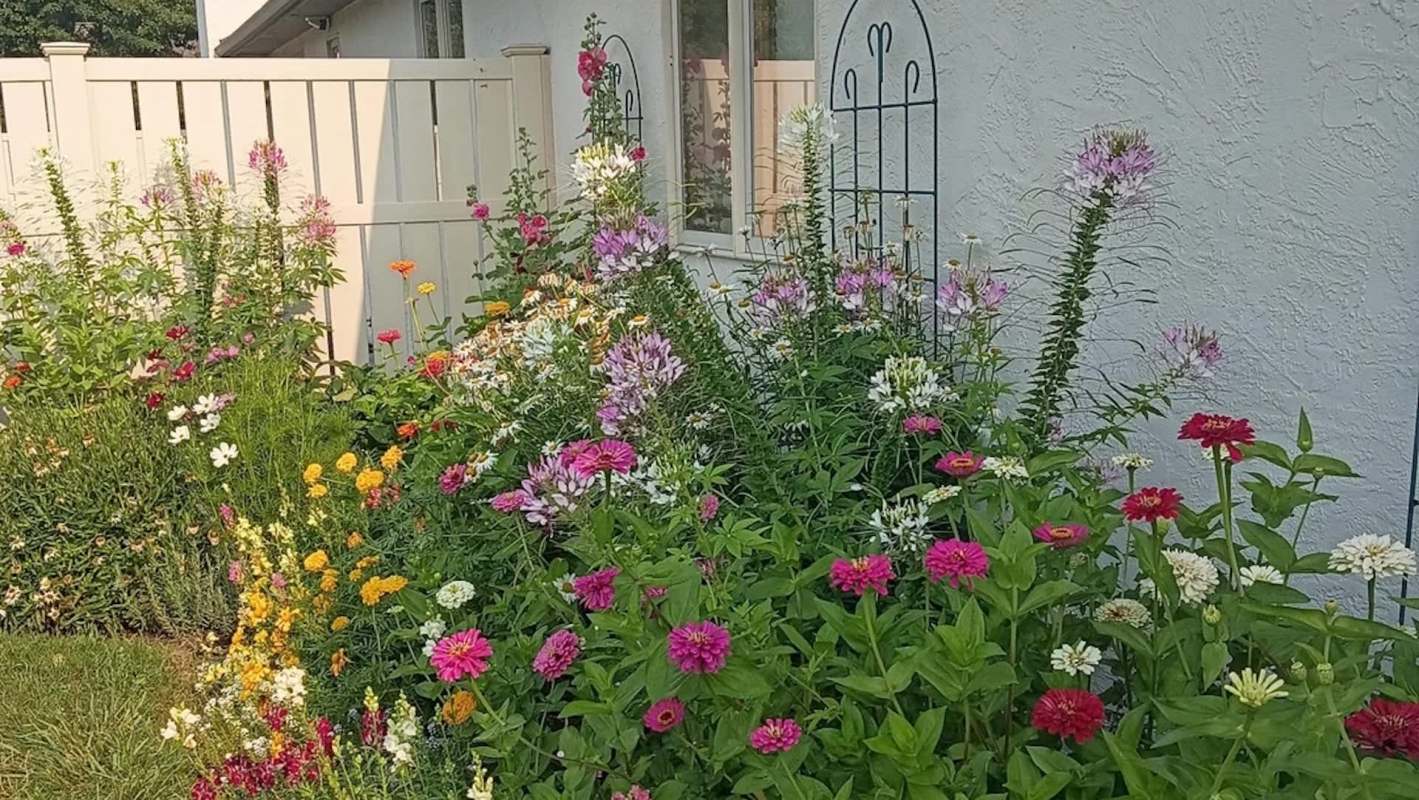
One gardener showcased that a colorful, abundant flower bed does not have to come with an extravagant budget.
Alongside photos of their thriving 2026 garden, the original poster wrote, "My garden is my happy place. I don't care that it doesn't look professionally designed or especially neat or sophisticated -- it just makes me happy."
What happened?
According to a Reddit post, the gardener raised the entire display from seed, relying mostly on Walmart packets priced at $1.96.
One user commented, "The way your flowers bloom is like a smile from Mother Nature itself." Another Redditor expressed that they "hope to one day have a garden like this."
Asked in the comments about whether the flowers were started indoors or outdoors, the original poster said, "I start inside. I have a setup with high intensity shop lights on chains. With this kind of setup it really is pretty easy."
They said growing from seed also gave them access to a broader selection than they would typically find as nursery starts.
TCD Picks » Quince Spotlight
💡These best-sellers from Quince deliver affordable, sustainable luxury for all




Among the examples they mentioned were snapdragons, zinnias, cleomes, hollyhocks, and sunflowers, which they said are often much easier to buy as seeds than as young plants in stores.
Why does it matter?
Buying seed packets instead of mature plants can be significantly cheaper, especially for anyone hoping to fill a larger yard or create a cut-flower patch without spending a fortune.
Growing flowers from seed can also reduce the need for plastic nursery pots and make it easier to choose plants that support pollinators, especially when gardeners choose to plant native flowers suited to their region.
Replacing all or part of a traditional grass lawn with a more natural landscape can save time and money on maintenance while reducing water bills.
Native plants, clover, buffalo grass, and xeriscaping are all lower-maintenance lawn-replacement options, and even a partial lawn replacement can reduce mowing, shrink irrigation needs, and create more habitat for birds and pollinators.
What can I do?
For people new to seed-starting, the gardener suggested: "If you don't have much experience with seeds, I recommend starting with zinnias, marigolds, and snapdragons because they start easily."
They also said beginners do not need an elaborate indoor setup and can get going with just one shop light.
A basement, spare room, or utility area can be enough to get seedlings going before transplanting them outdoors.
If you want to not only add a pop of color to your yard but also make it cheaper and easier to maintain over the long term, check out the TCD Guide's pages on rewilding your yard and upgrading to a natural lawn.
Even swapping out one section of turf for native flowers, clover, buffalo grass, or a xeriscaped bed can bring many of the same benefits.
One commenter wrote: "'Everything from seed' is such a flex."
The original poster wrote: "It's fun to start from seed and saves so much money."

Get TCD's free newsletters for easy tips, smart advice, and a chance to earn $5,000 toward home upgrades. To see more stories like this one, change your Google preferences here.






