


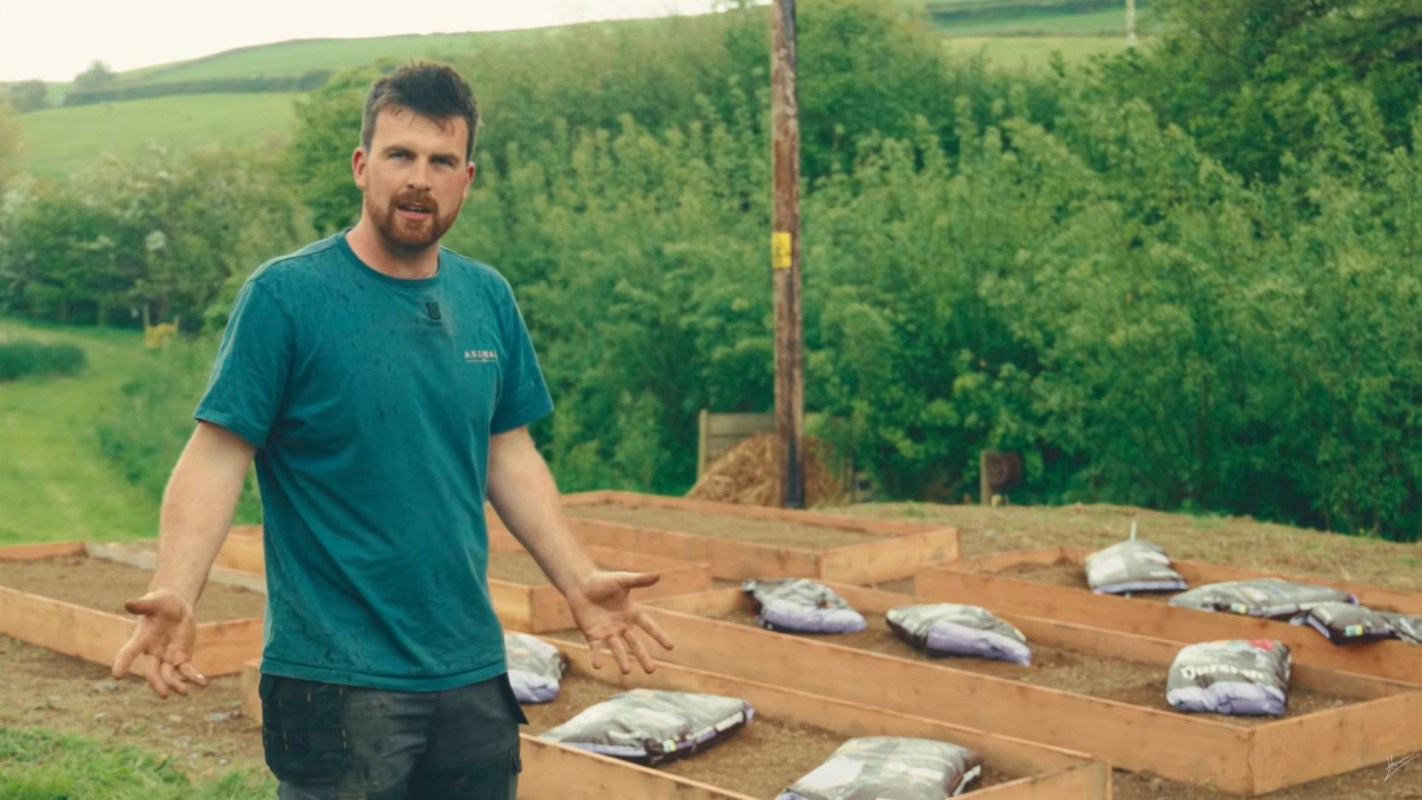
One gardener is using a small plot as a hands-on trial in home food production. Through a new six-bed setup, he wants to find out whether spending about 85 to 90 British pounds (~$112 to $118) on each bed can produce a worthwhile harvest from 18 square meters.
What's happening?
In a recent YouTube video, gardener and creator Huw Richards (@HuwRichards) introduced a new "mini garden" experiment centered on the food potential of a compact growing space.
The costs for each bed work out as 45 pounds (~$59) for the wooden frame, 21 pounds (~$27) for compost, and about 20 pounds (~$26) for roughly 0.7 tons of topsoil.
Richards said he plans to record both the money spent and the food harvested, using the project as a "micro example" of what a home food garden can achieve.
He framed the project around a problem many households are facing.
"Food prices aren't really going to be going back down much, and unfortunately, that's an issue, but fortunately, I think it is making growing your own food more worth it," Richards said.
TCD Picks » Quince Spotlight
💡These best-sellers from Quince deliver affordable, sustainable luxury for all




Richards' wider garden refresh goes beyond the beds themselves. It also features productive borders filled with soft fruit, herbs, lupins, sunflowers, and nasturtiums, underscoring that edible spaces can be attractive, colorful, and welcoming to pollinators as well as useful.
Why does it matter?
With crops such as salad greens, herbs, tomatoes, currants, and beetroot, gardening can often cut grocery bills, especially when gardeners are harvesting repeatedly from the same space.
Homegrown produce is usually fresher and often tastes better because it can be picked at peak ripeness instead of being shipped and stored.
Gardening can also support mental health by reducing stress and providing a restorative routine, while digging, planting, and weeding offer light physical activity.
Richards' approach also shows that productivity does not require a large property.
That small-space angle is especially relevant for renters, suburban homeowners, and anyone with limited room who still wants more control over food costs and quality.
What's being done?
Across the project, Richards is combining several practical techniques: preparing beds with peat-free compost and topsoil, sowing seeds in an organized way, planting tomatoes and other crops, and using soaker hoses and mulch to help retain moisture.
He is also blending edible plants with flowers to support pollinators and make the space more inviting.
Ultimately, starting small can pay off. One raised bed — or even a few containers — can produce herbs, greens, and other high-value crops that are expensive to repeatedly buy.
He also shares a simple, low-pressure approach to design: stick with a few plant types, space them by instinct, and make changes over time if needed.
Natural strategies such as mulch and simple hoeing can also help control weeds and pests without chemicals.
As Richards said, "I'm just showing you that you can grow a huge amount of food in a small space."
One commenter summed up the appeal this way: "Very excited for your new mini food production lab! Bravo, keep tracking the expenses and demonstrating that this can be done economically!"

Get TCD's free newsletters for easy tips, smart advice, and a chance to earn $5,000 toward home upgrades. To see more stories like this one, change your Google preferences here.






