


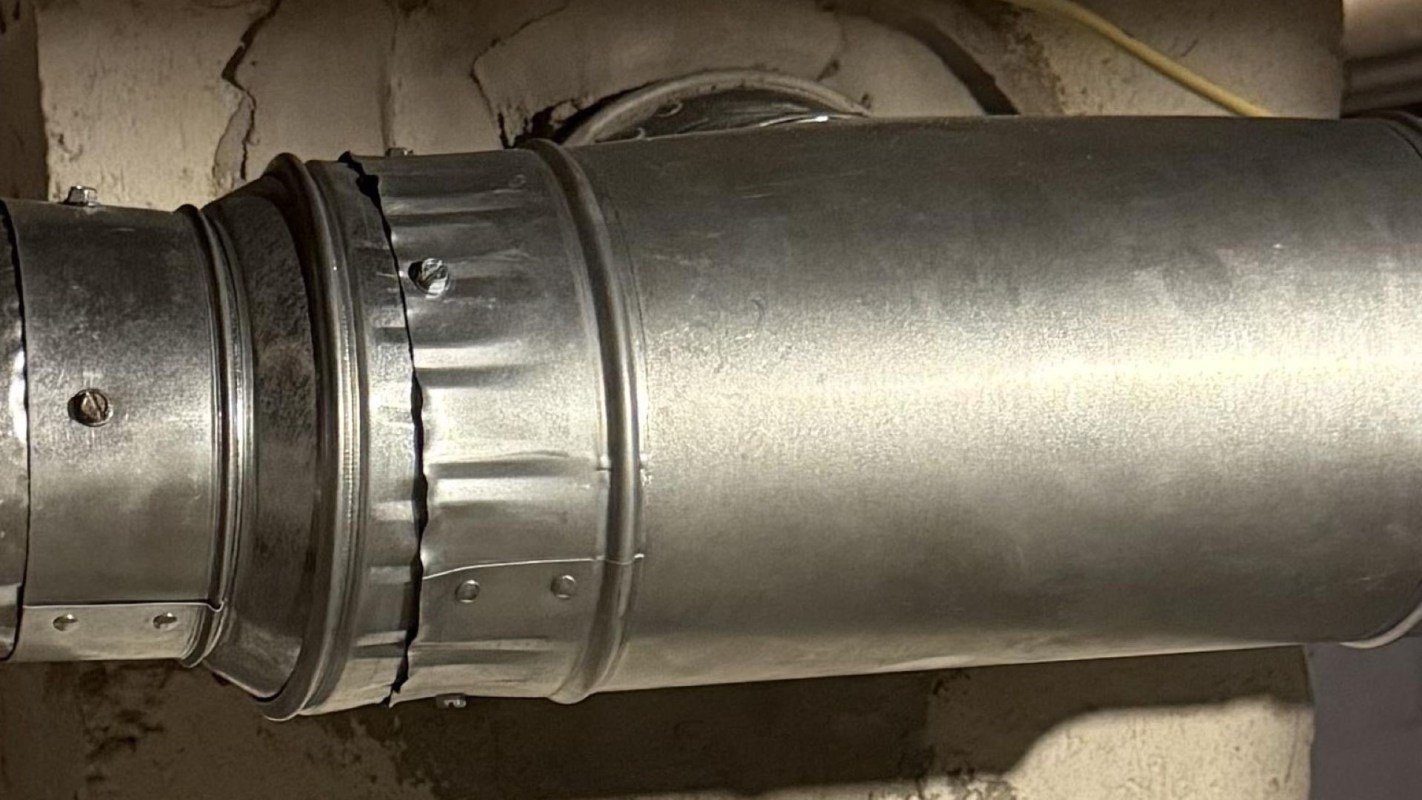
A homeowner who had a partial chimney rebuild was left wondering whether a newly shared vent for the furnace and water heater could send exhaust the wrong way — a concern users said could point to a venting problem that needs fixing.
Upgrading to a heat pump water heater can lower a home's utility bills because it uses less energy than older vented equipment, which is why some users would prefer that switch to spending more money on chimney-related fixes.
Here's what to know
In a Reddit thread, the homeowner said a company installed a chimney liner during a partial rebuild and connected both the furnace and water heater to one vent. The concern was whether, when only one unit is running, exhaust could come back through the other opening instead of continuing up the chimney.
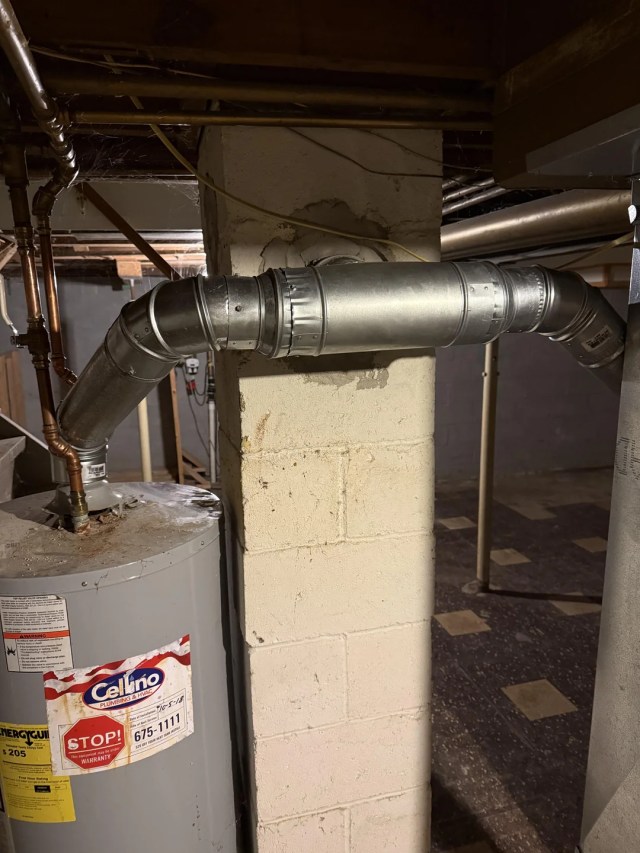
According to one user, that arrangement may be acceptable only under narrow conditions. "If both appliances were natural draft, it might be okay. But if one of them is induced draft, thats a huge problem and should be replaced with a Wye fitting instead of a Tee."
Another user explained that natural draft relies on hot air rising on its own, while induced draft uses "a small motor" to move exhaust out. After that explanation, the original poster replied: "I'm almost positive the furnace is induced draft in that case. Sounds like I have a problem that will need fixing."
Elsewhere in the thread, one user warned that the furnace "might send the exhaust out the water heater side."
More background
Users also noted that shared venting should not create opposing airflow. One person asked whether there were "any signs of backdraft on top of the water heater," suggesting that would be a clue the exhaust is not drafting properly.
Another reply said the installation looked incorrect for reasons beyond the tee fitting. "One thing about venting is it needs to always go uphill, to allow the hot exhaust to flow out better," the user said, adding that the furnace run seemed to slope downward toward the water heater, which could trap exhaust and "eat away at the venting itself."
Save $10,000 on solar panels without even sharing your phone number Want to go solar but not sure who to trust? EnergySage has your back with free and transparent quotes from fully vetted providers in your area. To get started, just answer a few questions about your home — no phone number required. Within a day or two, EnergySage will email you the best options for your needs, and their expert advisers can help you compare quotes and pick a winner. Solar panels can save you more than $50k over their 25-year lifespan, and EnergySage can help you save as much as $10k on installation. Which begs the question — isn't that worth an email or two? |

Other users focused on sizing and branch placement. One said the higher-BTU appliance should connect at the lower end of a properly sized wye, while another said the water heater flue pipe looked oversized.
Not everyone in the thread thought the best answer was more chimney work. One user said: "I'd rather get a high efficiency furnace and heat pump water heater instead. No need for a chimney anymore."
What can be done?
As a next step, users suggested checking whether the furnace is induced draft by looking for a sealed, motorized vent connection and watching for signs of backdraft near the water heater.
The discussion also pointed the homeowner toward outside help. One user recommended "chatting to a professional in your area." Another said to "call a home inspector and have him come out and take a look," adding that the company that did the work "have to remedy it" if the venting is wrong.
For homeowners thinking beyond a repair, Cala offers smart heat pump water heaters that line up with the alternative some Redditors preferred over more chimney fixes. Cala's customizable smart heat pump water heaters can help homeowners decrease their energy bills by heating water exactly when it is needed.
That upgrade can also simplify venting for homes with aging masonry chimneys and older combustion appliances. If you're already considering replacing a water heater because of venting concerns like these, Cala is one option worth comparing.
Where can I learn more?
These articles cover the same venting, flue, furnace, and water-heater safety issues raised here. They follow homeowners dealing with chimney warnings, wrong-sloped flues, dangerous furnace readings, and replacement choices.
• A homeowner shut off the water heater after a chimney vent warning raised urgent safety concerns.
• A new homeowner learned the water heater flue slopes the wrong way, raising carbon monoxide concerns.
• A worried homeowner sought help after 180 ppm is too high near a new furnace.
• Many homeowners weighing replacements compare heat pump vs. furnace costs, comfort, and carbon pollution.

Get TCD's free newsletters for easy tips, smart advice, and a chance to earn $5,000 toward home upgrades. To see more stories like this one, change your Google preferences here.






