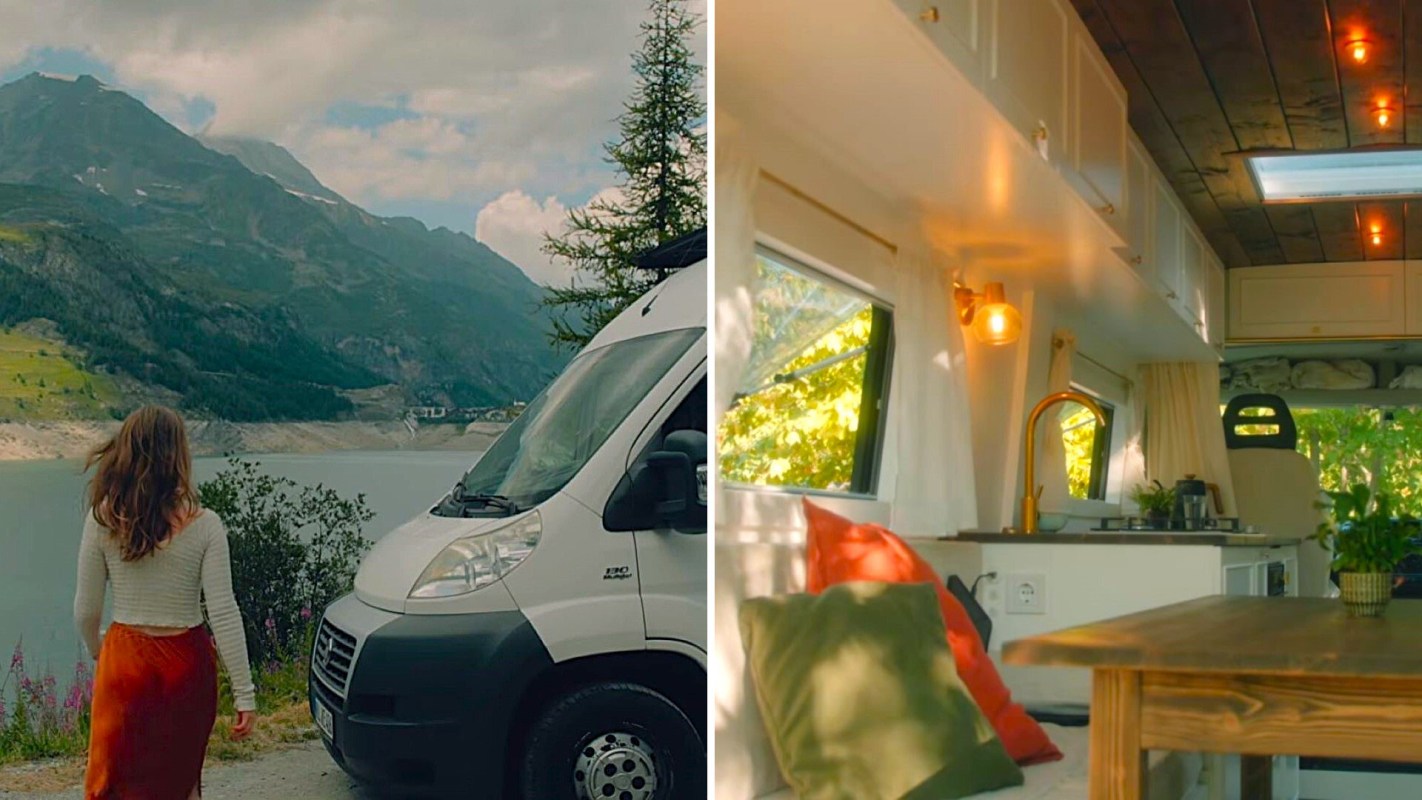
A self-built van home is giving viewers a close look at why tiny, mobile living continues to resonate with people priced out of traditional housing or simply looking for a different pace of life.
Here's what to know
On YouTube, full-time van-lifer Ev (@ev.winter) shared a tour of a self-built van they described as low-budget. The creator said it took "one and a half years" to build despite their lack of prior experience.
"Full time Van life is honestly my dream come true!" Ev said.
Rather than being set up as a weekend camper, the van was designed to work as a full-time home. Ev said it has many of the basics of a conventional living space.
To make the van feel brighter and more open, Ev put in a mostly white interior, seven windows, and wood finishes intended to make it feel "as much as possible like a tiny home."
The tour also shows a bathroom, a kitchen with several appliances, a large bed, and so much more.
TCD Picks » Quince Spotlight
💡These best-sellers from Quince deliver affordable, sustainable luxury for all




Reused materials also played a major role in the project. In the tour, Ev said the ceiling was made with secondhand wood and paint, and the floor was made from repurposed material from the creator's childhood home.
The van was also equipped for extended off-grid use. Ev said it has 32 gallons (120 liters) of water storage, a 460-amp-hour battery, and "almost 1 kilowatt solar on the roof."
"The car could survive at least 4 months completely off grid," the creator noted.
More background
For some people, van life or tiny-home living can reduce housing costs, encourage fewer possessions, and make better use of limited space. At the same time, the lifestyle comes with real compromises.
Those compromises can include losing stability and looking for safe and legal places to park. Ev also emphasized how costly it was to create this home.
What can be done?
Reusing materials, prioritizing storage, and choosing multi-functional items can lower costs and make a home feel more efficient and less cluttered.
"For the past 2 months, I've been living in it full time. And to be honest, I'm in love," Ev concluded.
Where can I learn more?
People have also explored similarly practical takes on off-grid living and energy-smart design.
• A home manufacturer unveiled sleek prefab tiny homes that recycle water and generate energy off-grid.
• A family built their own straw bale homestead with sustainable features for healthier living.
• Students in the Netherlands created a solar-powered motorhome for self-sustaining travel.

Get TCD's free newsletters for easy tips, smart advice, and a chance to earn $5,000 toward home upgrades. To see more stories like this one, change your Google preferences here.