


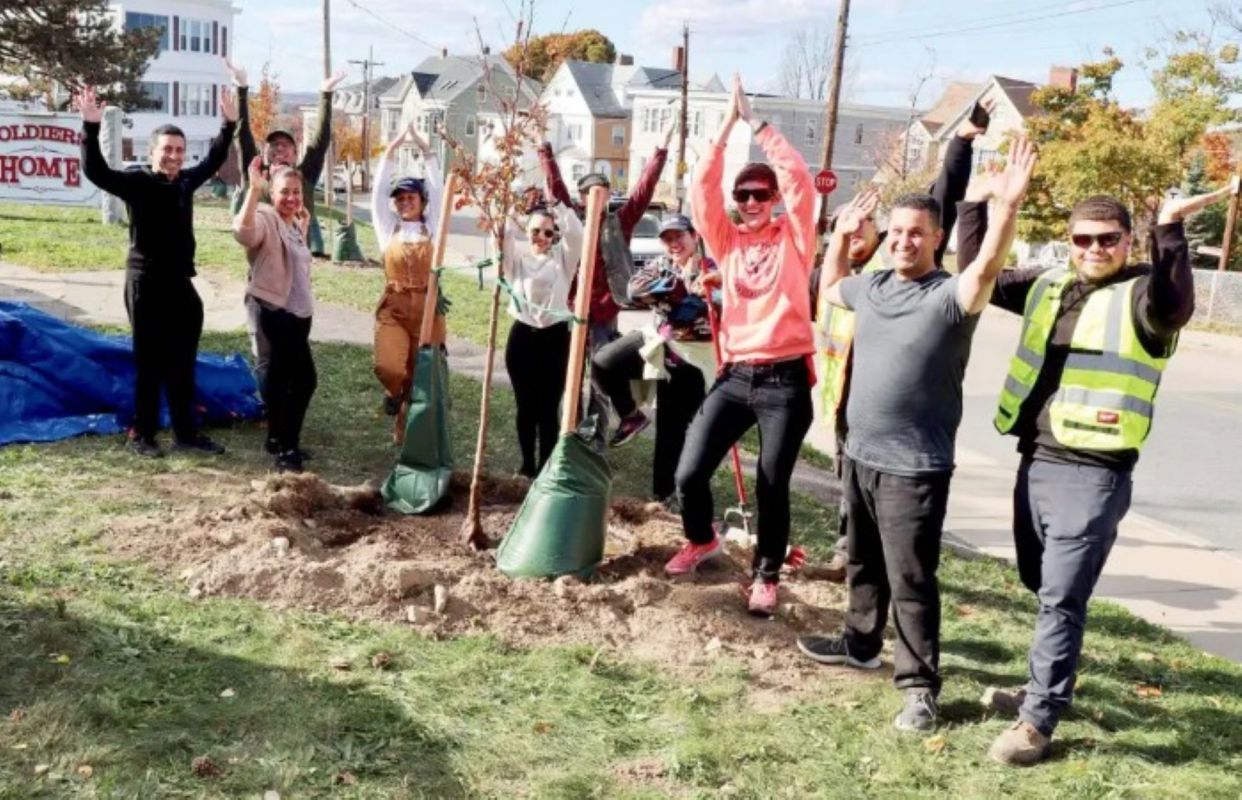
Massachusetts residents in several Greater Boston communities have an opportunity to bring more shade to their neighborhoods — and potentially cut down on home cooling costs — by claiming a free tree.
The Mystic River Watershed Association is pointing out the available programs, with giveaways open to eligible residents in Chelsea, Everett, Malden, Revere, Medford, and Cambridge.
Here's what to know
Residents can visit www.mysticriver.org/trees to learn about the program available in their community and sign up for a free tree, according to Everett Independent. The Greening the Gateway Cities MA Urban Canopy Project covers Chelsea, Everett, Malden, and Revere; the TreesMedford Fall 2026 Giveaway is for Medford residents; and the Green Cambridge Canopy Crew Tree Program serves people in Cambridge.
Trees not only add greenery, but their shade and cooling effects can also lower nearby temperatures and reduce how much energy homes need for cooling and heating.
That is especially important in Greater Boston, where, according to MyRWA, the most urban communities often have the least tree cover and are often the hottest. Those same communities also often include larger shares of low-income residents and people of color.
MyRWA said residents noted trees as one of the top solutions when asked what changes they wanted to see in their communities.
TCD Picks » Quince Spotlight
💡These best-sellers from Quince deliver affordable, sustainable luxury for all




More background
In dense urban neighborhoods, limited tree cover can contribute to poor air quality and make outdoor spaces more uncomfortable during the hottest months.
Trees absorb pollutants in the air, while their roots take in water that might otherwise contribute to polluted runoff flowing into rivers and streams. They also provide habitat for birds, insects, and other wildlife.
More greenery in a neighborhood can help reduce stress and support better mental health, while added shade can make streets, sidewalks, and yards more pleasant to use during heat waves.
According to MyRWA, the watershed spans 76 square miles and runs from Reading to Revere along Boston Harbor's northern edge. Its 21 municipalities include about 600,000 residents, among them many people who are disproportionately vulnerable to extreme weather, such as elders, low-income residents, people living with disabilities, and English-language learners.
What can be done?
Eligible residents can request a free tree through the local program serving their city. Planting on private property can help expand the region's tree canopy beyond public parks, paths, and parking lots.
MyRWA says it has already supported the planting of more than 1,000 shade trees on public property, and that resident tree planting remains key to expanding the canopy even further. A tree planted in the right place can also provide direct household benefits through added shade and lower air-conditioning demand.
A free tree can add to the aesthetics of a property, help manage heat, and support cleaner air and water across the Mystic River watershed.
Where can I learn more?
Free trees are one practical way to ease extreme heat and lower the energy it takes to stay comfortable at home. Here are a few stories on similar efforts, from neighborhood tree planting in Detroit to rebates, tax credits, and utility programs that can help residents cut cooling and electricity costs.
• In Detroit, the NFL Draft helped launch a tree-planting program to cool neighborhoods.
• Across several states, homeowners can tap thousands of dollars in heat-pump rebates.
• Federal tax credits could put up to $1,600 toward home energy-saving upgrades.
• Southern California Edison customers can join a state community solar program and trim electric bills.
• In the UK, officials are planning over $17B in home energy upgrades for households.
Each points to a different way households can prepare for hotter weather, whether through added shade, more efficient equipment, or utility-backed savings programs. For residents considering a free tree, they also outline a broader mix of options for keeping energy bills in check.

Get TCD's free newsletters for easy tips, smart advice, and a chance to earn $5,000 toward home upgrades. To see more stories like this one, change your Google preferences here.






