


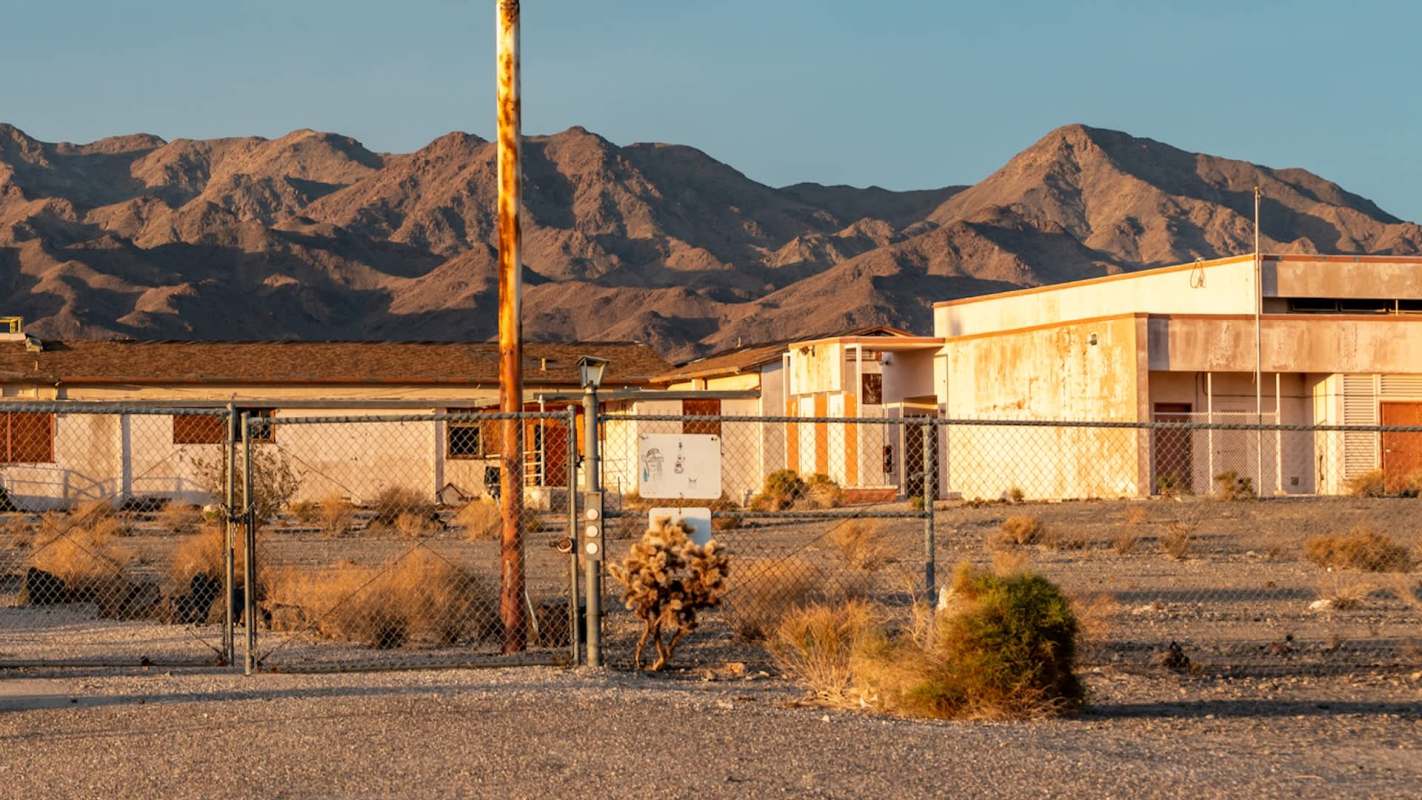
In Santa Barbara, California, an unused former school property on the Eastside could be put to use in a way that helps others — by turning it into affordable housing for teachers and school employees.
Supporters are getting closer to turning the site into 30 deed-restricted homes for district workers, a proposal aimed at easing the burden of living costs that keep many school employees far from the campuses where they work.
Here's what to know
According to Noozhawk, Santa Barbara's Finance Committee approved a $1 million loan to redevelop the Lawrence M. Parma School property at 915 E. Montecito St. The effort brings together the City of Santa Barbara, Santa Barbara Unified School District, and the Housing Authority of the City of Santa Barbara.
Under the proposal, the site would be redeveloped into a three- and four-story apartment complex with 30 homes total: 10 one-bedroom units, 12 two-bedroom units, and eight three-bedroom units, along with a community space for residents. The apartments would serve low-income families, with units restricted at 30%, 50%, and 60% of area median income.
Pointing to the pressure housing costs place on school employees, Councilwoman Wendy Santamaria said, "We have so many of our teachers and educators and other education staff that just cannot live anywhere near the schools that they are serving and the children they're educating."
The city financing comes with affordability protections that would stretch far into the future. To receive the loan, the project must keep its deed restrictions in place for 90 years, through 2116. The loan itself carries a 30-year term and a 3% interest rate.
TCD Picks » Quince Spotlight
💡These best-sellers from Quince deliver affordable, sustainable luxury for all




More background
The property was once home to the Lawrence M. Parma School, which closed in 1989. It later served as a children's center for several years before eventually becoming vacant.
Councilman Eric Friedman said one of the project's strengths are the larger apartments with more bedrooms, which he noted are often missing from affordable housing developments for families.
"To be able to have that flexibility here, that is deed restricted, will go a long way to have the diversity of the community that we want to serve," Friedman said.
Councilwoman Meagan Harmon said replacing the vacant site with housing would also benefit the neighborhood, saying, "It's just such a wonderful thing, and so many people will be served through this."
What's being done?
The loan funding comes from federal HOME Entitlement and Program Income money the city set aside in prior years. The remaining amounts were $353,543 for program year 2024, $507,453 for 2025, and $139,003 for 2026.
Caroline Paine, the city's Housing and Homeless Services manager, said the city receives those funds annually and can set some aside to support larger housing efforts. The reserve is helping move the workforce housing proposal closer to construction.
The development is still moving through the permitting process, and Santa Barbara Unified spokesman Ed Zuchelli said the district expects to share more about the project timeline.
Santa Barbara Unified Superintendent Hilda Maldonado thanked the city for taking this step to support educators. "Housing affordability is one of the greatest challenges facing our staff," Maldonado said. "Through this approval to develop workforce housing at the Parma site, the city is taking care of our educators who deeply deserve to be valued."
Where can I learn more?
Santa Barbara isn't the only place trying to turn overlooked properties and alternative housing models into more attainable homes. These stories look at office-to-apartment conversions, climate-focused affordable housing, mixed-use family projects, resident-owned communities, and large tiny-home developments.
• Across major cities, unused office space is becoming apartments that expand affordable communal living options.
• In British Columbia, affordable housing is protecting residents facing dangerous heat and rising costs.
• In Calgary, Moda's planners say equitable inner-city housing can make family life more connected.
• Across rural America, resident-owned mobile home communities are helping families resist displacement.
• In Springfield, Missouri, a tiny home community is keeping family rents under $500.

Get TCD's free newsletters for easy tips, smart advice, and a chance to earn $5,000 toward home upgrades. To see more stories like this one, change your Google preferences here.






