


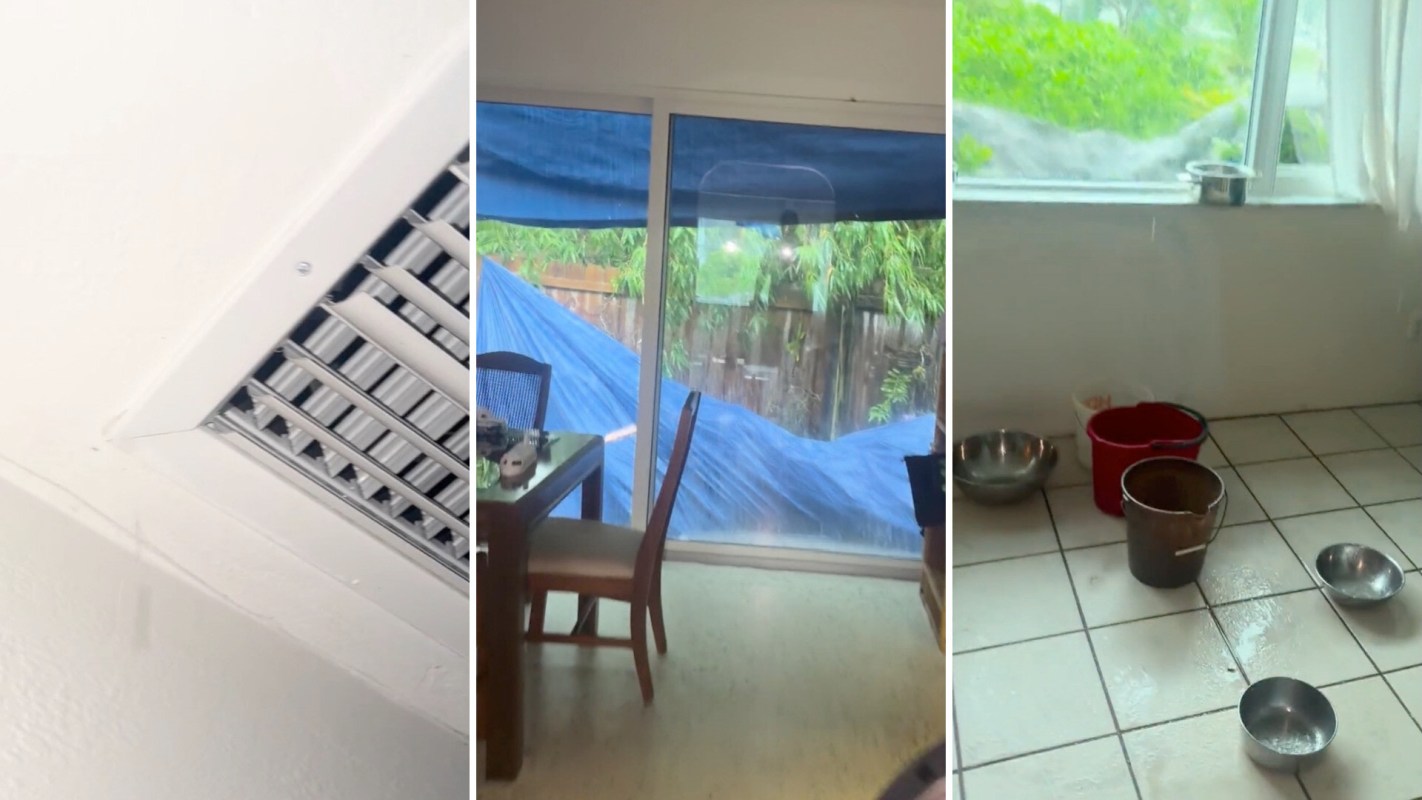
A South Florida homeowner says roof work went ahead despite an 80% rain forecast, and what was supposed to be a reroof ended with water getting into the house after the crew relied on tarps for protection.
Here's what to know
According to a Reddit post in the r/Roofing forum, the homeowner had specifically checked with the company before work started because the day's forecast called for a high chance of rain. They said the crew answered, "yeah, it will be fine, we are prepared for this. We have tarps," but later "it completely poured" while the roof decking was exposed.
(Click here if the embedded video does not appear.)
"Is it fair for me to ask for a reduction of the bill?" they asked. "I'm not sure where the water is right now and how much water in total really got in. But I can tell you that almost every room in the house showed signs of water intrusion. Now I have to worry about mold. And I'm going to have to paint over the areas where there's new staining."
Commenters largely rejected the idea that this was a matter of trimming 15% off the bill, even though that was the homeowner's initial question. "This is lawsuit territory not a reduction," one commenter wrote.
The OP also said the property has no homeowners insurance. They bought the home with cash, and said older South Florida houses like theirs can be denied coverage even after more than $100,000 in upgrades before the roof work.
TCD Picks » Quince Spotlight
💡These best-sellers from Quince deliver affordable, sustainable luxury for all




One of the strongest warnings came from a commenter who said they own a restoration and remediation company in South Florida. They wrote, "This is not 15% reduction territory. This is you need to take action to save your property territory," arguing that the more urgent issue is the moisture left inside the home.
More background
The homeowner said this was not a surprise weather problem. With daily rain already hitting South Florida, they said they raised the forecast concern before the job began and were told the crew was prepared.
Their biggest worry was how much water remained out of sight.
In one reply, a commenter said the repair list could extend to "decking, insulation, drywall, electrical and who knows what else."
A roofer in the comments said they had encountered this situation only once, and described returning with a crew to help remove wet insulation before paying to have it replaced. "Felt terrible and made $0 profit on that job," they added.
What can be done?
The advice in the thread was to treat the issue as damage control, not a pricing negotiation. One commenter wrote, "Get everything inspected by a professional and then talk to a lawyer," while another advised filing a claim with the roofer's insurance immediately.
The commenter who owns a restoration company in South Florida offered the most detailed guidance. They said the house should be dried out "ASAP," warned the homeowner not to let anyone "just place any old equipment and then claim it is dry," and said moisture in affected materials should be checked and documented as the drying continues.
Another commenter said the homeowner should get a copy of the roofer's errors and omissions policy and deal directly with the insurer's claims department rather than only the sales side. That commenter also said the homeowner should establish a remediation plan before any settlement talks.
On the payment question, one commenter said it made more sense to hold money back until repairs are handled than to ask for a cheaper roof. They wrote that a "10% deficiency holdback is standard to retain until everything is resolved," while stressing that this is different from a discount.
Where can I learn more?
As these articles show, roofing problems like this often turn into bigger fights over leaks, storm repairs, and insurance coverage.
• In Texas, solar panels left his roof leaking, and months later the damage remained unresolved.
• Tropical storm damage left a condo owner saying the HOA failed to act before damage spread.
• On the Texas Gulf Coast, one homeowner fought for hurricane-proof roofing approved by the HOA.

Get TCD's free newsletters for easy tips, smart advice, and a chance to earn $5,000 toward home upgrades. To see more stories like this one, change your Google preferences here.






