


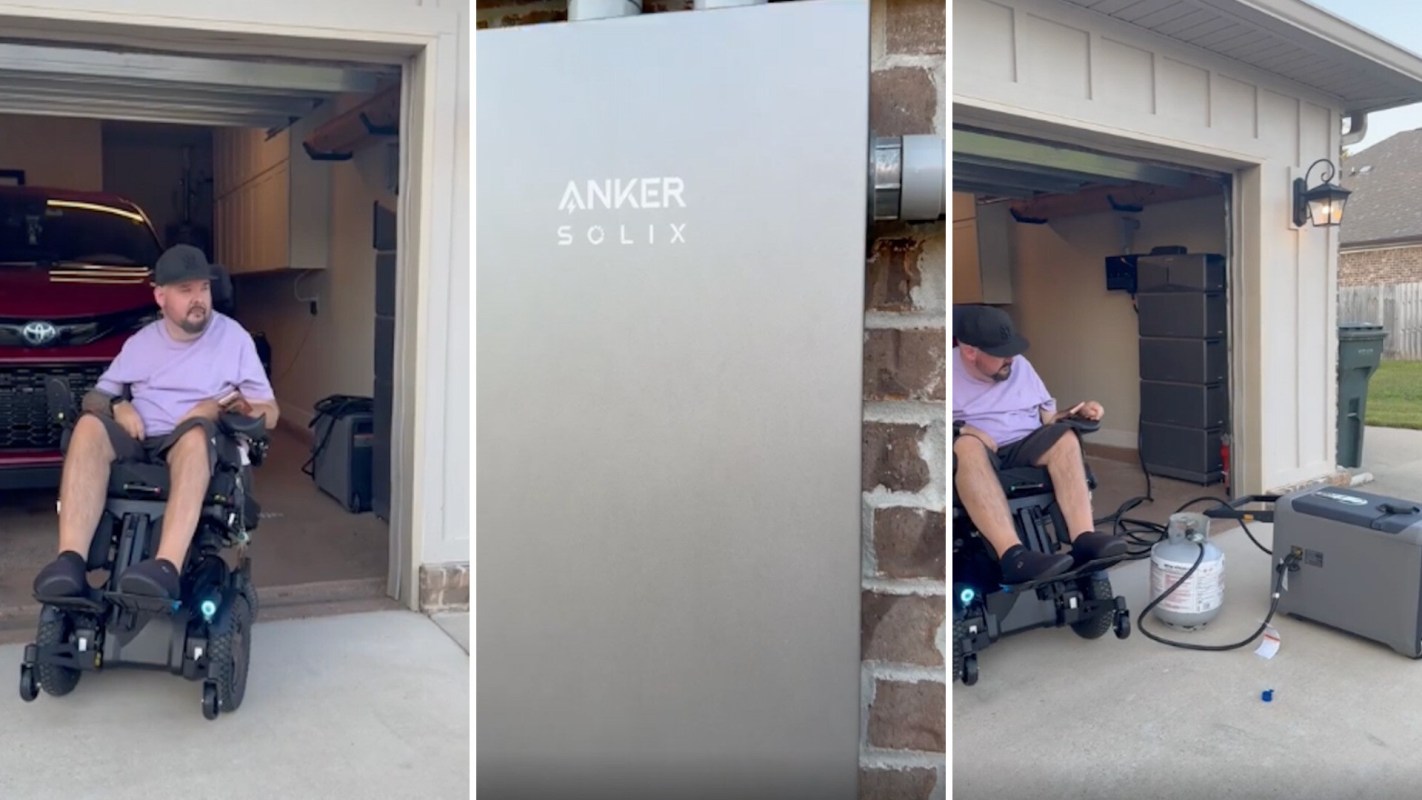
For many people, a blackout is little more than a frustrating inconvenience. For one Florida resident with a high-level spinal cord injury, however, losing power can threaten basic safety, mobility, and independence.
Here's what to know
In a post on the r/AnkerSOLIXCommunity subreddit, the C4 quadriplegic and full-time power wheelchair user shared a backup power setup with a breaker drill.
(Click here to watch the embedded video if it does not appear.)
To simulate an outage, the original poster shut off the main breaker and ran the house on an Anker SOLIX E10 whole-home backup system.
The OP said the setup includes one inverter, four battery modules, about 24 kilowatt-hours of storage, and a smart generator for longer outages.
One of the most important loads is the automatic exterior door opener because the OP cannot open those doors manually.
During the test, the system also kept a computer workstation, internet equipment, refrigerator, lighting, wheelchair charging, and medical/accessibility devices operating.
The OP said the bigger question for battery life is what a home is actually running. The household typically uses about 50 to 60 kWh per day, but cutting nonessential loads during an outage would let the system support critical equipment for much longer.
Save $10,000 on solar panels without even sharing your phone number Want to go solar but not sure who to trust? EnergySage has your back with free and transparent quotes from fully vetted providers in your area. To get started, just answer a few questions about your home — no phone number required. Within a day or two, EnergySage will email you the best options for your needs, and their expert advisers can help you compare quotes and pick a winner. Solar panels can save you more than $50k over their 25-year lifespan, and EnergySage can help you save as much as $10k on installation. Which begs the question — isn't that worth an email or two? |

More background
Living in Florida, where hurricanes can bring extended outages, means the issue is about far more than comfort, the OP mentioned.
The creator said one of the most valuable features is being able to control the generator from a phone. After a caregiver connects the propane and charging cable for the smart generator, the OP can start it through the SOLIX app, which gives more control and reduces reliance on others during an emergency.
"This is awesome," one commenter wrote.
Battery-backed systems can also provide broader resilience benefits. They can keep food cold, communication lines open, and essential devices running when severe weather knocks out the grid — while helping households reduce waste and avoid some of the financial losses associated with prolonged outages.
What can be done?
For homeowners considering backup power, planning around critical loads first means identifying the devices you need in an emergency — whether that is refrigeration, internet, medical gear, mobility equipment, or lights and phone charging — and sizing a battery system accordingly.
The OP is planning to add about 7 kilowatts of solar so the home can recharge its batteries during the day and rely less on propane.
"For me this isn't about being able to watch Netflix when the neighborhood loses power," the OP wrote. "It's about independence."
Adding battery storage stands out as one of the best ways to safeguard your home during power outages, cut energy costs, and move toward off-grid living. If you are interested in exploring home battery storage, EnergySage offers great options, including competitive installation estimates. EnergySage has teamed up with the electrification brand Qmerit to guarantee you get the best price on home battery storage solutions.
For another fantastic battery backup alternative, check out Pila. Its plug-and-play batteries cost just a fraction of a full-home backup system.
Where can I learn more?
Backup power can shape everything from storm readiness to day-to-day independence at home. Batteries, financing options, and portable setups can help keep essential devices running when the grid goes down.
• Palmetto says backup batteries without upfront costs can remove major adoption barriers.
• Renters can use a briefcase battery for outages to keep essentials powered.
• In Austin, Texas, utilities could tap home backup batteries to ease peak demand.

Get TCD's free newsletters for easy tips, smart advice, and a chance to earn $5,000 toward home upgrades. To see more stories like this one, change your Google preferences here.






