


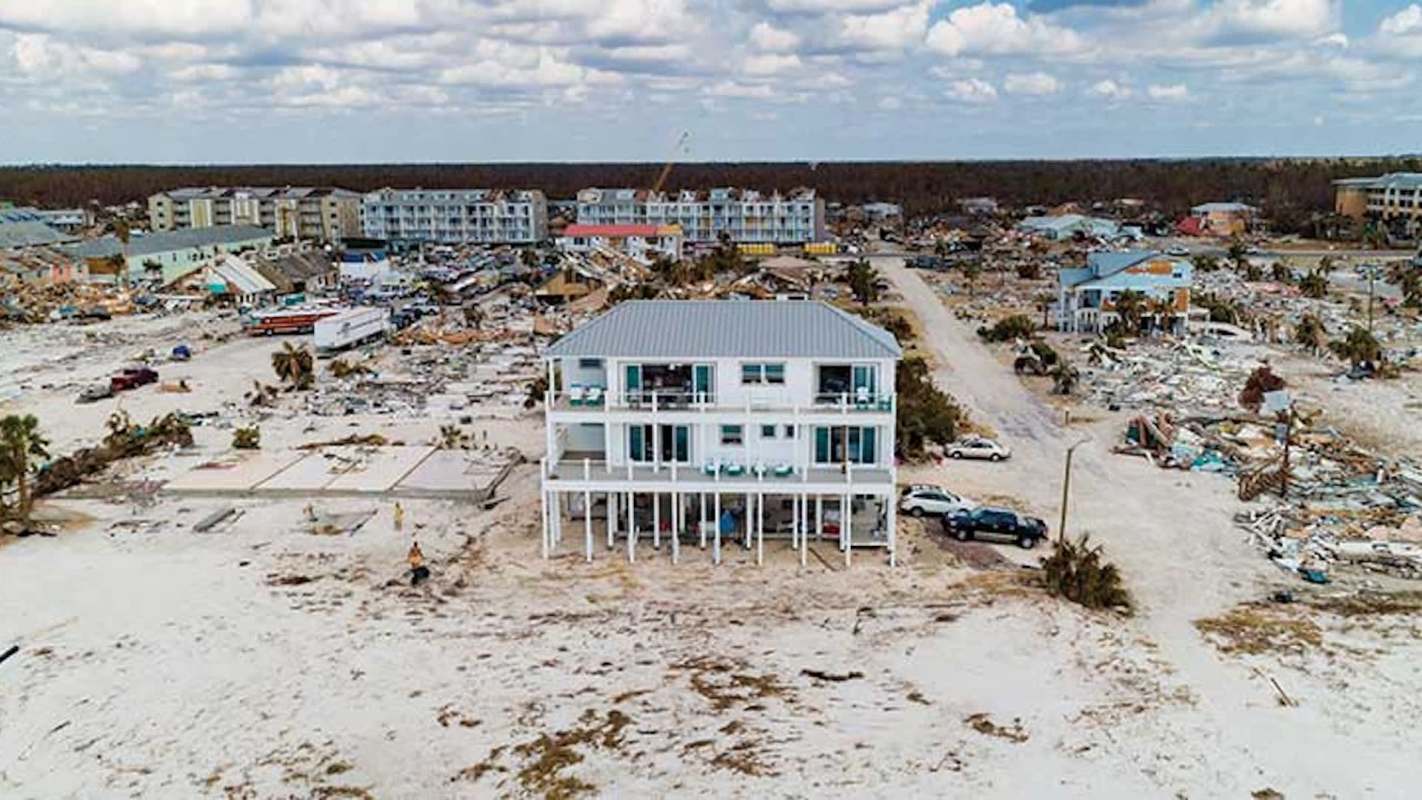
In 2018, Hurricane Michael devastated Florida's Panhandle, but one beach house became a vivid example of climate-ready design.
That house, the Sand Palace, stayed standing while most of the buildings nearby were destroyed.
Here's what to know
Its owners had the Sand Palace built to handle wind speeds about twice as high as required under state code, using reinforced concrete walls anchored to 40-foot pilings. The added protection increased the cost of the home by about 15% to 20%.
As The Conversation noted, the materials that improve a house's odds in a storm can make it look less green than it actually is because more concrete usually means a larger carbon footprint.
A building only stays low-carbon if it can keep serving its purpose over time.
Repairs after hurricanes, floods, or wildfires can generate substantial pollution through replacement materials, transport, reconstruction work, and temporary living arrangements. When a house makes it through a disaster without major damage, owners can avoid rebuilding costs, displacement, and everyday disruptions.
TCD Picks » Quince Spotlight
💡These best-sellers from Quince deliver affordable, sustainable luxury for all




That matters as extreme weather grows more common and more severe. Focusing only on a building's impact on day one can miss its long-term impact on both people and the planet.
More background
Insurance is one reason this way of thinking is picking up steam.
Building codes and green-rating programs often concentrate on what goes into a project, but insurers have clear incentives to care about how a home performs across its lifespan.
Homeowners who harden their properties against hurricanes often qualify for premium reductions of 15% to 30%. Strong roofs, impact-resistant windows, and other improvements that satisfy wind standards can all cut recurring expenses and improve the chances of staying safely housed after a storm.
Research also suggests that resilience can pay off environmentally.
In Catalonia, Spain, a study of flood-prevention infrastructure found that barriers and channel improvements caused higher construction pollution up front but avoided an estimated 58 metric tons of carbon-equivalent emissions for each flood.
The study projected that those avoided emissions would erase the initial climate cost of construction within 25 years, well inside the project's 50-year lifespan. The financial return arrived much sooner, in about two years.
What's being done?
Researchers want green building standards to factor in resilience alongside materials and energy use.
That means counting not only the damage caused when a building fails but also what is prevented when it holds up.
They identify three major gaps. One is the environmental and financial burden of supporting people while a damaged building is unusable, including short-term housing, backup power, and travel. Another is the cost of strengthening a building after a disaster so it has a better chance of surviving the next one.
The third gap involves the benefits of strong standards: avoiding repairs, downtime, pollution, and disruptions. That can translate into shorter recovery periods for families, fewer interruptions to essential services, and less risk that a home will lose its function for months.
Resilience-focused features may add to a home's up-front price, but they can also protect savings, lower insurance bills, and make severe weather far less disruptive.
Even if a simple carbon tally suggests otherwise, a house that remains standing can be good for both people and the environment. What is missing is enough incentive to make durable design the rule rather than the exception.
Where can I learn more?
Building for storms goes beyond reinforced walls and deep pilings. Several factors can determine whether a home stays livable and low-carbon when severe weather hits, including clean energy systems, neighborhood design, and upgrade costs.
• At large solar farms, hurricane winds can damage infrastructure as severely as homes.
• In Vermont, the storm-resistant, solar-powered Hillside East neighborhood is being built all-electric.
• At EnergySage, interconnected solar installation costs steer which home upgrades come first.
Resilience comes down to more than a single material choice or an insurance discount. It also depends on whether homes and energy systems can keep working when the next disaster hits.

Get TCD's free newsletters for easy tips, smart advice, and a chance to earn $5,000 toward home upgrades. To see more stories like this one, change your Google preferences here.






