


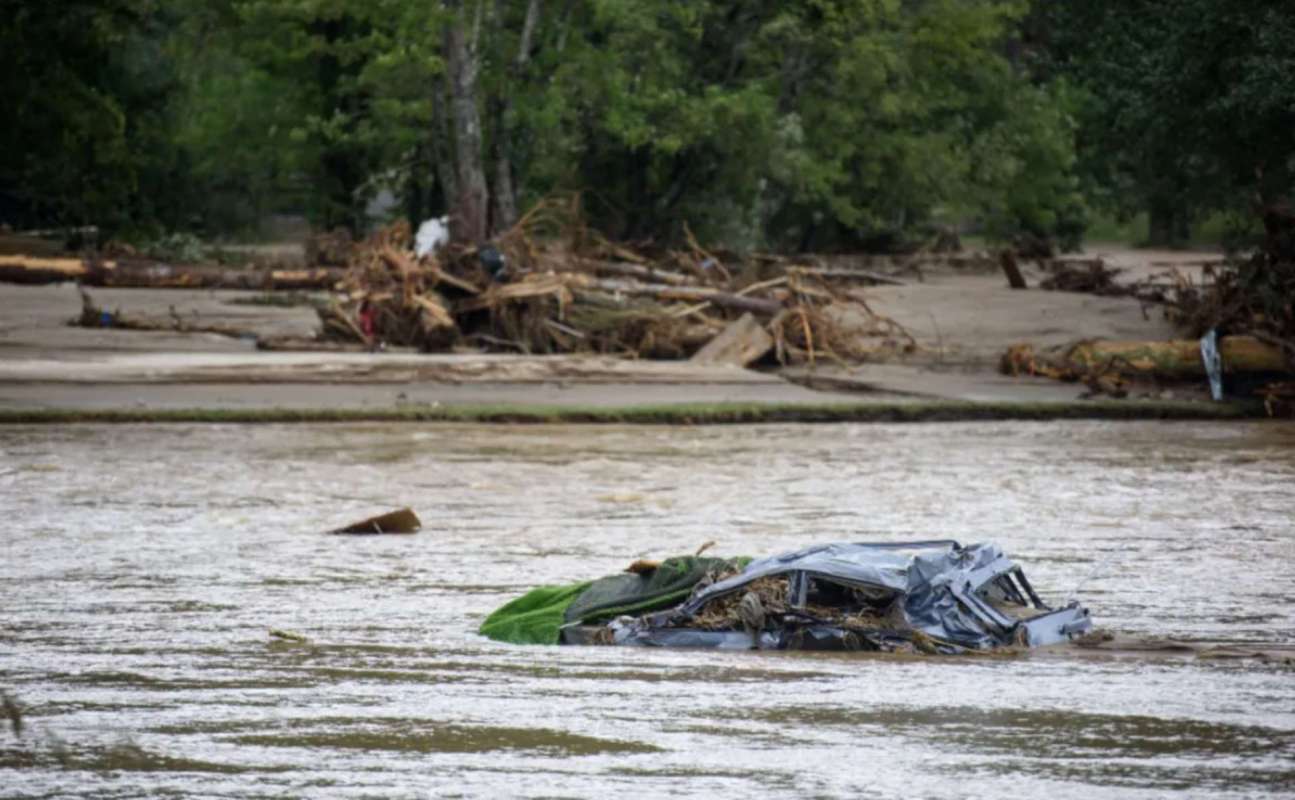
When Hurricane Helene tore through western North Carolina, Liz Barker, a North Carolina midwife, saw her home in Swannanoa flood all the way to the attic.
What happened?
Early on September 27, 2024, Barker got a flash flood emergency alert along with a mandatory evacuation order for her neighborhood near Asheville.
She quickly grabbed a bag and left with her teenage daughter and dog.
According to ABC News, Helene's heavy rain pushed the Swannanoa River to record heights in an area that had already been soaked by another storm.
When she came back, her house was so badly damaged that she could no longer live there.
Barker said 24 homes on her street were flooded up to the gutters, but only one had flood insurance.
TCD Picks » Quince Spotlight
💡These best-sellers from Quince deliver affordable, sustainable luxury for all




Countywide, fewer than 1% of homes in Buncombe County had federal flood insurance when Helene arrived, according to the Insurance Information Institute.
That shortfall may reflect how flood risk is understood.
Barker said, "I never in a million years thought that we would get flooded from the river," and her property was outside FEMA's Special Flood Hazard Area, so flood insurance was not required for a federally backed mortgage.
Why does it matter?
Experts say her situation reflects a wider misunderstanding about flood risk that can leave homeowners exposed to major financial losses after disasters.
Susan Crawford, a former Harvard Law School professor and author on climate issues, told ABC News that FEMA flood maps are "seen by the public now as sort of binary representations of risk."
That mindset can leave people outside the clearest flood zones feeling safer than they are, even though floodwaters do not stop neatly at mapped boundaries.
Crawford said many people end up thinking, "If I'm inside the area, then I face risk and should get flood insurance. If I am outside, I don't need to."
Ed Kearns, chief science officer at First Street and former chief data officer at the National Oceanic and Atmospheric Administration, said, "There's a big misunderstanding in America of what being in a FEMA flood zone means."
Without flood coverage, homeowners can face large rebuilding expenses, extended stays in temporary housing, and ongoing mortgage payments on homes that may be badly damaged or impossible to occupy.
As stronger storms and heavier rain become more common, the financial impact can spread beyond individual families and strain entire communities.
What's being done?
FEMA said it is revising some flood maps, and the process takes at least 18 months.
The agency said it "works directly with communities to ensure local knowledge and data sources — including recent mitigation projects — are reflected in every update."
FEMA also said it is updating its modeling, is "managing approximately 1,000 active projects nationwide," and wants to provide "a more comprehensive view of flood risk that extends beyond traditional regulatory boundaries."
Still, Crawford said some of the changes "still aren't looking at rainfall risk, at future conditions risk, showing where development is going to increase risks of flooding, or at climate change."
Kearns said private tools such as First Street's may generate different results from FEMA's public maps because they include heavy rainfall and climate-related factors.
Barker had considered getting flood insurance after a tropical storm caused flooding in the area in 2021, but the cost and her belief that the risk was still low led her not to buy a policy.
"I definitely didn't anticipate things to be nearly as bad as they actually became," Barker said.
Kearns emphasized the same concern, saying, "There's a big misunderstanding in America of what being in a FEMA flood zone means."

Get TCD's free newsletters for easy tips, smart advice, and a chance to earn $5,000 toward home upgrades. To see more stories like this one, change your Google preferences here.






