


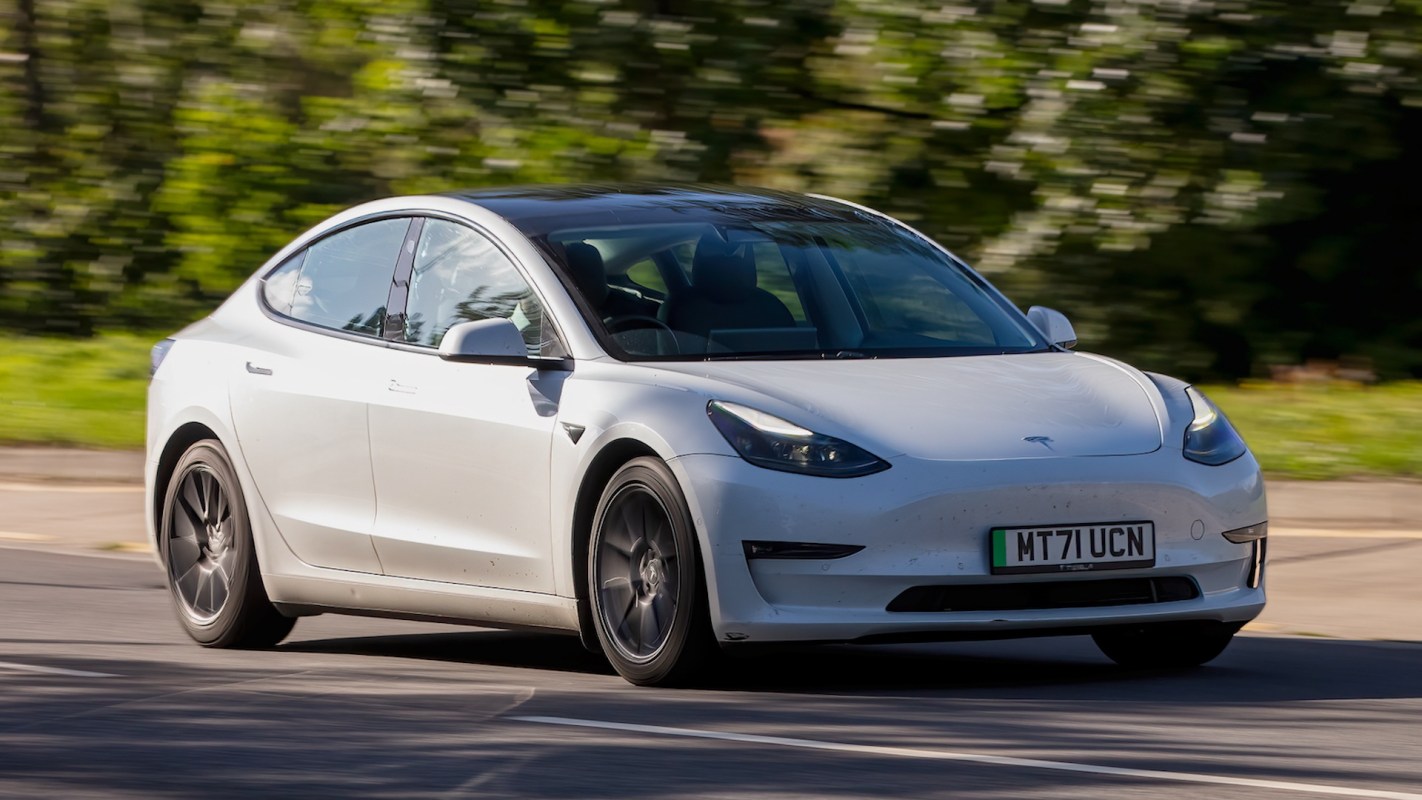
An EV owner's cost breakdown is getting attention online for a simple reason: It challenges the idea that electric cars stop saving money when gas gets cheap.
In a Reddit post published before the rise in gasoline prices fueled by the U.S. and Israel's war on Iran, a driver compared a Tesla Model 3 with a typical 30-mile-per-gallon gas sedan and found that even with national gas prices around $2.90 per gallon, the EV still came out ahead.
The post broke down a simple 2025 comparison based on average U.S. driving habits: driving 14,000 miles per year in either a 30 mpg gas car or a Tesla Model 3 with gas priced at $2.90 per gallon and home electricity costing 17 cents per kilowatt-hour.
The poster estimated that the average gas-powered vehicle would cost about $1,354 per year to fuel, while a Tesla Model 3 would cost roughly $619 annually to charge at home. In total, electric driving accounted for over $700 in savings, and these estimates also don't include the typically lower maintenance costs associated with EVs.
While EV owners who charge at public stations already save significantly by avoiding fuel costs, this estimation highlights how those who charge at home can stretch those savings even further.
Whether you're a long-time EV owner or are considering making the switch, you may be surprised by how much at-home charging can reduce your monthly costs. To see how much you could save, and to receive quick installation estimates from vetted installers, connect with the charging experts at Qmerit.
Transportation is one of the biggest monthly expenses for many households. A saving of roughly $735 a year on fueling could make a real difference, especially for drivers who commute long distances. Unlike gas prices, which can swing quickly, home charging costs are often more stable.
There are caveats, of course. Public fast charging can be more expensive than plugging in at home, and electricity rates vary by state. Insurance, registration fees, depreciation, and upfront sticker prices also affect the total cost of ownership.
Save $10,000 on solar panels without even sharing your phone number Want to go solar but not sure who to trust? EnergySage has your back with free and transparent quotes from fully vetted providers in your area. To get started, just answer a few questions about your home — no phone number required. Within a day or two, EnergySage will email you the best options for your needs, and their expert advisers can help you compare quotes and pick a winner. Solar panels can save you more than $50k over their 25-year lifespan, and EnergySage can help you save as much as $10k on installation. Which begs the question — isn't that worth an email or two? |

Still, EVs often come out ahead with reduced routine maintenance, including no oil changes, no spark plugs, and less brake wear thanks to regenerative braking.
One commenter was quick to point out that the economics of EV driving also depend on how and where drivers charge.
"I drive ~28k miles/yr and charge for about $.04/kwh so it's a no-brainer for me," they commented.
While the exact savings will vary, charging an EV at home is typically much cheaper than relying on public chargers, and that difference alone can add up to hundreds of dollars in annual savings.
If you're curious about Level-2 at-home charging, check out Qmerit's free resources.
Drivers looking to lower charging costs even further may want to consider installing solar panels. By powering an EV with energy from your own roof, you may be able to reduce charging costs more than if you rely on grid electricity alone.

Get TCD's free newsletters for easy tips, smart advice, and a chance to earn $5,000 toward home upgrades. To see more stories like this one, change your Google preferences here.






