


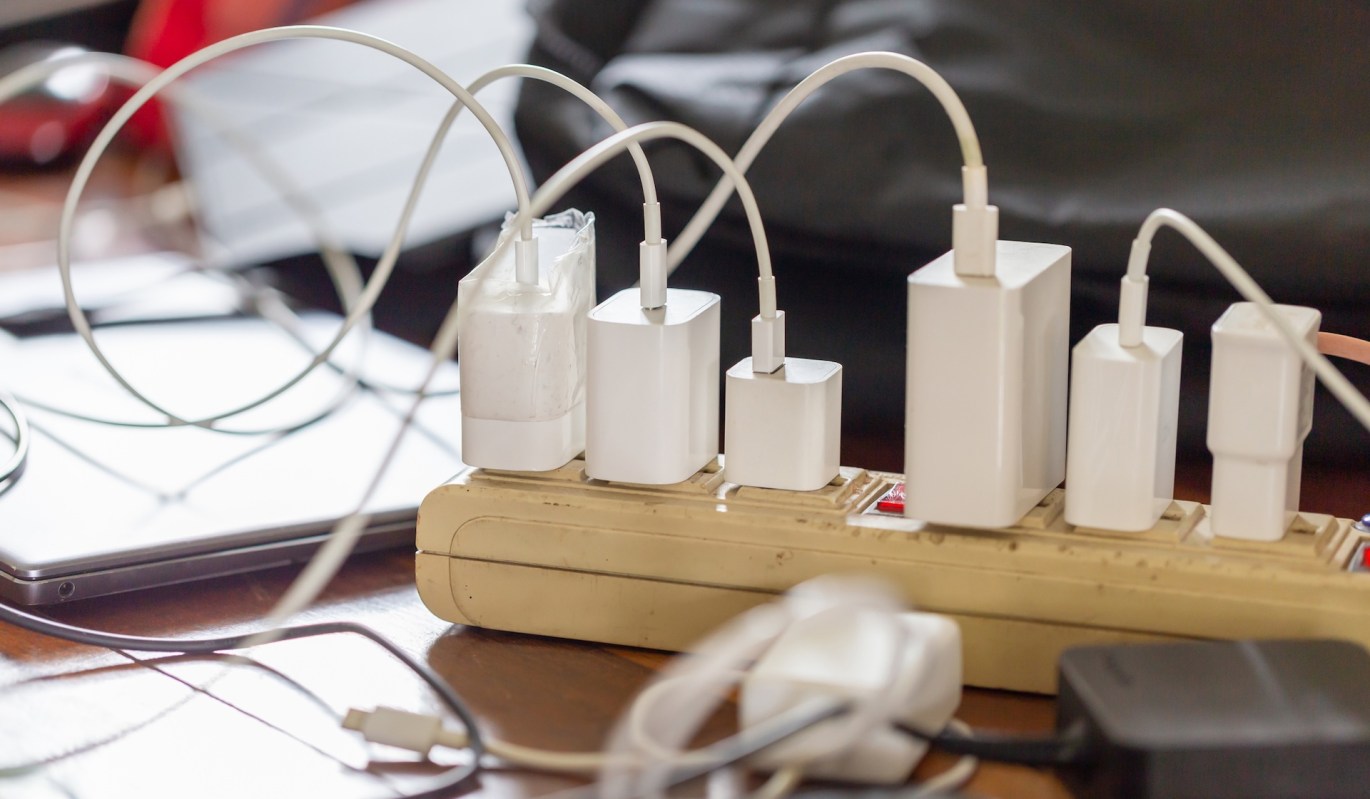
A phone charger sitting in an outlet may barely move the needle on your power bill. A social media post, however, shows that for most homes, the real electricity costs come from much bigger equipment.
The contrast that grabbed attention was simple: about 0.9 kilowatt-hours over a full year for an idle phone charger compared with 2,706 for an electric water heater.
What's happening?
A chart by the Energy Information Administration posted on Reddit compared yearly electricity use from everyday household devices and highlighted how small standby power use can look next to that of major appliances.
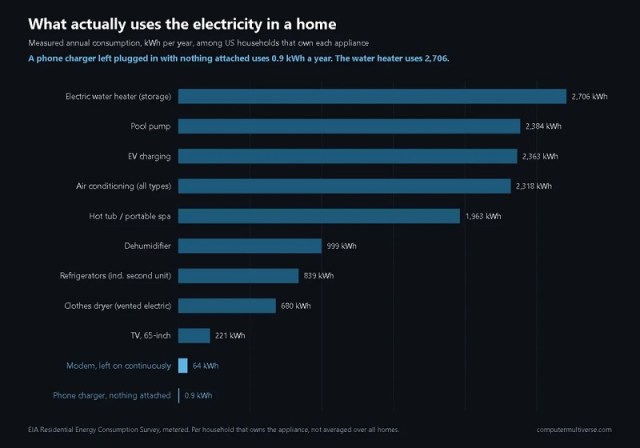
The OP showed an image that broke down everything from a pool pump to a modem.
One of the clearest takeaways was the gap between the phone charger and electric water heater.
People in the comments pointed to the same large energy hogs.
TCD Picks » Quince Spotlight
💡These best-sellers from Quince deliver affordable, sustainable luxury for all




"I expected my EV to be electricity-hungry, but I stopped tracking it within months because the water heater and air conditioner are the culprits," one commenter wrote.
Why does it matter?
A common budgeting mistake is focusing too much on tiny energy drains while overlooking the appliances that actually drive electric bills.
For most households, the biggest opportunities to reduce electricity use come with water heating, air conditioning, heating, dehumidification, clothes drying, and refrigeration.
While unplugging one idle charger may feel productive, it is unlikely to make any noticeable difference in annual energy costs.
By contrast, even modest reductions in large loads can add up.
Improving how a water heater or AC system runs can deliver much larger returns than trying to eliminate every small load.
The thread also highlighted how much local weather and home design can shape electricity demand.
Commenters from hot parts of the United States described cooling as a necessity rather than a luxury, especially in old all-electric homes.
What can I do?
Start with the biggest loads first.
Water heating is often a good place to begin. Lowering the temperature setting within manufacturer guidance, insulating accessible hot-water pipes, altering wasteful hot-water habits, and replacing an aging unit with a more efficient model can all help.
Cooling is another major target. Cleaning HVAC filters, sealing air leaks, using a programmable thermostat, and running dehumidifiers only when necessary can reduce wasted electricity without sacrificing comfort.
It can also help to audit the extras. A second fridge, wine cooler, deep freezer, or hot tub may cost far more to run than many people expect.
If an appliance is rarely used, unplugging or retiring it may save more than years of unplugging chargers.
Focus your effort where the kilowatt-hours are.
The best energy hack may not be the most obvious one.

Get TCD's free newsletters for easy tips, smart advice, and a chance to earn $5,000 toward home upgrades. To see more stories like this one, change your Google preferences here.






