


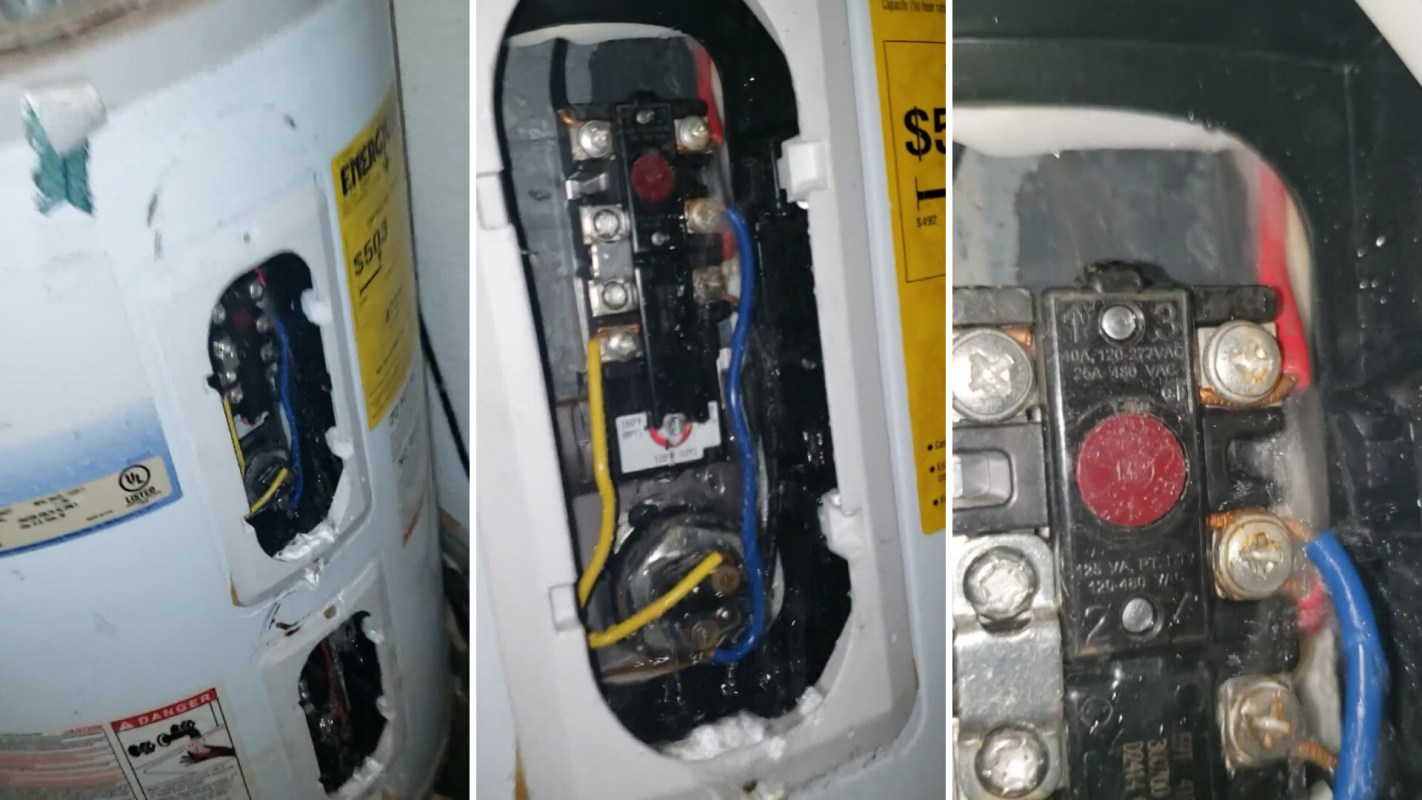
A homeowner trying to track down a water-heater problem noticed a strange pattern: Water was showing up near the upper thermostat section of an electric unit, and the leaking intensified whenever cold water was being used elsewhere in the house.
For anyone already facing a replacement, that kind of failure can also become a money-saving turning point. Switching from a standard electric resistance tank to a heat pump water heater can often cut water-heating costs.
What happened?
In a post on Reddit, a homeowner shared that their electric water heater only leaked around the upper thermostat/electrical area when the cold-water supply valve was on.
(Click here if embedded video doesn't play.)
To stop the leaking, the homeowner had already turned off power to the unit and shut off the water. They also said the visible pipe connections, valves, and nipples appeared dry, which suggested the water wasn't coming from an obvious top-side fitting.
If opening a cold-water faucet or shower makes the leak heavier, it can point to a problem inside the tank assembly itself — such as a failed gasket, a leak around the heating element area, or even a compromised tank seam — because incoming cold water increases pressure and movement through the unit.
"The more I open the cold water faucet or shower, the heavier the leak gets," the OP wrote.
Why does it matter?
Any leak near an electrical compartment is a safety issue, even if it seems minor at first. Water and energized components are a dangerous combination, which is why shutting off the breaker is so important before investigating further.
Save $10,000 on solar panels without even sharing your phone number Want to go solar but not sure who to trust? EnergySage has your back with free and transparent quotes from fully vetted providers in your area. To get started, just answer a few questions about your home — no phone number required. Within a day or two, EnergySage will email you the best options for your needs, and their expert advisers can help you compare quotes and pick a winner. Solar panels can save you more than $50k over their 25-year lifespan, and EnergySage can help you save as much as $10k on installation. Which begs the question — isn't that worth an email or two? |

There's also the cost factor. A failing electric resistance water heater can waste both water and energy, and once corrosion or internal leaks begin, repairs aren't always worth it — especially for older tanks that may already be nearing the end of their useful life.
Heat pump water heaters use much less electricity than conventional electric tanks, which can translate into lower monthly bills, and many households may also qualify for local rebates or federal tax incentives that reduce the upfront cost.
What can I do?
If a water heater is leaking over or near the thermostat compartment, the safest move is usually to leave the power off, shut off the cold-water supply, and avoid reopening the access panel unless you know exactly what you're doing. A licensed plumber can determine whether the issue is a replaceable component, such as a gasket or element seal, or whether the tank itself has failed.
If replacement is the better path, it may be worth looking beyond another standard electric tank. Cala makes smart heat pump water heaters aimed at giving homeowners more control over both energy use and hot-water timing. Its customizable smart heat pump water heaters help homeowners decrease their energy bills by heating water exactly when it's needed. That can be especially helpful for families with predictable routines since the unit can avoid wasting electricity keeping water hot around the clock.
Rebates, tax credits, and lower operating costs can make a high-efficiency upgrade more affordable than it first appears, and Cala is one example of how newer water-heating technology is being built around both savings and convenience.

Get TCD's free newsletters for easy tips, smart advice, and a chance to earn $5,000 toward home upgrades. To see more stories like this one, change your Google preferences here.






