


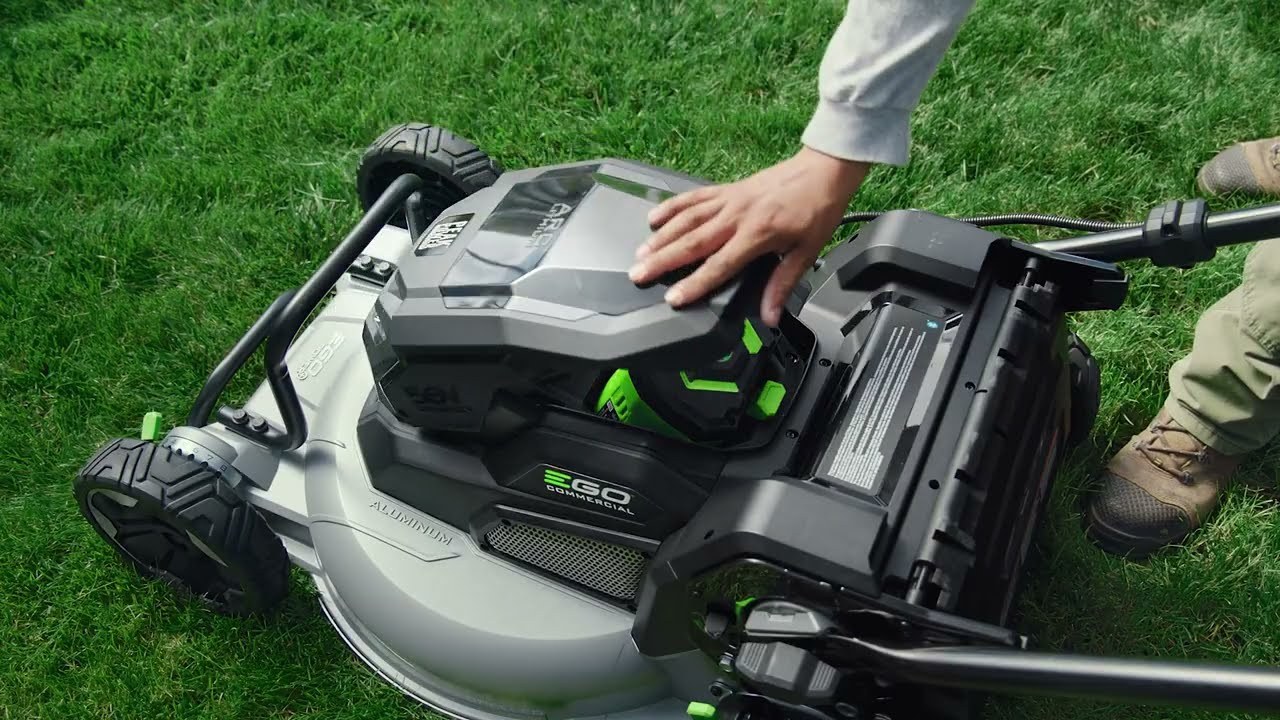
An Ego mower owner nearing winter storage started worrying after an unforced error. They wanted to know if charging up their mower to full juice and leaving it without use would bite them in the behind later.
Here's what to know
That discussion came up on Reddit, where the owner explained their concern.
"Probably just mowed my lawn for the last time this year," they shared. "Without thinking, I put the battery in the charger and allowed it to fully charge. Since I probably won't use it again until next spring, is this bad?"
Replies in the discussion were largely reassuring, with other owners saying Ego packs automatically self-discharge to a lower storage level after about 30 days.
One commenter pointed to a built-in safeguard that should ease the original poster's worries.
"It will discharge to 30% on its own if you just leave it alone for 30 days," they wrote. "No worries. Now you won't need to make a follow up post asking why you found your battery flashing its lights and slightly warm to the touch in a month."
TCD Picks » Quince Spotlight
💡These best-sellers from Quince deliver affordable, sustainable luxury for all




For battery-powered yard tools, storage may require less hands-on management than many people expect, especially when the battery management system handles part of the process automatically.
More background
Putting the mower away does not necessarily mean putting the battery away, too. Several commenters noted that late fall and early winter can still be an active season for other Ego tools, particularly for leaf cleanup.
The replies made that point from a few angles.
"What about blowing leaves? Are you sure you are really done?" one commenter wrote.
Another said: "You're not done. Blowing leaves, snow shoveling all require a battery."
A third described using the same battery ecosystem for a blower, mulcher, pruner, chainsaw, and zero-turn mower once mowing season winds down.
Another commenter said they had "added the pole saw" and then "added the extender," calling it "tree cleanup season." Evidently, the battery was useful for a range of yard jobs that continue after the last mow.
A shared setup can mean getting more use out of existing batteries and chargers, rather than relying on separate power sources for each tool.
What can be done?
For straightforward winter storage, the simplest advice in the thread was to do nothing and let the pack manage itself. Some replies suggested there may be no need to treat the battery as offseason gear yet, given all the other uses it could have around the lawn.
The thread also had some humor, with users quipping, "Straight to jail" for "assault on battery!" Another commenter had their own proposal for the OP.
"If society is to accept girl math as a thing, I propose Ego math," a user joked. "If you have a fully charged battery you don't plan on using in a reasonable time frame you 'must' buy another tool which will let you use that battery."
Where can I learn more?
Similar questions often arise about battery-powered lawn tools and battery limits.
• On a hilly quarter-acre, a battery mower flashed red twice but still finished the job.
• During a blackout, one homeowner found power tool batteries doubled as backup power for essentials.
• A first-time homeowner bought a $20 electric mower at a garage sale and got hooked.
• DIYers dismissed it at first, then used a tiny battery chainsaw all the time for cleanup.

Get TCD's free newsletters for easy tips, smart advice, and a chance to earn $5,000 toward home upgrades. To see more stories like this one, change your Google preferences here.






