


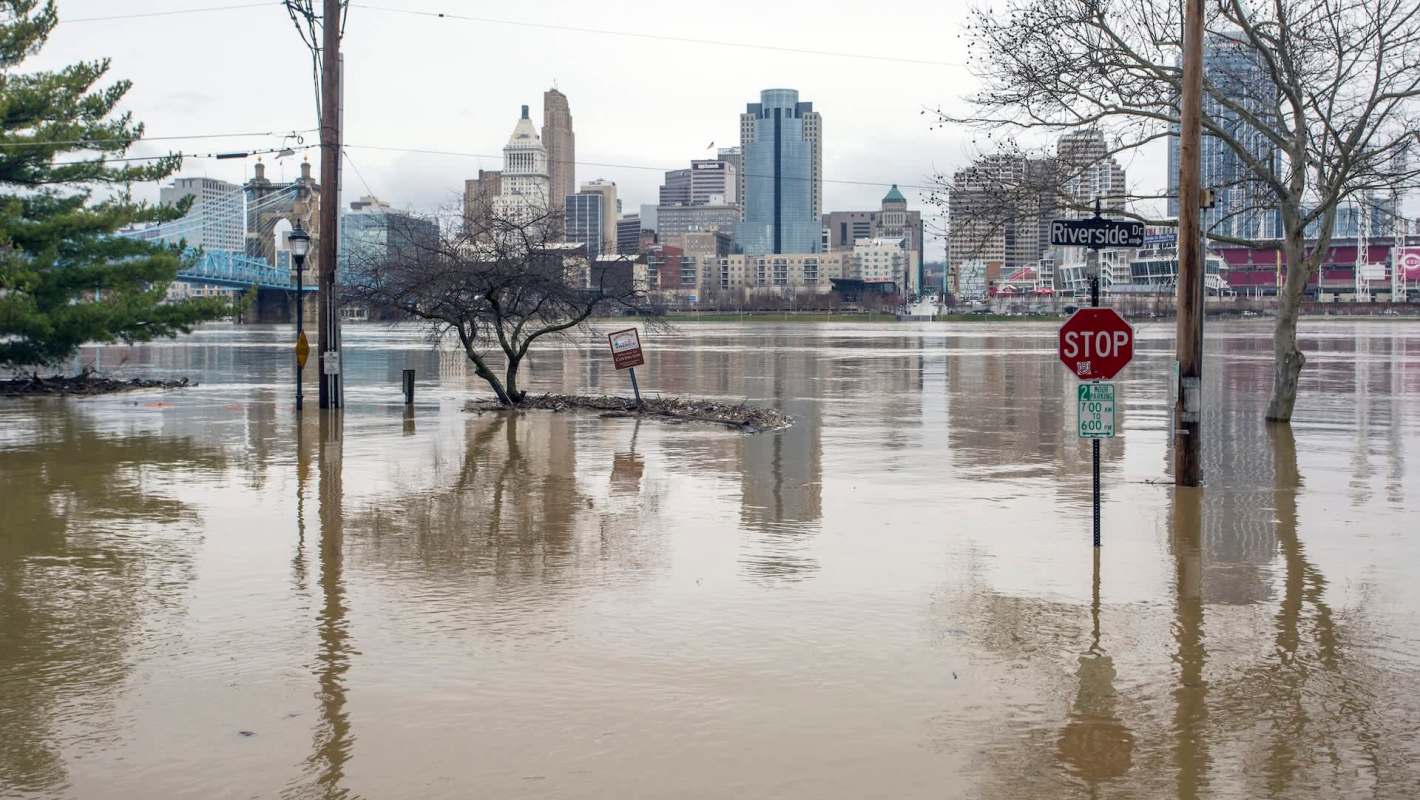
During a historic July 17 cloudburst in Cincinnati's Oakley neighborhood, the floodgate over Duck Creek stayed open as water spread through roads, sewer lines, homes, and businesses, leading to questions about whether the barrier failed or was overtaken by the storm.
What happened?
According to The Cincinnati Enquirer, city officials and the U.S. Army Corps of Engineers are investigating why the Duck Creek floodgate remained open during last week's flash flooding.
More than six inches of rain fell on Oakley in a little over an hour, a remarkable total that swamped drainage systems across Cincinnati's East Side.
From Mainly Art Vintage Furniture on Madison Road, owner Mark Fisk said he watched water rise near the floodgate and kept expecting it to activate.
"We were sitting here going, 'When is it going to close?'" Fisk said. "It never did."
Officials said the gate may have reduced some overflow from the creek, but they also stressed that the storm was so intense that floodwater was coming from several directions at once.
TCD Picks » Quince Spotlight
💡These best-sellers from Quince deliver affordable, sustainable luxury for all




"The floodgate is to prevent the creek from overflowing. That is not the reason there was flooding in the roadway," city spokesperson Mollie Lair said.
University of Cincinnati civil engineer Patrick Ray used stark language to describe the storm.
"That's a catastrophe," he said. "That's a crazy freaking precipitation event."
Why does it matter?
The flooding forced businesses to close, filled basements, destroyed belongings, and generated more than 900 sewer backup reports across the region. It also left behind cleanup expenses, lost income, mold concerns, exposure to contaminated floodwater, and what could be a long recovery process.
A disaster like this can disrupt housing, transportation, sanitation, and health, putting lives and livelihoods at risk. When rainfall exceeds the capacity of sewers and drainage systems, polluted water can enter homes and streets, block access for first responders, and leave families and small businesses with costs they may struggle to pay.
The Enquirer reported Metropolitan Sewer District principal engineer John Barton wrote in an email to May that the storm may have been rare enough that it would only occur every 1,000 years, while Climate Central has found that Cincinnati's rainfall intensity has increased 10% since 1970.
In many places, a warming planet is making short bursts of very heavy rain more likely, which can make flooding both harder to forecast and more damaging.
What's being done?
The city and the Army Corps are trying to answer several questions, including why the floodgate did not close, whether a mechanical problem was involved, and whether a working gate would have significantly changed the outcome during such an intense storm.
The Metropolitan Sewer District of Greater Cincinnati is reviewing hundreds of flooding complaints.
MSD Director Diana Christy said, "Our sewer system didn't fail." Instead, it was hit with more water than it was designed to manage.
Some property owners may be eligible for compensation if investigators conclude that public sewers caused specific backups.
The disaster could increase pressure for stronger flood planning, better warning systems, and neighborhood designs that are more resilient. Even so, Ray warned that engineering can only do so much when rainfall is this concentrated. Most infrastructure is built for "100-year" events, not the kind of storm Oakley just saw.

Get TCD's free newsletters for easy tips, smart advice, and a chance to earn $5,000 toward home upgrades. To see more stories like this one, change your Google preferences here.






