


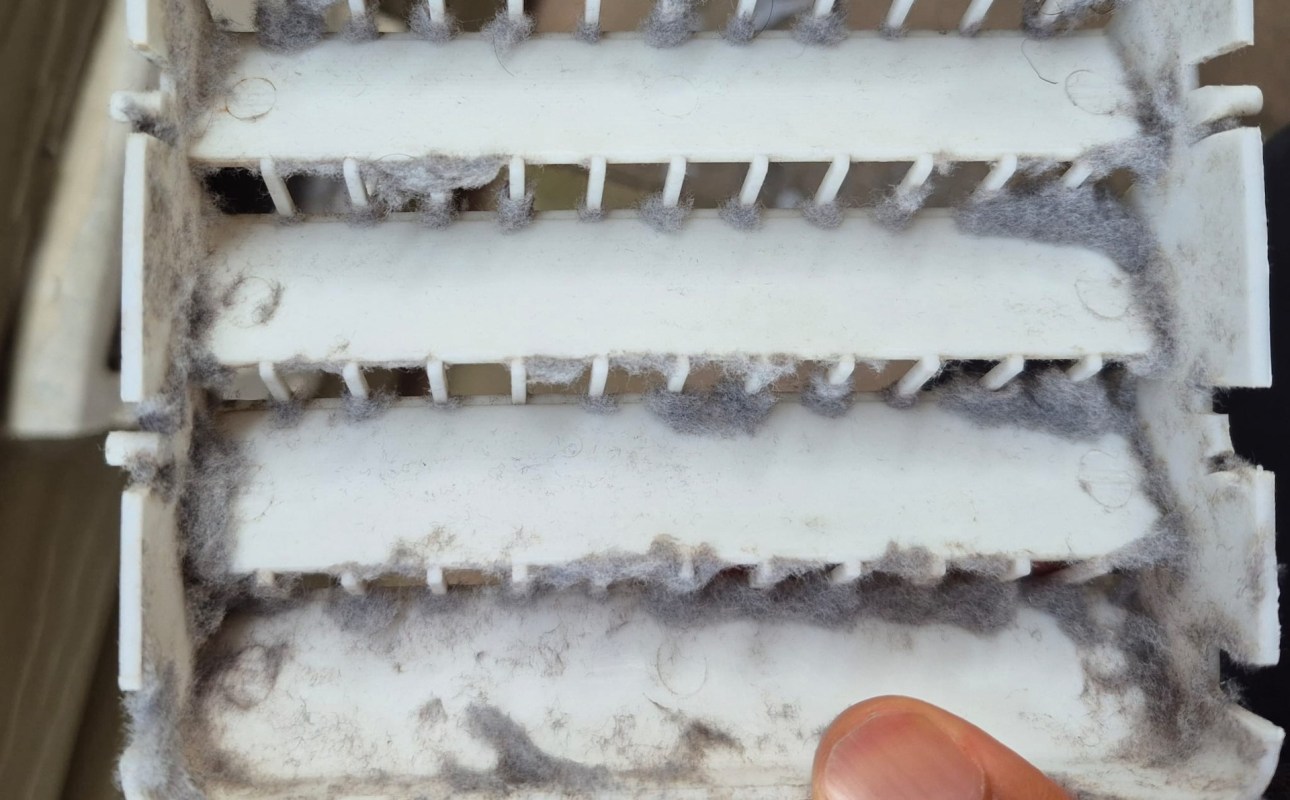
What started as a Reddit question about a dryer that ran forever—and left a window fogged for almost the whole cycle—turned into the discovery that the blockage came from a far less obvious place.
The underlying issue appears to have been the exterior vent hood itself.
Here's what to know
The Reddit user, posting in r/Appliances, said they had already cleaned beneath the removable lint trap, the exhaust pipe, and the vent line leading outside. Even after that, the dryer still took too long, and condensation kept building up on the window during cycles.
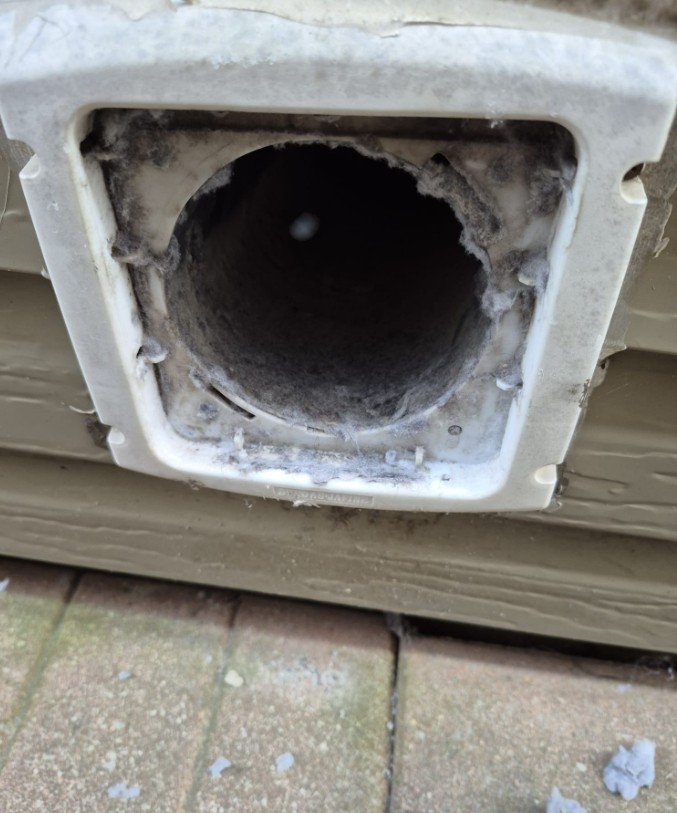
The key detail was outside the house. The poster explained that two vent hoods were on the same side of the home—one for the overhead stove fan and one for the dryer—and they had first inspected the wrong one.
After locating the correct vent, the original poster wrote, "I popped off Dryer Vent Hood it was pretty much 99% blocked and caked with lint." They said that after scraping off some of the buildup and cleaning part of the pipe, the dryer took "80% less time to dry."
Within a week, the OP noticed that drying times had increased again. They returned to the vent to find that "the Dryer Vent Hood was blocked 50%."
TCD Picks » Quince Spotlight
💡These best-sellers from Quince deliver affordable, sustainable luxury for all




Shorter drying cycles can also mean lower energy use per load, though the thread did not provide a specific dollar figure for the savings.
More background
Several commenters pointed to the installed hood itself as the real problem, rather than treating the lint buildup as a one-off cleaning issue.
"That hood is not for dryer. Its intended for air intake or exhausting things like a bathroom fan or air exhange units," the commenter wrote.
The poster responded that the hood was simply what came with the house. They also said that after only "2-3hours worth of drying," it was already about 50% blocked again.
A setup that cuts drying time by roughly 80% can reduce reruns, shorten laundry day, and use less energy.
The poster added that they live "somewhat close to a forest," so they were concerned about what might get into the vent if it were left too open.
What can be done?
Advice in the thread centered on replacing the vent hood, with commenters suggesting that a part not meant for dryer exhaust would keep catching lint too quickly.
Calling it a "Common mistake," one commenter added, "Even the coarse screen will need weekly cleaning, so I would say run it without screen."
When the poster asked how difficult it is to replace, that same commenter outlined two possible outcomes.
In the simpler scenario, they wrote, "If youre lucky, old vent hood cap snaps off and leaves the metal ducting intact," meaning a "hood cap kit" might be enough.
If that does not happen, the commenter said the repair is more involved: "If it fights, youll need to disconnect from inside the house/wall and get the exhaust kit with the 1-2foot duct."
They also wrote, "I prefer the exhausts with the single big flap vs the multiple little ones. The multi ones dont open as well imo."
From the discussion, the most likely next step seems to be replacing the cap so lint doesn't build up as fast.
By the end of the exchange, the poster seemed to conclude the issue may have been there from the start: "I see. It is what came with the house, strange they put it there."
Where can I learn more?
These stories dig into similar dryer problems, from slow cycles caused by blocked airflow to heavy lint buildup. They include homeowners and technicians dealing with clogged vents, overheating risks, and simple cleaning fixes.
• A new homeowner found the vent packed solid with years of lint behind a sluggish dryer.
• On TikTok, one dad showed an easy step-by-step that cleared lint and helped dryers run better.
• A home expert shared critical tips for improving dryer efficiency when winter loads started dragging.

Get TCD's free newsletters for easy tips, smart advice, and a chance to earn $5,000 toward home upgrades. To see more stories like this one, change your Google preferences here.






