


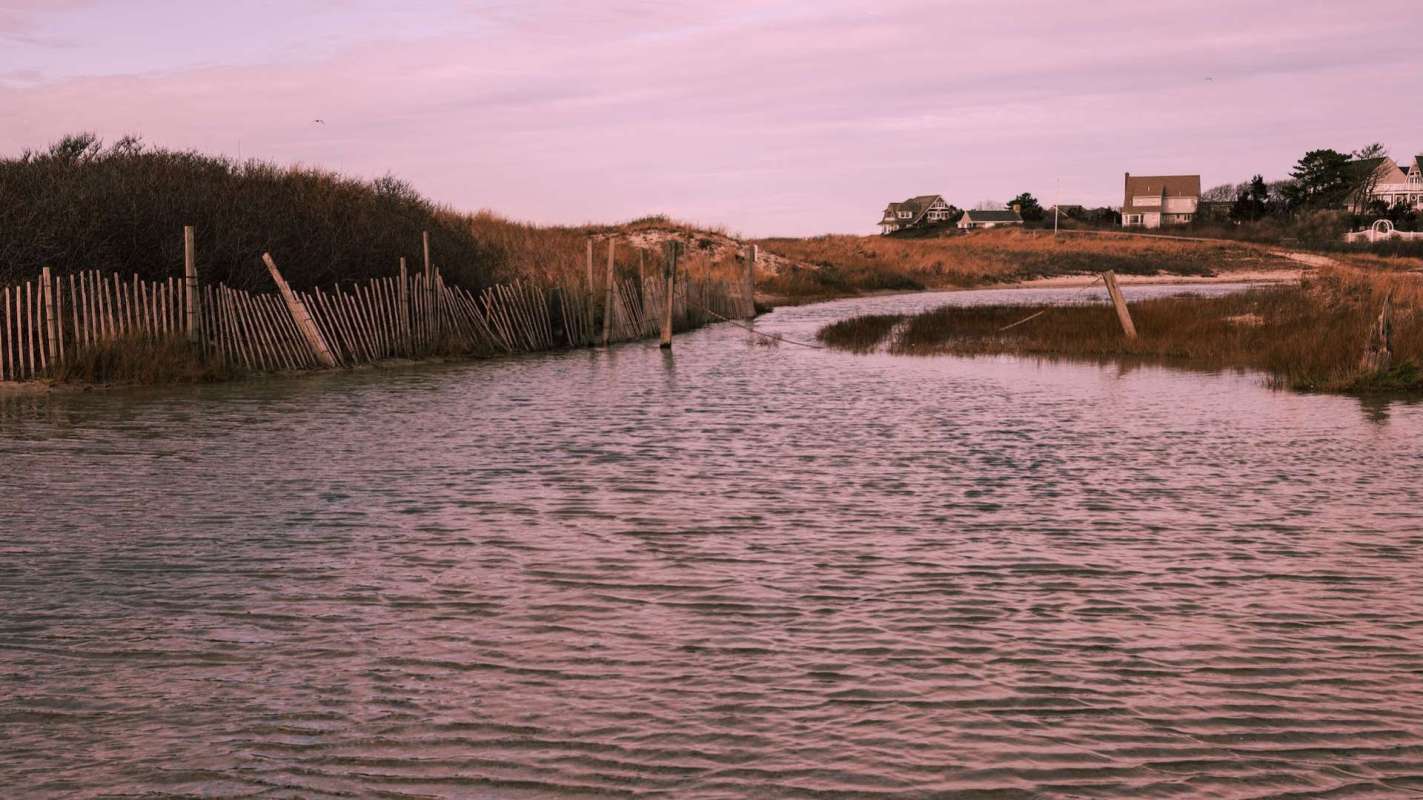
Millions of dollars in drainage upgrades are helping a flood-prone neighborhood in Hampton, New Hampshire, cope with repeated tidal flooding linked to climate change.
Much of the work sits below ground, but after decades of water filling neighborhood streets and yards, residents say the difference is unmistakable.
Here's what to know
People living near Gentian Road, Meadow Pond Road, and nearby streets spent more than 20 years urging officials to repair a drainage system that could not keep up with high tides and heavy storms. Those efforts eventually resulted in an approximately $4.3 million project, funded by local, state, and federal sources, that added new drainage pipes, a repurposed pump station, and an automated water-level monitoring station, according to New Hampshire Bulletin.
Tom Bassett, who lives on Gentian Road, said the project has dramatically improved conditions. Before the upgrades, contaminated tidal floodwater would cover his yard, reach his home, and collect in the street dozens of times each year. Since the work was finished, he estimates flooding has dropped by about 75%.
Executive Councilor Janet Stevens said the flooding once became so severe that "Roads could become impassable. I saw it first-hand."
More background
The neighborhood's flooding problems were also a consequence of older infrastructure. Pauline Perkins, a watershed management staffer with the New Hampshire Department of Environmental Services, said the stormwater system serving the area was built in the 1950s and discharged into Meadow Pond, a tidal estuary connected to Hampton's salt marshes and ultimately the ocean.
TCD Picks » Quince Spotlight
💡These best-sellers from Quince deliver affordable, sustainable luxury for all




The average sea level has risen about 8 inches since 1880, according to the National Oceanic and Atmospheric Administration.
As tides have increased, that infrastructure was not able to keep up. When water rose above the outfall pipe, the system no longer drained away from the neighborhood and instead pushed water back toward streets and homes.
Cracked pipes and a higher water table compounded the issue by letting additional water into a network meant to carry it away.
What's being done?
The response in Hampton has relied on multiple engineering changes working together. New drainage pipes improve water movement, the repurposed pump station helps when high tides block normal drainage, and the water-level station allows officials to track conditions near the marsh.
Stevens explained life before the new system: "Drainage outlets could be submerged for extended periods, and residents were left wondering when the next storm would bring another round of flooding."

Get TCD's free newsletters for easy tips, smart advice, and a chance to earn $5,000 toward home upgrades. To see more stories like this one, change your Google preferences here.







