


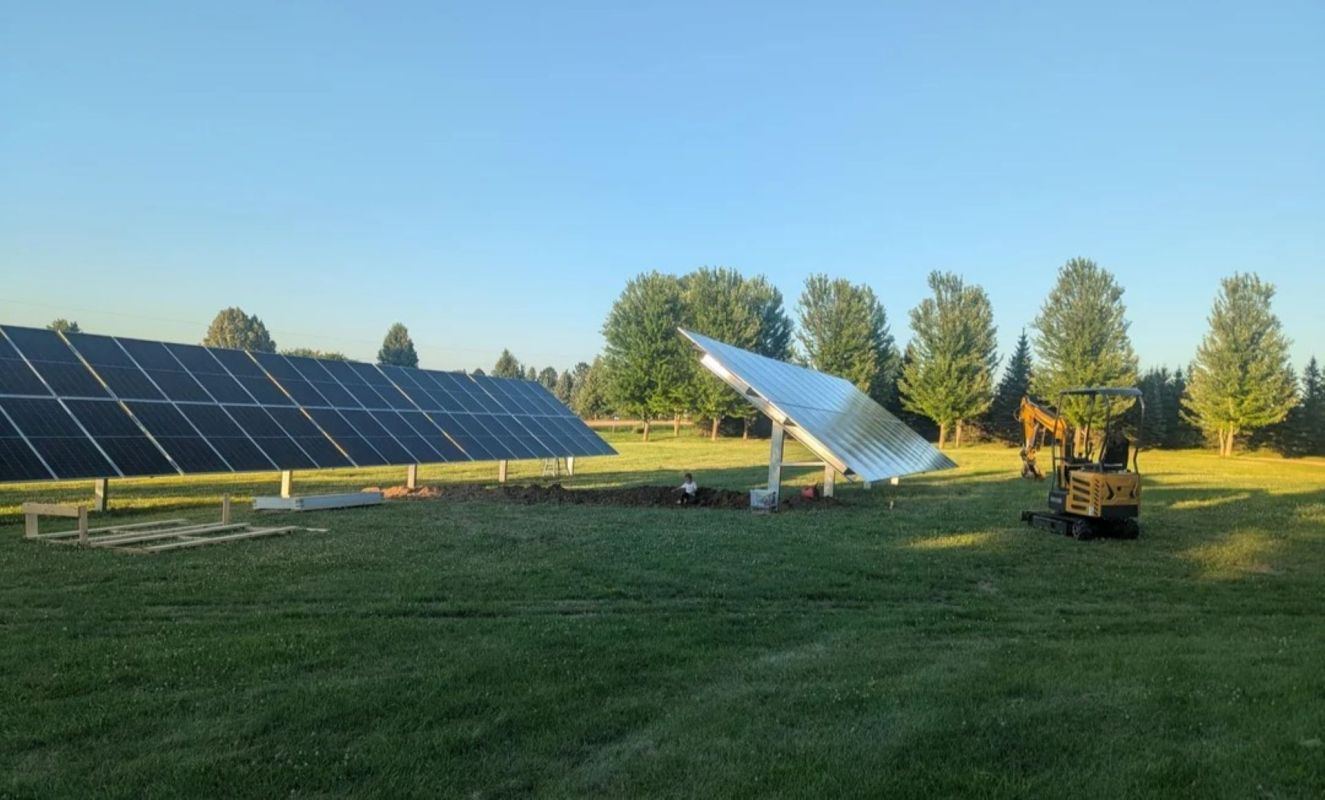
After getting a 40-kilowatt DIY solar installation up and running, one DIYer was thrilled to show off their array and brag about its benefits.
Here's what to know
On Reddit, the original poster said the project began in April, with work seemingly completed in early October. They had to obtain permits and an interconnection agreement, but they are now clear to export electricity.
According to the post, the equipment list included four Solis S6 high-voltage hybrid inverters, 80 Waaree B-grade 590-watt panels, and a Sinclair sky rack.
Those core components alone totaled about $28,400. Roughly $11,000 for the rack picked up at the Sinclair factory, $10,400 for the 80 panels, and about $7,000 for the four inverters shipped from AliExpress.
While the system did not yet include batteries, the poster said 1:1 net metering allows exported solar generation to offset power taken from the grid.
In the thread, one commenter joked: "Anything worth doing, is worth overdoing."
More background
A project like this can lower costs for homeowners who understand the equipment, code requirements, and permitting process. If you're interested in rooftop solar, getting free installation estimates through EnergySage can make it easier to compare quotes and see what a professionally installed system might cost.
In the comments, the poster said buying the Solis inverters through AliExpress likely saved "a couple thousand," though delivery took about 45 days. The builder also said they chose Solis because the units "seem very compatible with the battery emulator project," suggesting that future expansion was part of the plan from the beginning.
Save $10,000 on solar panels without even sharing your phone number Want to go solar but not sure who to trust? EnergySage has your back with free and transparent quotes from fully vetted providers that can help you save as much as $10k on installation. To get started, just answer a few questions about your home — no phone number required. Within a day or two, EnergySage will email you the best local options for your needs, and their expert advisers can help you compare quotes and pick a winner. |

A solar array this large can do more than shrink a utility bill. It can effectively turn a home into a small-scale power producer. Even without batteries, net metering can lower monthly energy costs, and the original poster said the setup is already exporting electricity rather than only covering on-site demand.
What can be done?
Much of the challenge came down to paperwork, code compliance, and obscure electrical details.
"That was one of the hardest parts, but the most rewarding," the original poster wrote. "I downloaded a copy (free) of the 2023 NEC and started googling."
They said local utility and county solar requirements were part of the process, alongside the electrical code for "trench depths, conduit fill calculations, and wire ampacity ratings."
More From EnergySage
💡Go deep on the latest news and trends shaping the residential solar landscape


The OP also noted that "solar is considered a continuous load," so components had to be sized to 125%.
For homeowners who want solar savings without handling every permit and calculation themselves, EnergySage can be especially useful. With its help, the average person can save up to $10,000 on solar purchases and installations.
EnergySage's solar map shows the average cost of a home solar panel system by state, along with local incentives. Those tools can help homeowners get the best price for a rooftop solar array.
Adding battery storage to a solar setup is also one of the best ways to protect your home during outages, save money on energy, and go off-grid. Homeowners can explore EnergySage for information about home battery storage options, including competitive installation estimates.
Where can I learn more?
Other households are reporting lower bills, utility credits, and backup power thanks to their solar panels.
• In Australia, a 20kW solar setup made blackouts a thing of the past and delivered a $545 monthly credit.
• Budget-minded homeowners found eye-popping deals for solar on Facebook Marketplace by buying used panels.

Get TCD's free newsletters for easy tips, smart advice, and a chance to earn $5,000 toward home upgrades. To see more stories like this one, change your Google preferences here.






